The letter arrives without warning. A developer’s acquisition team writes to the owner of a single-storey strip plaza on Kingsway or Scott Road with an offer significantly higher than the property’s value two years ago. The building remains unchanged, but the zoning has shifted.
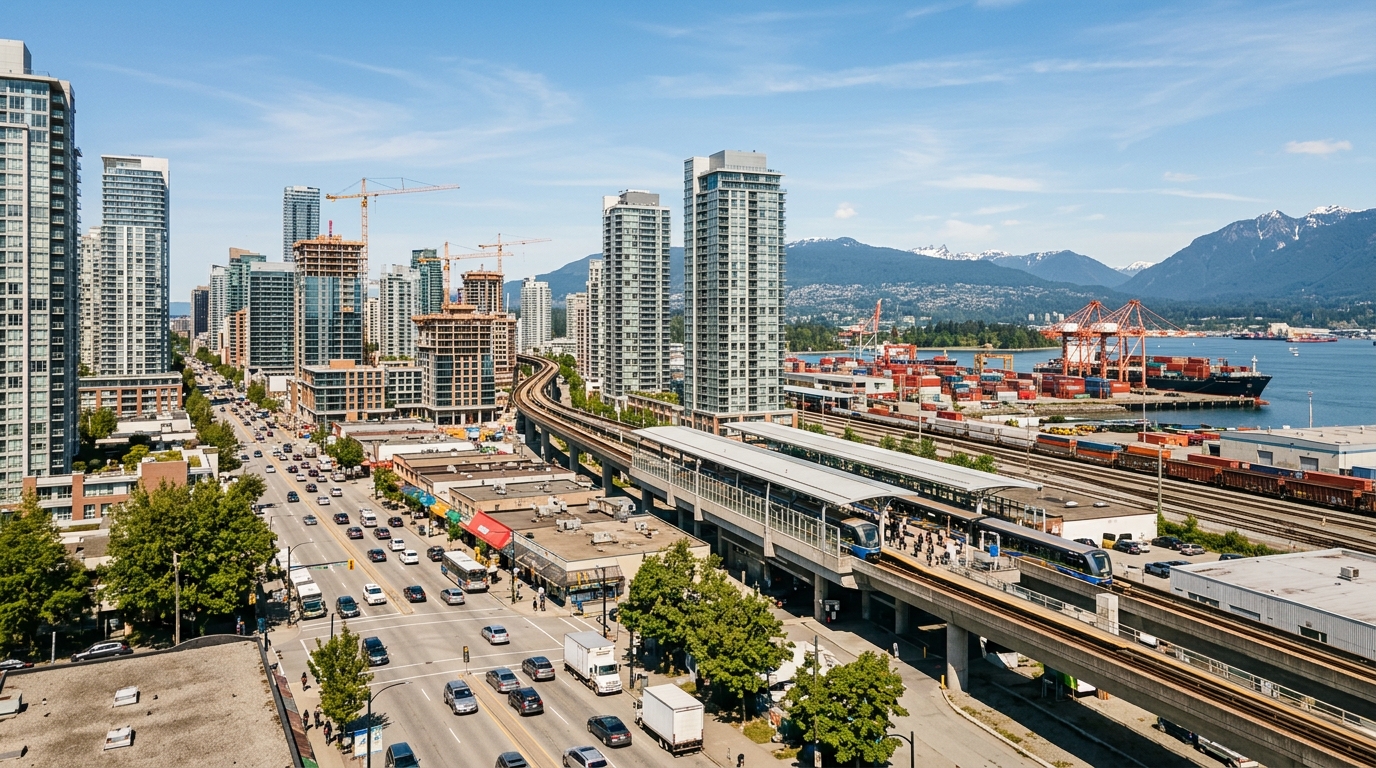
Across Metro Vancouver, BC’s Transit-Oriented Areas Act (Bill 47, 2023) is translating from provincial statute into street-level transactions. The legislation mandates minimum density allowances within set distances of SkyTrain and major transit stations—up to 20 storeys within 200 metres, and eight storeys within 800 metres, depending on the tier. Municipalities have brought their zoning into conformity, granting land previously limited to low-rise retail use a new development ceiling—and a new price.
The shift toward "as-of-right" density is the primary catalyst. While developers still face significant timelines and costs associated with development and building permits, the provincial mandate removes the multi-year rezoning process that previously defined these corridors. This increased certainty is being priced into land valuations immediately.
The corridors seeing the most activity are predictable: Kingsway between Main Street and Boundary Road and Scott Road in Surrey near the King George and Gateway SkyTrain stations. Fraser Street, while also seeing increased interest, operates under different density rules, with many areas designated for six to 18 storeys under local "Village" planning frameworks rather than the 20-storey SkyTrain mandate.
For an owner of a 10,000-square-foot lot with a 1970s strip mall, the land value is no longer calculated solely on retail rent. It is now calculated on the potential for 60 to 80 residential units stacked above ground-floor retail. This math can produce a land value two to four times the previous assessed value, depending on location and feasibility.
BC Assessment data for 2025 showed upward movement in commercial land values, though assessments typically lag the transaction market by six to twelve months. According to the Urban Development Institute, the pace of these inquiries is accelerating in 2026.
The picture is more complex for retail tenants. A long-running restaurant or community pharmacy typically operates on a three-to-five-year lease. When a property sells for redevelopment, those leases are honoured to their term, but renewal is rarely offered. CBRE’s Metro Vancouver retail market data has tracked rising vacancy along some corridors as landlords decline to sign new long-term leases while evaluating redevelopment options.
Developers are not uniformly bullish. The Colliers retail investment team has noted that the gap between vendor expectations—inflated by new density permissions—and what developers can pay given construction economics is creating a bid-ask spread that is slowing some transactions.
For property owners sitting on arterial land near transit, the liquidity event is no longer theoretical. Whether to sell, partner, or hold remains a decision requiring independent financial advice, as the development window is now open in a way it has not been before.



