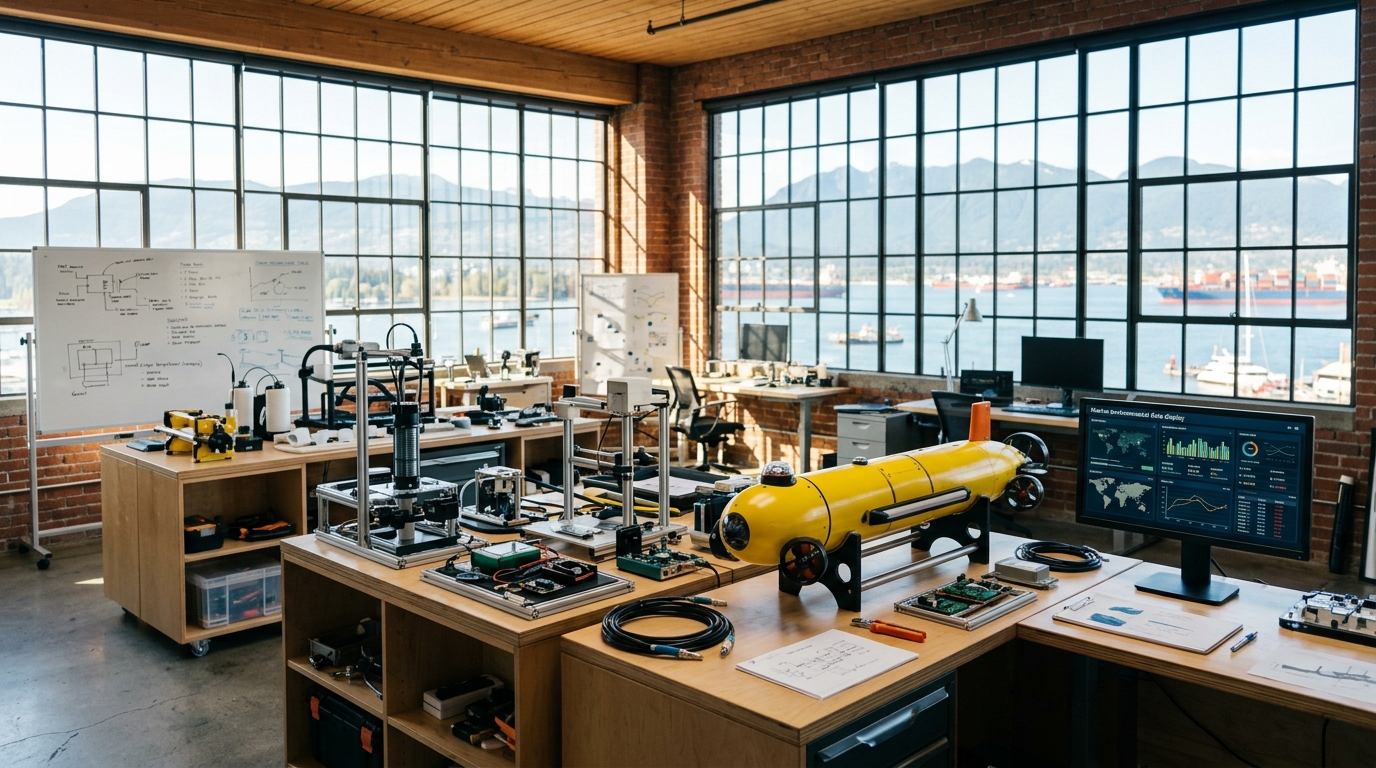
The grow lights are on. Quietly, a cluster of Metro Vancouver and Fraser Valley startups building controlled-environment agriculture (CEA) technology has begun attracting the kind of institutional capital that signals a sector is graduating from niche to serious.
The timing is not accidental. Two years of supply chain disruption rattled food systems across North America, and investors who once treated indoor farming as a novelty are now treating it as infrastructure. In BC, a specific set of structural advantages — among the cheapest and cleanest electricity in North America, a deep agricultural land base, and research institutions with genuine agri-tech depth — is positioning the province as a credible global competitor in a sector where first-mover advantage compounds quickly.
Why BC, Why Now
CEA — the umbrella term for greenhouses, vertical farms, and precision indoor growing systems — is energy-intensive. That makes power cost and carbon intensity the two variables that determine whether a facility is economically viable at scale. BC's hydroelectric grid addresses both, a combination that most competing jurisdictions in North America cannot match.
Land access is the second structural lever. The Agricultural Land Reserve protects BC's farmland from development, but industrial-zoned land outside the ALR — particularly in the Fraser Valley — can accommodate large-scale CEA facilities at costs that remain competitive with Alberta and Washington State, even after the Fraser Valley industrial rent surge that has pushed Class A warehouse rates toward $20 per square foot.
The third leg is research. Kwantlen Polytechnic University’s Sustainable Agriculture program and the University of BC’s Faculty of Land and Food Systems are producing graduates and spin-out intellectual property that founders are turning into commercial ventures. That pipeline is accelerating.
The Funding Infrastructure Is Building
Capital is following the structural thesis. The federal AgriScience Clusters program, administered through Agriculture and Agri-Food Canada, has directed funding toward BC-based research clusters focused on precision agriculture and controlled-environment systems. At the provincial level, the BC Ministry of Agriculture's AgriInnovation program has expanded its funding envelope for the 2025–26 cycle, with recipients spanning greenhouse automation, crop-monitoring sensors, and nutrient-delivery systems.
Innovate BC has run dedicated agri-tech cohorts that have helped early-stage companies bridge the gap between research and commercial pilot. The number of agri-tech companies registered through Innovate BC programs has grown meaningfully since 2023, reflecting both founder interest and the availability of non-dilutive capital to de-risk early development.
On the private side, deal flow data from the Canadian Venture Capital Association shows BC agri-tech attracting increasing attention from institutional investors. While the sector remains early-stage relative to the AI and cleantech cohorts that dominate headline numbers, valuations are not yet stretched, and the technology risk in CEA is lower than in quantum computing or novel therapeutics.
The Competitive Moat Is Real — But So Are the Challenges
The BC Greenhouse Growers' Association represents one of the most productive greenhouse sectors in North America. BC's greenhouse industry is a significant contributor to provincial agricultural output, creating both a customer pipeline for agri-tech startups and a proof-of-concept environment for investors.
Proximity to Asian export markets — Metro Vancouver's port infrastructure connects directly to Japan, South Korea, and Southeast Asia — gives BC-grown premium produce a logistics advantage that inland competitors lack. For startups building the technology layer on top of that production base, the addressable market extends well beyond domestic food security.
The challenges are structural. CEA facilities require significant upfront capital expenditure; a commercial-scale vertical farm can cost tens of millions of dollars before the first harvest. That capital intensity has tripped up high-profile players in the US market, including several well-funded American CEA operators that filed for creditor protection after scaling faster than their unit economics could support.
The lesson the BC ecosystem appears to be drawing is disciplined: build the technology and licensing layer, not just the farms. Startups focused on sensor systems, AI-driven crop management software, and modular growing infrastructure can serve the global CEA buildout without carrying the balance-sheet risk of operating large facilities.
The Bigger Picture
CEA sits at the intersection of three capital themes: deep tech, sustainability, and food security. BC has a credible claim on all three. The province's clean grid is a sustainability argument that writes itself. The research institutions provide the deep tech pipeline. And two years of supply chain volatility have made food security a boardroom conversation.
For founders considering the space, the window is real but not unlimited. First-mover advantage in CEA compounds through customer relationships, proprietary growing data, and regulatory familiarity. The funding infrastructure, from federal AgriScience clusters to provincial AgriInnovation grants to Innovate BC cohorts, is more developed than many realize.
The grow lights are on. The capital is starting to follow. The question for BC's agri-tech founders is whether they move fast enough to own the infrastructure layer before the rest of the world catches up.