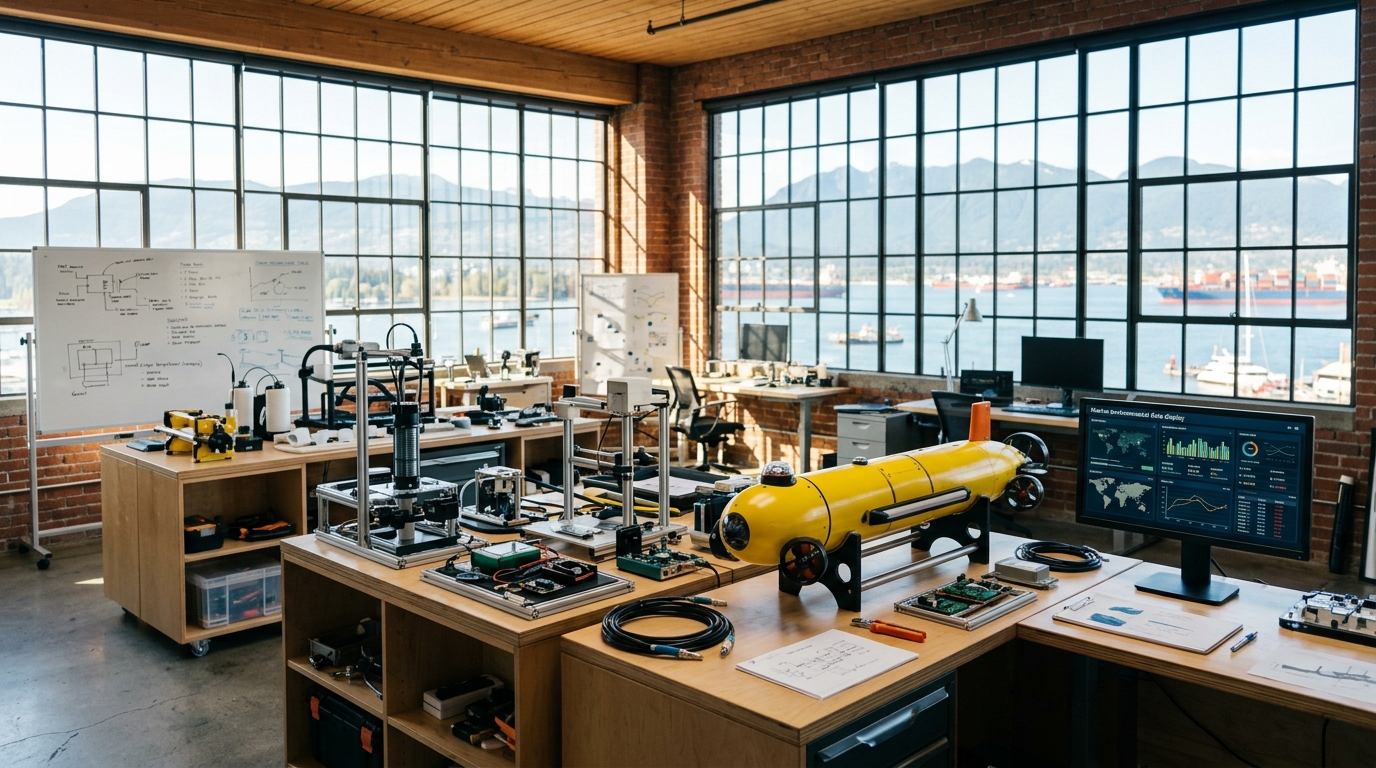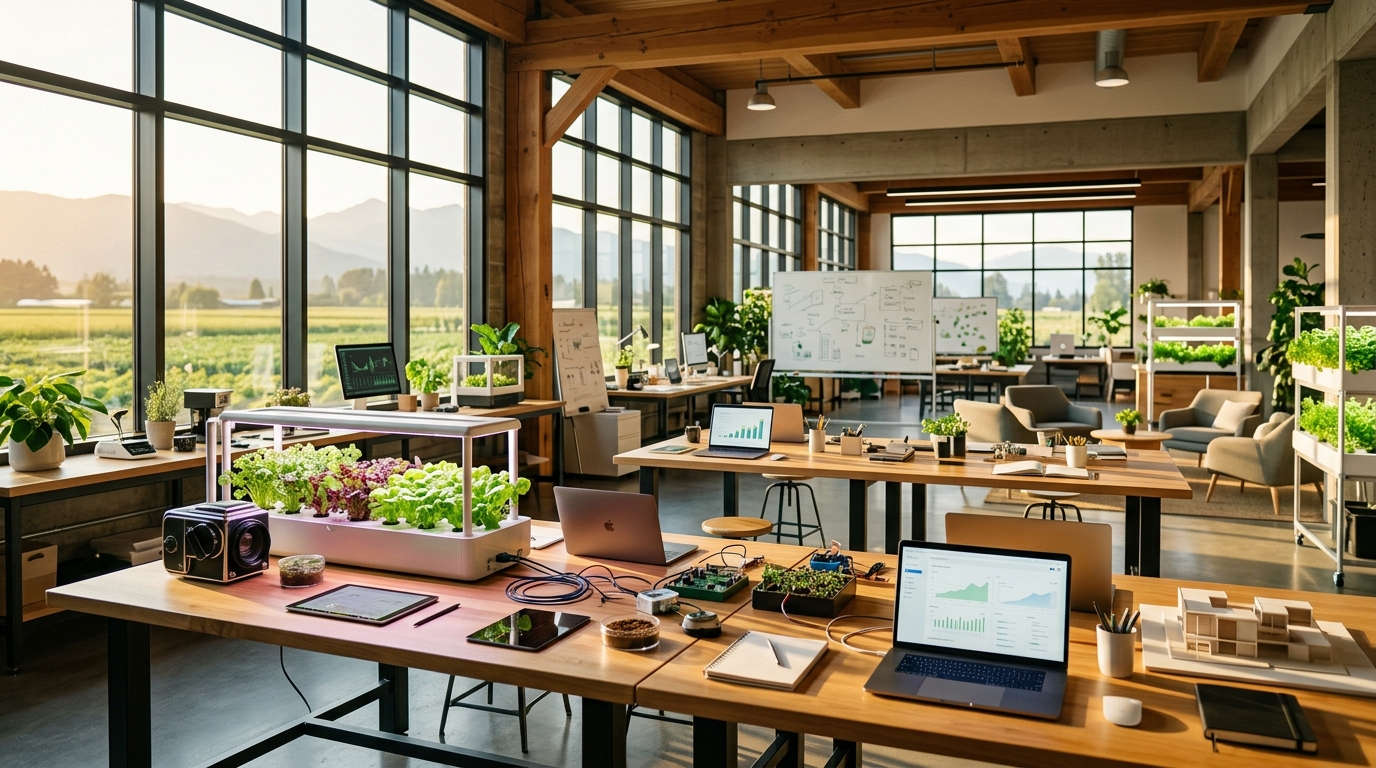
Drive east on the Trans-Canada Highway past Abbotsford and you will not see a traditional startup campus. Instead, you will see farmland—some of the most productive agricultural land in Canada, measured by output per hectare. What is less visible is the layer of sensor networks, machine-learning platforms, and controlled-environment systems being built on top of it.
The Fraser Valley’s emerging agri-tech cluster has developed largely out of view of the Gastown pitch-deck circuit. Founders in the region suggest this relative anonymity is precisely why the opportunity remains significant.
The structural case is compelling. BC's agri-food sector generates over $15-billion annually in combined farm gate and processing value. Global pressures—including climate volatility, water scarcity, and export demand from Asia—are forcing an accelerated technology adoption curve. Startups filling this gap are often securing paying customers faster than their counterparts in pure software.
The talent stack
The cluster’s foundation is academic. UBC's Faculty of Land and Food Systems has produced applied research in precision agriculture and soil science for decades. Kwantlen Polytechnic University's Institute for Sustainable Food Systems, based in Richmond and Surrey, operates at the practical edge of this pipeline, training technicians and agronomists.
SFU's engineering and computing science programs contribute to the cluster’s sensor, robotics, and data-infrastructure layers. This creates a talent pool that combines domain expertise with technical depth—a combination that is rare and difficult for pure software clusters to replicate.
Capital is shifting
The funding environment has evolved over the past 18 months. Agriculture and Agri-Food Canada's Sustainable Agriculture Strategy is directing commercialisation funding toward climate-adaptive farming technologies, with BC firms appearing more frequently in recipient lists.
Provincially, Innovate BC's AgriTech Innovation Program provides early-stage capital and market-access support to bridge the gap between research and commercial deployment. For founders in the Fraser Valley, this non-dilutive funding extends runway without forcing premature valuation discussions.
The BC Agriculture and Food Climate Action Initiative further supports this by targeting climate-adaptation, which drives both grant eligibility and customer urgency. Farms facing erratic precipitation and heat events are motivated buyers.
The investor arbitrage window
Global agri-tech venture capital investment reached approximately US$30-billion in 2025, according to industry data. Canadian founders have captured a small share of this capital.
CVCA data indicates that the sector has been systematically underweighted by BC-focused funds relative to software and life sciences. This creates an arbitrage opportunity. Valuations in the Fraser Valley remain early-stage, and customer traction is based on measurable operational improvements rather than speculative projections.
This window exists because many generalist BC venture funds have yet to build the sector expertise required to evaluate agri-tech deals. However, specialist capital from Ontario and the United States is beginning to enter the region.
The cluster landscape
Companies scaling in the Fraser Valley span three primary layers. Precision agriculture platforms use sensor networks and machine learning to provide real-time visibility into soil conditions and irrigation efficiency. Controlled-environment agriculture startups are building the software and hardware stacks that make vertical and greenhouse farming viable at scale. Food-tech companies are focused on the processing and supply-chain layer, reducing waste and improving traceability.
The bigger picture
Metro Vancouver's innovation economy is diversifying. The quantum cluster, critical minerals startups, and cleantech founders are all signals of an ecosystem broadening its base. The Fraser Valley agri-tech cluster fits this pattern, rooted in a physical industry that is central to the province’s economy.
For founders, the case for building here is structural: the talent, customers, and non-dilutive funding are present, and the cost base is lower than in California or Ontario. For investors, the sector remains underpriced relative to its fundamentals.