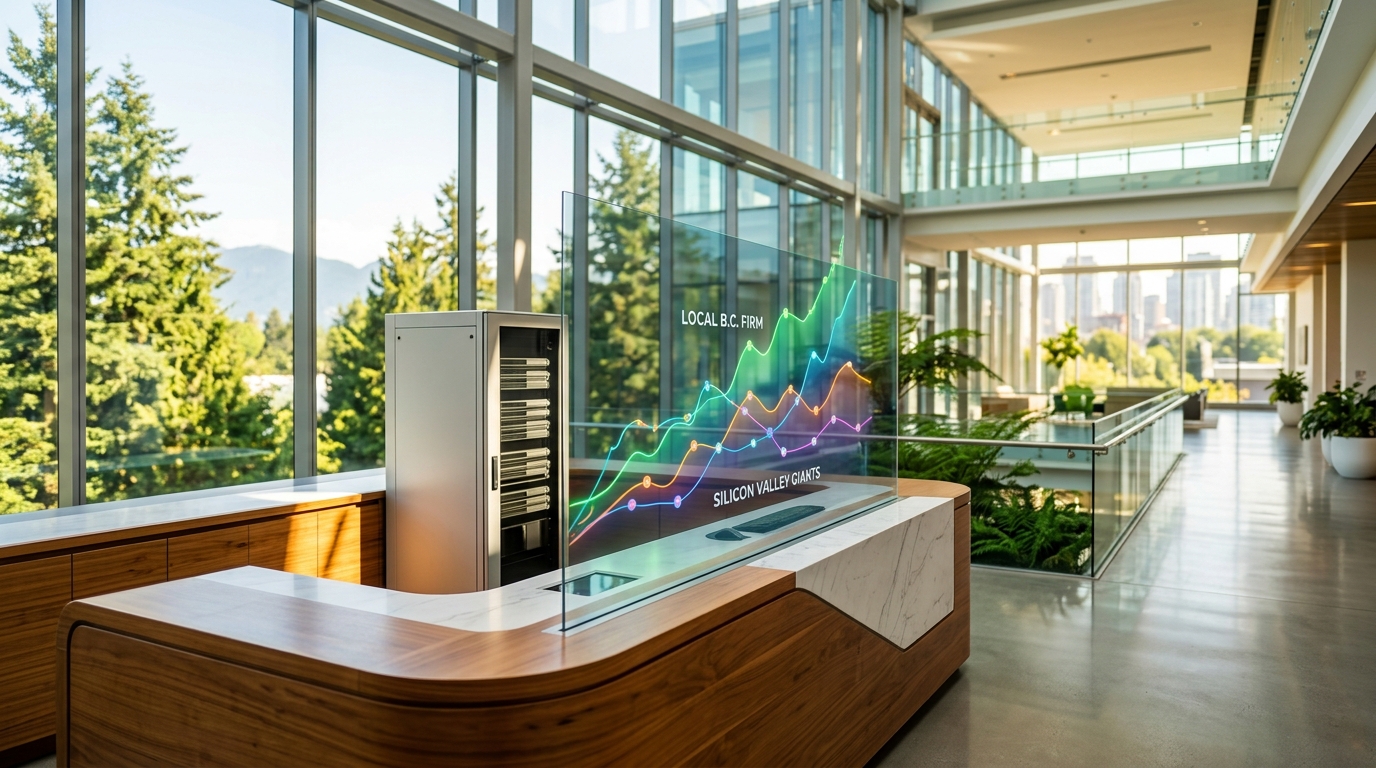
The number that should focus every Vancouver AI founder's attention is clear: senior machine learning engineers in Metro Vancouver are commanding between $180,000 and $230,000 annually in total compensation. Even at these rates, they remain targets for Amazon, Google, and Microsoft recruiters offering U.S.-dollar packages that dwarf local benchmarks. The talent war is not coming; it is underway, and the domestic supply side offers no immediate relief.
The scale of demand is measurable. AI-related job postings in Metro Vancouver surged approximately 65 per cent in Q1 2026 compared to the same period in 2025, driven by new venture funding, hyperscaler expansion, and established enterprises moving from pilots to production. That is a significant volume of open requisitions chasing a limited pool of qualified candidates.
The pipeline problem has a clear timeline. While UBC's expanded AI and data science graduate streams and SFU's applied sciences programs are scaling intake, these students will not enter the job market until 2027. This leaves a 12-to-18-month window where talent remains the primary constraint on the growth of Vancouver’s AI sector.
For founders staffing teams today, the sourcing map is shifting. International hires via the Global Talent Stream remain a reliable lever, though processing times and local housing costs complicate recruitment. Poaching from hyperscalers—particularly Amazon Web Services and Microsoft—is common but expensive. A third, increasingly popular approach is internal upskilling: investing in structured machine learning training for strong software engineers and data analysts over six to twelve months.
This internal strategy is gaining traction because the economics are becoming more favourable. According to Hays Canada's technology compensation benchmarks, the salary differential between a senior ML engineer and a mid-level software developer with ML exposure is significant enough that companies can realize cost savings by training internally, provided they have the necessary runway and technical leadership.
Alternative pipelines are also maturing. BCIT's AI and machine learning programs are producing engineers capable of building and deploying models in production. Bootcamp graduates from programs like BrainStation and Lighthouse Labs are also becoming competitive for roles that do not require a graduate degree. Furthermore, Innovate BC's workforce development initiatives are directing funding toward reskilling professionals from adjacent fields, such as statistics and quantitative analysis, into applied AI roles.
The compensation gap with the U.S. remains, but it is not insurmountable if founders are transparent about their value proposition. CVCA data on Canadian tech compensation indicates that Vancouver's lower cost of living, combined with Canada's public healthcare system, narrows the effective take-home gap for mid-career professionals. The pitch is most effective for candidates who have experienced U.S. hyperscalers and are now prioritizing equity upside, mission alignment, or quality of life.
The 2027 graduate cohort will eventually ease the pressure, but retention remains a critical variable. For founders, the immediate calculus is clear: those who solve their talent requirements over the next 18 months will secure a structural hiring advantage when the next funding cycle accelerates.