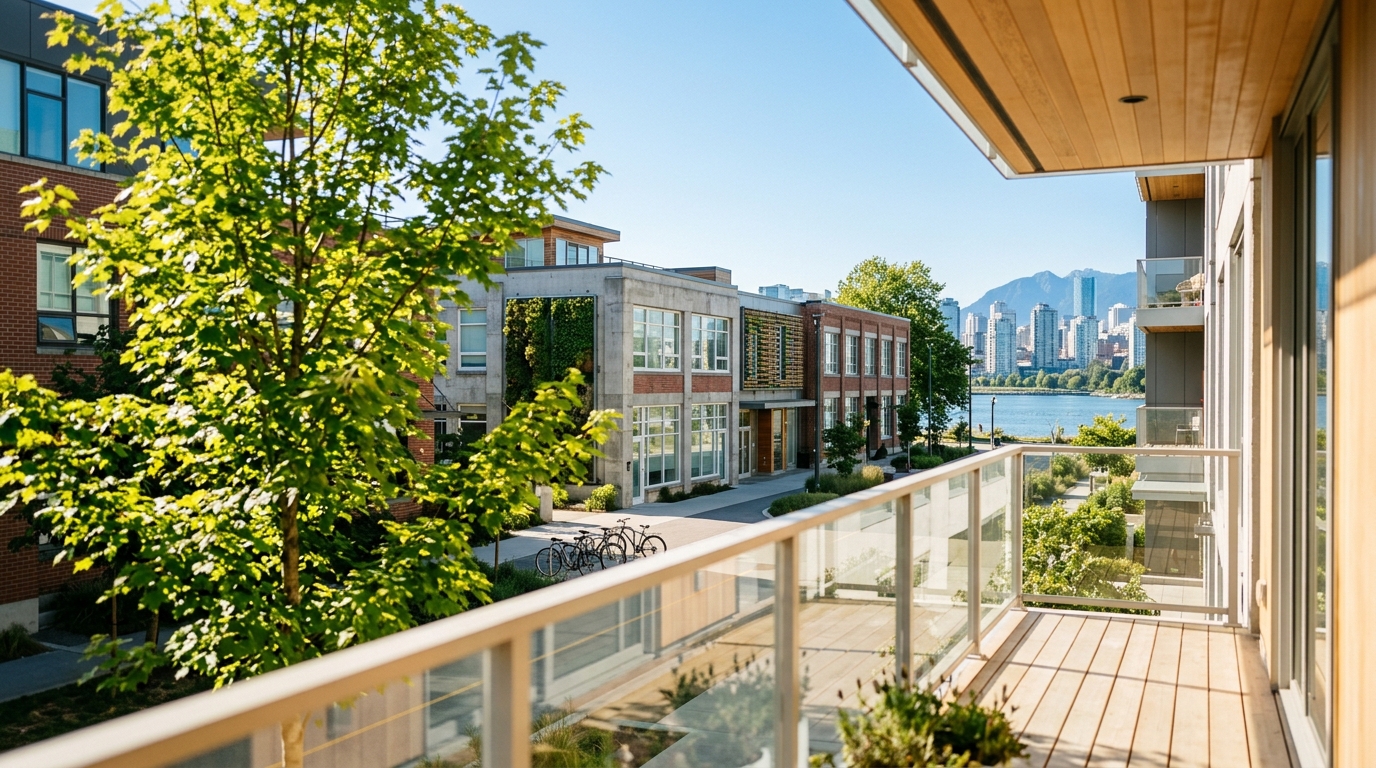
On the stretch of Marine Drive between the Fraser River and the Cambie Bridge, a quiet transformation is underway. Buildings that once housed light industrial tenants and mid-tier tech firms are being stripped to the concrete and rebuilt—biosafety cabinets bolted to benches, HVAC systems upgraded for fume extraction, and floor drains installed where carpet tiles once sat. The Marine Drive corridor, long an afterthought in Metro Vancouver's commercial real estate market, is emerging as the spine of the region's burgeoning BioHub.
The driver is straightforward: Metro Vancouver's office vacancy rate has climbed toward historic highs, with flex and mid-tier product—buildings in the 50,000-to-150,000-square-foot range—sitting particularly empty. Traditional tech tenants have retreated into hybrid footprints or consolidated into newer Class A space. Conversely, life sciences tenants, with their specific infrastructure requirements and longer operational timelines, are actively seeking this product category. The match is being engineered by policy.
For landlords holding vacant flex space, life sciences represents a durable, government-backed tenant category with higher tenant improvement tolerance and longer lease terms than most other commercial sectors.
The Conversion Economics
The core question for any landlord considering a life sciences conversion is the delta between a standard office tenant improvement allowance and the cost of a wet-lab build-out. The gap is significant, and the opportunity lies in understanding who absorbs it.
Industry data from CBRE's North American life sciences practice places wet-lab build-out costs in the $200-to-$350 per square foot range for full conversions, compared to $80-to-$120 per square foot for a standard office fit-out. The differential reflects the mechanical complexity: reinforced flooring for equipment loads, dedicated exhaust systems, emergency eyewash stations, specialised electrical capacity, and biosafety level upgrades that require sealed rooms and pressure differentials.
The arithmetic works for Metro Vancouver landlords due to the policy backstop. The BC Life Sciences Strategy, led by the Ministry of Health and the Ministry of Jobs, Economic Development and Innovation, has positioned the province as a preferred destination for investment. Federally, the Strategic Science Fund and NRC-IRAP programs have directed substantial capital toward BC-based research institutions, providing anchor funding that underwrites the multi-year leases life sciences tenants need to justify their own fit-out investment.
Life sciences tenants—particularly university spinouts—routinely accept lease terms of seven to twelve years, compared to the three-to-five-year standard in the broader market. They also frequently contribute to their own build-out costs because the infrastructure they install is purpose-built and non-transferable.
Where the Leasing Is Clustering
The Marine Drive corridor in South Vancouver has emerged as the most active zone, anchored by proximity to UBC's Point Grey campus and the research ecosystem at Vancouver General Hospital. Colliers International's Vancouver leasing data points to a clustering effect: once two or three life sciences tenants occupy a building, the supporting ecosystem—specialised equipment suppliers, contract research organisations, and regulatory consultants—follows.
Burnaby is the second major node, driven by proximity to SFU's Burnaby Mountain campus and established biotech firms along the Willingdon and Lougheed corridors. The SkyTrain connection to both downtown Vancouver and the Fraser Valley gives Burnaby addresses a transit advantage for talent recruitment.
UBC's University-Industry Liaison Office and Genome BC serve as pipelines for early-stage companies graduating into commercial leases. These tenants arrive with federal and provincial grant funding in hand, de-risking the lease from day one.
What Landlords Need to Know
The conversion opportunity is not frictionless. Floor-load capacity is the first filter; analytical equipment often requires loads of 150 pounds per square foot or higher in lab zones. Ceiling height is equally critical, as HVAC systems for lab spaces are more complex than standard office systems.
Power is the second constraint. A wet lab typically draws three to five times the electrical load of a comparable office floor. Landlords should engage a life sciences-experienced tenant representative and a mechanical engineer early to assess whether existing electrical service can support that demand.
The Bottom Line
Metro Vancouver's life sciences sector is an active, policy-backed tenant category signing leases today. For landlords holding flex and mid-tier office product, the conversion economics are worth serious consideration. While the tenant improvement gap is real, the seven-to-twelve-year lease terms provide long-term stability.
Expect the Marine Drive corridor to define its identity more sharply over the next 18 months. Landlords who conduct proper due diligence on building specifications and conversion costs will be well-positioned to set the market rate for lab space in a rapidly evolving corridor.



