For years, BC's aquaculture narrative was defined by what it was moving away from: open-net salmon farms, associated sea-lice controversies, and the ensuing regulatory battles. The more compelling story—one that investors are now beginning to price—is what the sector is moving toward.
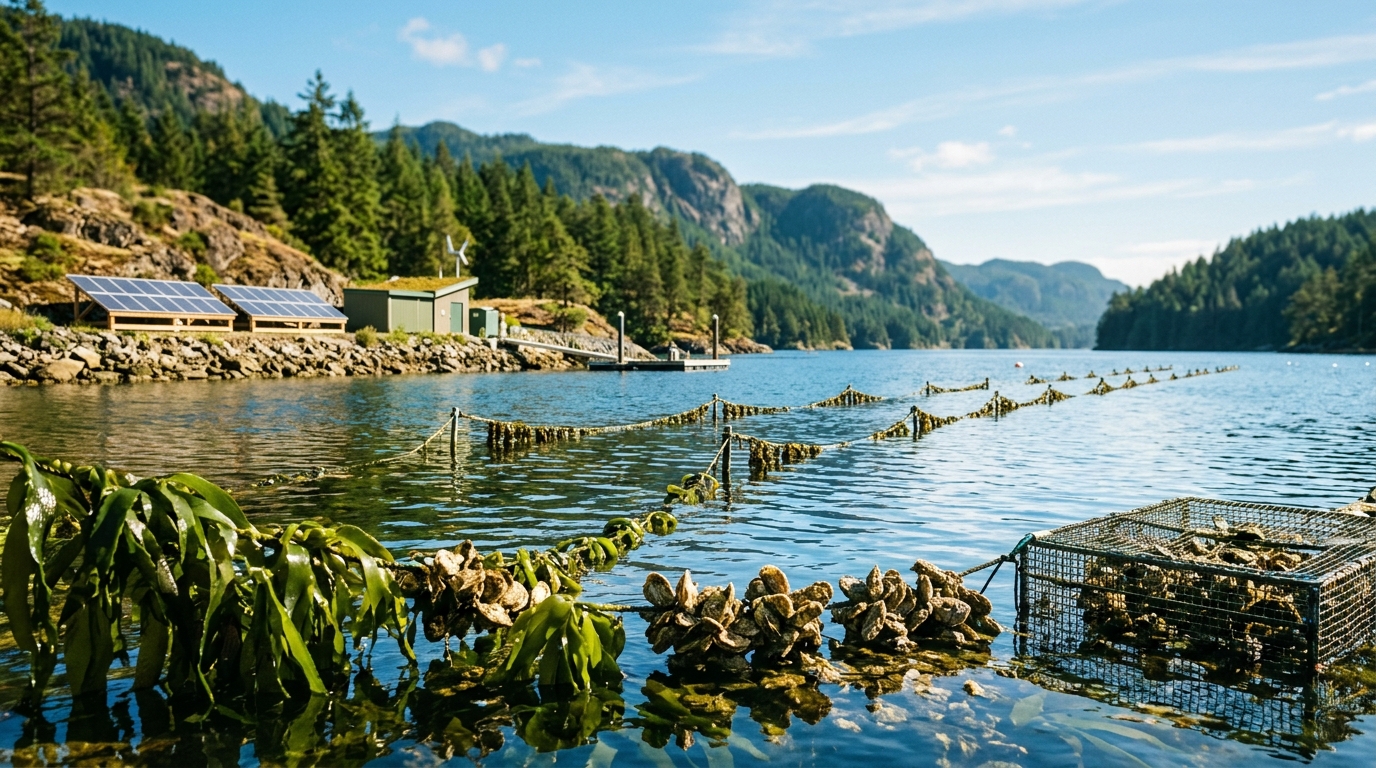
Shellfish, seaweed, and restorative mariculture have emerged as the commercial beneficiaries of that regulatory shift. Fisheries and Oceans Canada licensing data shows a measurable increase in new aquaculture licences issued for shellfish and marine plant operations in BC between 2024 and 2026, as the province accelerates its transition away from open-net finfish tenure. The pipeline of applicants includes a notable proportion of First Nations-led enterprises—a structural shift that reflects both reconciliation policy and the commercial logic of coastal stewardship rights.
The business case rests on three pillars: food production, carbon markets, and federal capital. Each is strengthening independently, creating the conditions for a new asset class.
The Carbon Credit Angle: Potential and Caveats
Blue carbon—the carbon sequestered by coastal and marine ecosystems including kelp forests, seagrass beds, and shellfish reefs—has attracted significant scientific and financial attention. Research compiled by Oceans North and peer-reviewed marine science literature suggest that kelp and seagrass restoration can sequester meaningful volumes of carbon, though the permanence and measurability of that sequestration remain active areas of scientific debate.
That debate is critical for investors. Under Verra's Verified Carbon Standard, blue carbon methodologies for seagrass and tidal wetland restoration are among the more established in the voluntary market. Kelp-specific methodologies are still being developed and validated. This distinction is commercially significant: credits from validated methodologies are eligible for corporate Scope 3 offsetting under most major ESG frameworks, while unvalidated approaches carry reputational and regulatory risk.
Estimated credit values for verified seagrass restoration projects have ranged from approximately $30 to $80 per tonne of CO₂ equivalent on voluntary markets, according to voluntary carbon market data—a range that rewards careful project selection.
First Nations Leadership as a Structural Differentiator
The coastal tenure landscape in BC makes First Nations partnerships not just ethically sound but commercially necessary. Unextinguished Aboriginal title and treaty rights over significant portions of BC's coastline mean that projects without Indigenous co-leadership face material legal and social licence risk.
The Coastal First Nations—Great Bear Initiative has been among the most active voices in restorative mariculture, supporting member nations in developing shellfish and seaweed operations along the central and north coast. The First Nations Fisheries Council of BC has advocated for licensing frameworks that centre Indigenous jurisdiction in aquaculture decision-making—a position that has gained traction with both DFO and the BC Ministry of Agriculture and Food.
For investors, this is a strategic consideration. First Nations-led or co-led ventures carry lower permitting risk, stronger community licence to operate, and, in many cases, access to federal reconciliation funding streams unavailable to purely commercial applicants.
Federal Capital and Early-Stage Growth
The federal Oceans Protection Plan has directed funding toward BC coastal restoration, including mariculture-adjacent initiatives. The BC Ministry of Agriculture and Food has maintained aquaculture sector development programs that include capital support for new entrants in shellfish and marine plant production.
Combined with agri-food venture capital activity tracked by CVCA, the sector is seeing public capital de-risk early-stage positions, which is helping to foster growing interest from the investment community.
Reality Check: A Nascent Sector
The opportunity is genuine, but so is the risk of hype. BC's blue economy sector does not yet have the exit track record, standardised carbon accounting, or deep talent pool that institutional investors typically require before deploying significant capital. BC shellfish aquaculture generates tens of millions in farm-gate value, contributing to a broader seafood sector worth over $1 billion in total wholesale value, but the seaweed and restorative mariculture segments remain small by comparison.
Investors entering now are pricing a regulatory and market transition. The licensing pivot is real, as is the federal support. However, distinguishing between established markets and prospective ones remains the primary work of due diligence.