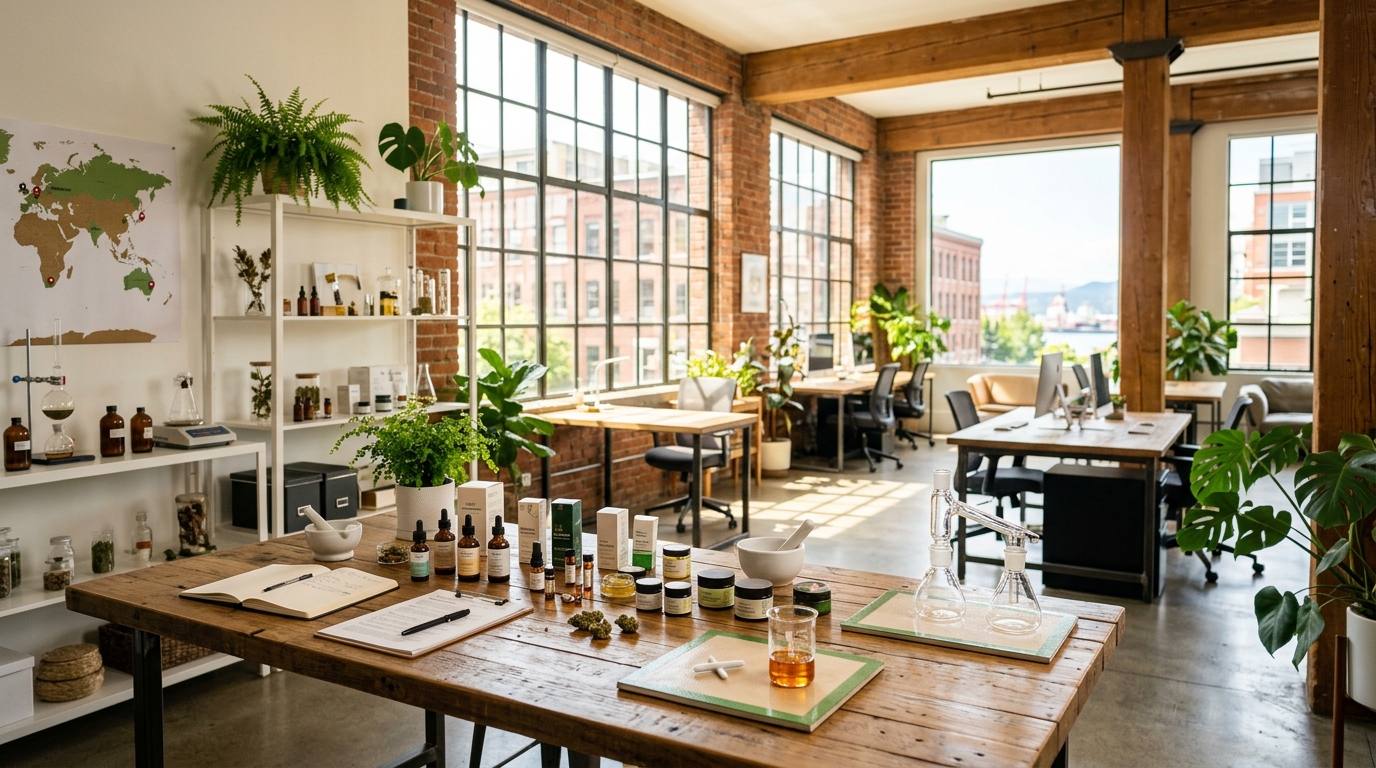
Forget the budtender. The most significant moves in BC’s cannabis sector are now occurring in extraction labs, wellness aisles, and international customs offices.
Nearly eight years after legalization, the recreational retail gold rush has concluded. BC’s retail cannabis licence count has plateaued and contracted, as margin compression—squeezed by provincial markups, excise taxes, and a persistent grey market—made standalone retail economics unsustainable for all but the most efficient operators.
A different story is emerging among BC’s licensed producers (LPs). Over the past two years, many have repositioned, shifting capital and talent away from dried flower and toward derivatives: topicals, functional beverages, high-potency extracts, and wellness-focused softgels. For these survivors, these products are now the core business.
The Margin Math
Dried cannabis flower is a commodity; derivatives are not. A gram of input cannabis that yields modest wholesale returns can generate significantly higher value as a precisely dosed extract, a THC-infused beverage, or a CBD topical marketed alongside skincare products.
The category is expanding. Health Canada’s market data shows derivatives steadily gaining share as Canadian consumer preferences mature, mirroring trends in established US state markets where edibles and extracts represent a significant portion of total sales.
For BC producers, the derivatives pivot also solves a distribution challenge. A wellness topical or functional beverage can be sold in pharmacies, yoga studios, or online health retailers—channels inaccessible to dried flower. This expands the addressable market without requiring a traditional cannabis retail licence.
The Export Equation
The most consequential opportunity lies in international export.
Germany’s partial legalization in April 2024 and its expanded medical cannabis framework opened one of the world’s largest import markets to Canadian producers. Because Germany lacks domestic production at scale, it relies on imports, and Canada’s internationally recognized Good Production Practices standards provide local LPs with a distinct credibility advantage.
Australia’s medical cannabis import market has similarly expanded, with the Australian Office of Drug Control overseeing a framework increasingly receptive to Canadian-origin products.
Health Canada export permit data indicates a growing number of permits issued over the past 12 months, with BC-based producers among the applicants.
The Cannabis Council of Canada has identified international medical markets as a critical growth lever, noting that domestic recreational market economics alone are insufficient to sustain a healthy LP ecosystem.
Strategic Differentiation
Successful companies are prioritizing three core areas:
First, they have invested in extraction and formulation rather than retail footprint, hiring food scientists and pharmacists to drive product development.
Second, they treat regulatory compliance as a competitive advantage. Export markets require rigorous documentation and audit trails. Companies that built quality management systems to pharmaceutical standards were positioned to enter German and Australian markets immediately, while less-compliant operators were excluded.
Third, they have built brands that transcend the "cannabis consumer" label. Products positioned as sleep-support supplements or recovery topicals resonate in international markets where stigma remains a factor for pharmacy buyers.
The Retail Cautionary Tale
The contrast with retail is stark. Operators who focused on dispensary buildouts found themselves competing on location and price in a market where the illicit market continues to undercut legal retail. Retailers who wound down operations in the past 18 months often cited rigid excise tax structures and high provincial wholesale prices as primary pressures.
The Bigger Picture
BC’s cannabis evolution mirrors a pattern seen in other resource-adjacent industries: value-add extraction captures more durable margins than raw commodities. For investors and founders, the signal is clear: the companies worth backing in 2026 are those that can demonstrate unit-cost efficiency, secure export permits, and build brands that appeal to a broad wellness-conscious demographic.
The dispensary era shaped the industry; the CPG era will define it.