The robots are not coming to BC's food processing plants; they are already there. The next minimum wage increase is set to trigger another wave of purchase orders for robotics integrators across the Lower Mainland.
BC's minimum wage sits at $17.85 per hour as of June 2026, with a further increase scheduled for June 2027. For food processing and cold storage operators running three-shift operations in the Fraser Valley—where roughly 30,000 workers are employed in the province's food manufacturing sector—that trajectory is a significant capital budgeting challenge.
The economics have shifted decisively. Industry estimates now place the payback period for robotic pick-and-place systems, automated guided vehicles (AGVs), and vision-based quality inspection lines at 18 to 24 months. This is a sharp compression from the three-to-five-year horizons that caused many processors to hesitate only a few years ago. With a single line worker costing upwards of $45,000 annually in wages and benefits, and a collaborative robot arm installable for under $120,000 with government co-funding, the financial case for automation is increasingly clear.
Co-funding is playing a critical role. Ottawa's Strategic Innovation Fund and BC's Agri-Innovation program have moved aggressively to support food sector automation over the past 18 months, covering a meaningful share of capital costs. For processors who might have deferred a $500,000 project, a 30 to 40 per cent grant contribution can be the difference between a project that proceeds in Q3 and one that remains in a feasibility study.
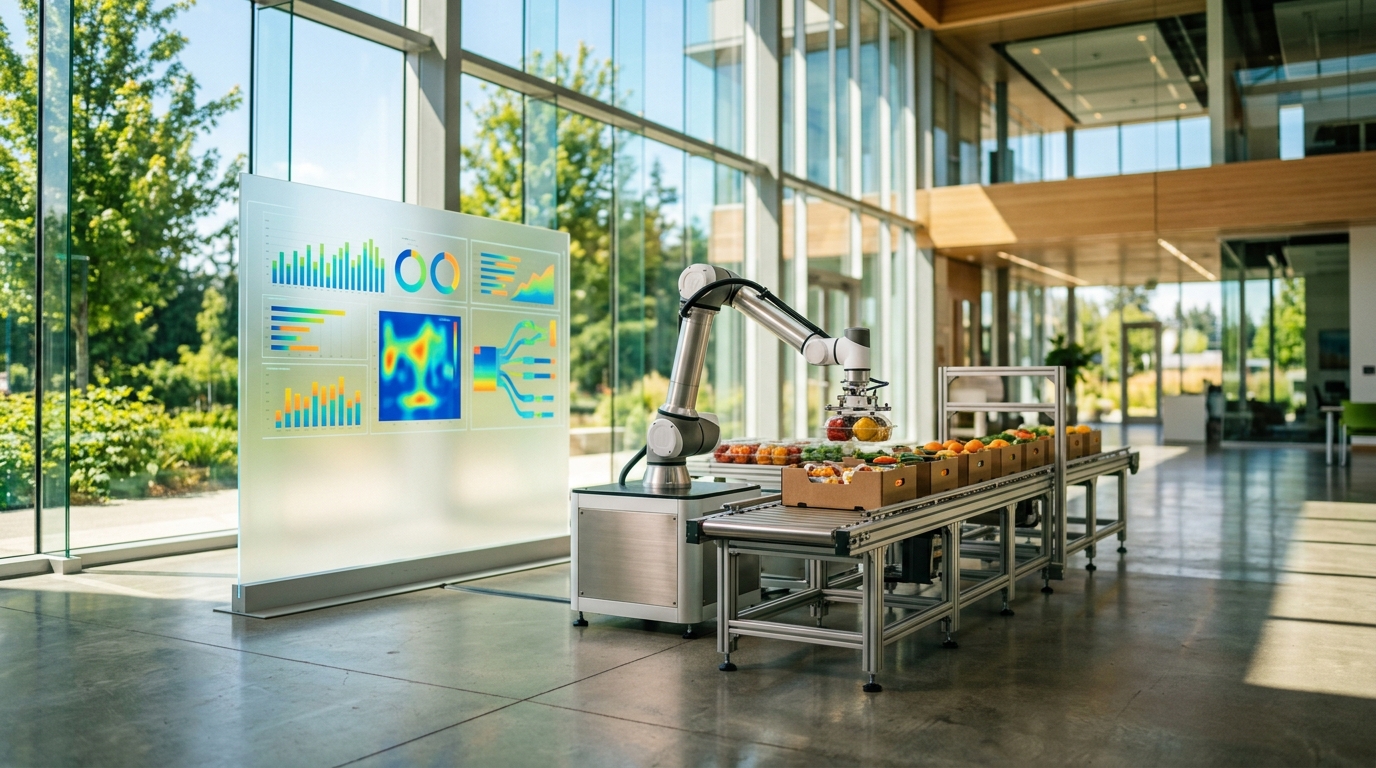
Applications are concentrated in the most labour-intensive nodes of the supply chain. Pick-and-place robotics handle repetitive portioning and packaging, particularly in refrigerated environments where turnover is high. AGVs are replacing forklift operators in cold storage warehouses across Abbotsford and Chilliwack. Vision-based inspection systems, trained on thousands of images to identify defects, are outperforming human sorters on consistency while removing workers from physically demanding, chronically understaffed roles.
The labour availability problem is structural. BC manufacturing employment data shows persistent vacancy rates in food processing that remain elevated compared to other tradeable sectors, driven by competition from construction, logistics, and service industries. Processors who waited for labour markets to loosen are still waiting.
This creates an opportunity for the broader BC tech ecosystem. Automate Canada and Food and Beverage BC have identified food processing as one of the fastest-growing verticals for robotics integration. Vancouver-based systems integrators—firms that design, install, and commission automation lines—are reporting inquiry volumes from food sector clients that would have seemed implausible three years ago. These integrators capture value regardless of the specific robot brand deployed.
Food processing is typically a lagging adopter of automation due to thin margins, high product variability, and complex food safety regulations. When laggards accelerate, it signals that the economics have become undeniable. What is happening on the floors of Fraser Valley processing plants today is a preview of the shift likely to occur in plastics, metal fabrication, and light assembly within the next 24 to 36 months.
With the June 2027 wage increase less than a year away, the window for processors to complete installation and capture grant funding is narrowing. The combination of rising labour costs and finite grant deadlines is concentrating minds across the industry.