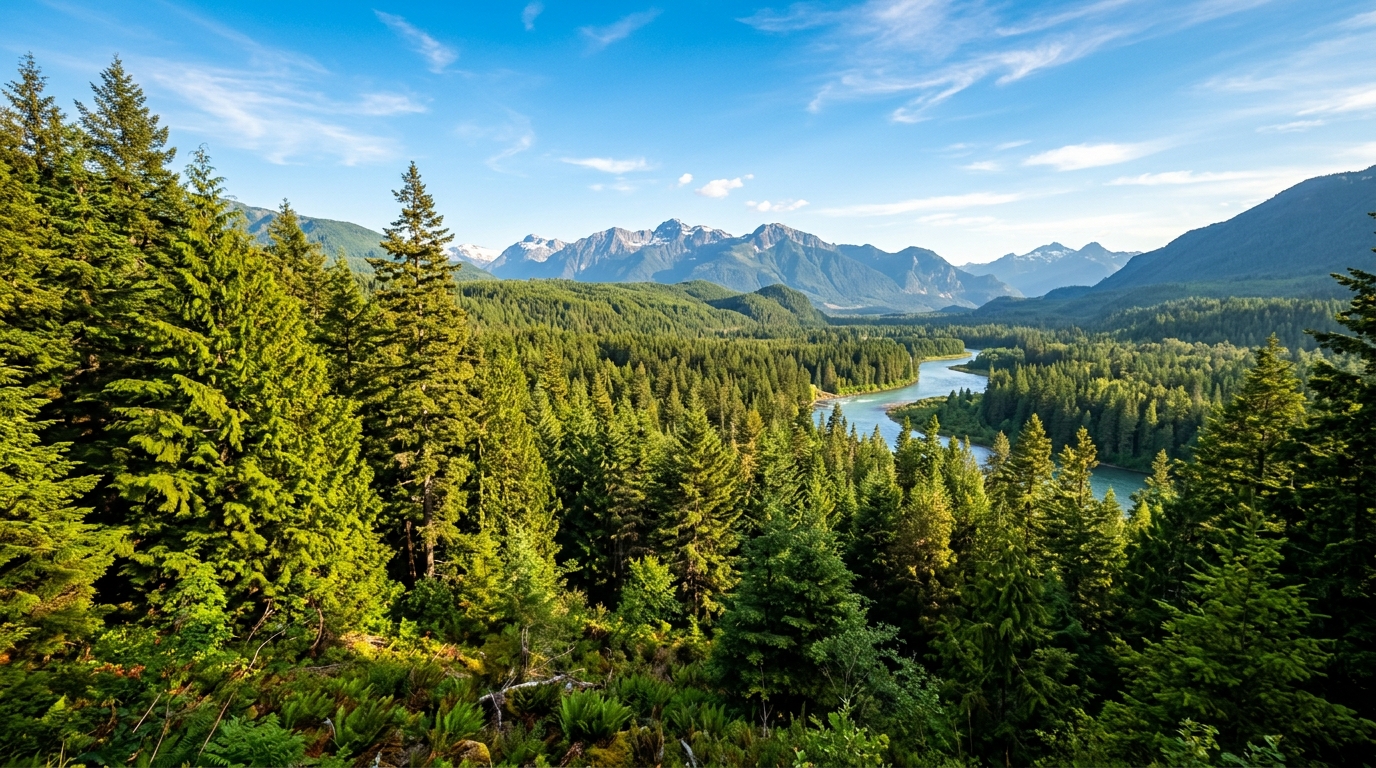
Federal carbon policy in Canada has spent much of 2026 in a state of suspended animation, leaving BC's industrial emitters uncertain about compliance costs. The voluntary carbon market, however, does not share Ottawa's hesitation. A growing cohort of Interior and Coast forestry operators—including several First Nations-owned timber enterprises—are completing verified carbon projects and finding that corporate net-zero buyers remain active.
The economics are compelling. High-integrity forestry credits on voluntary markets traded between $15 and $50 USD per tonne in early 2026, according to S&P Global Commodity Insights. This price range reflects the premium buyers assign to verified projects with documented co-benefits, such as biodiversity protection and Indigenous community engagement. For a 50,000-tonne annual issuance, this represents an estimated annual revenue range of roughly $1 million to $3.4 million CAD, depending on the specific credit price and current exchange rates.
BC’s forest carbon offset programme provides a stable foundation for this activity. The programme has issued more than 30 million verified carbon units since inception, according to registry data, establishing British Columbia as one of North America’s most mature jurisdictions for forest carbon accounting. The provincial framework predates current federal uncertainty by more than a decade, meaning the necessary methodological infrastructure—including auditors, verifiers, and registry protocols—is already in place.
The dominant verification standard for BC projects is the Verra Verified Carbon Standard (VCS), which governs improved forest management (IFM) methodology. Under VCS, operators must demonstrate that their practices sequester more carbon than a business-as-usual harvest projection. The process is rigorous: IFM projects in BC typically require three to five years from inception to first credit issuance, meaning operators who began development in 2021 or 2022 are only now reaching the market.
This timing creates a first-mover advantage. Buyers—including multinational corporations with science-based targets and financial institutions managing Scope 3 exposure—are increasingly selective. Credits with verified histories, transparent co-benefit reporting, and Indigenous rights documentation command premiums over anonymous registry units.
First Nations-owned forestry enterprises are well-positioned in this market. The First Nations Forestry Council of BC has documented growing interest among member nations in forest carbon as a revenue stream that complements timber harvesting. For nations with long-term tenure, IFM projects can generate revenue from areas where commercial harvest is constrained by terrain or conservation objectives, effectively monetising forest values that conventional timber economics often overlook.
Navigating market constraints
The opportunity carries structural risks. High-profile criticism of forestry offset methodologies has prompted Verra to tighten its IFM methodology requirements, raising the bar for new registrations. Furthermore, a growing share of corporate purchasers now require credits to meet the Integrity Council for the Voluntary Carbon Market's Core Carbon Principles. Operators should treat alignment with these principles as a commercial requirement.
Finally, carbon revenue is not a substitute for a viable timber business. Credits are priced on sequestration, not operational costs, and the economics only hold if the underlying land management is sound. For operators already running profitable timber businesses, however, voluntary carbon credits represent incremental revenue from an existing asset, denominated in USD, and independent of federal policy shifts.