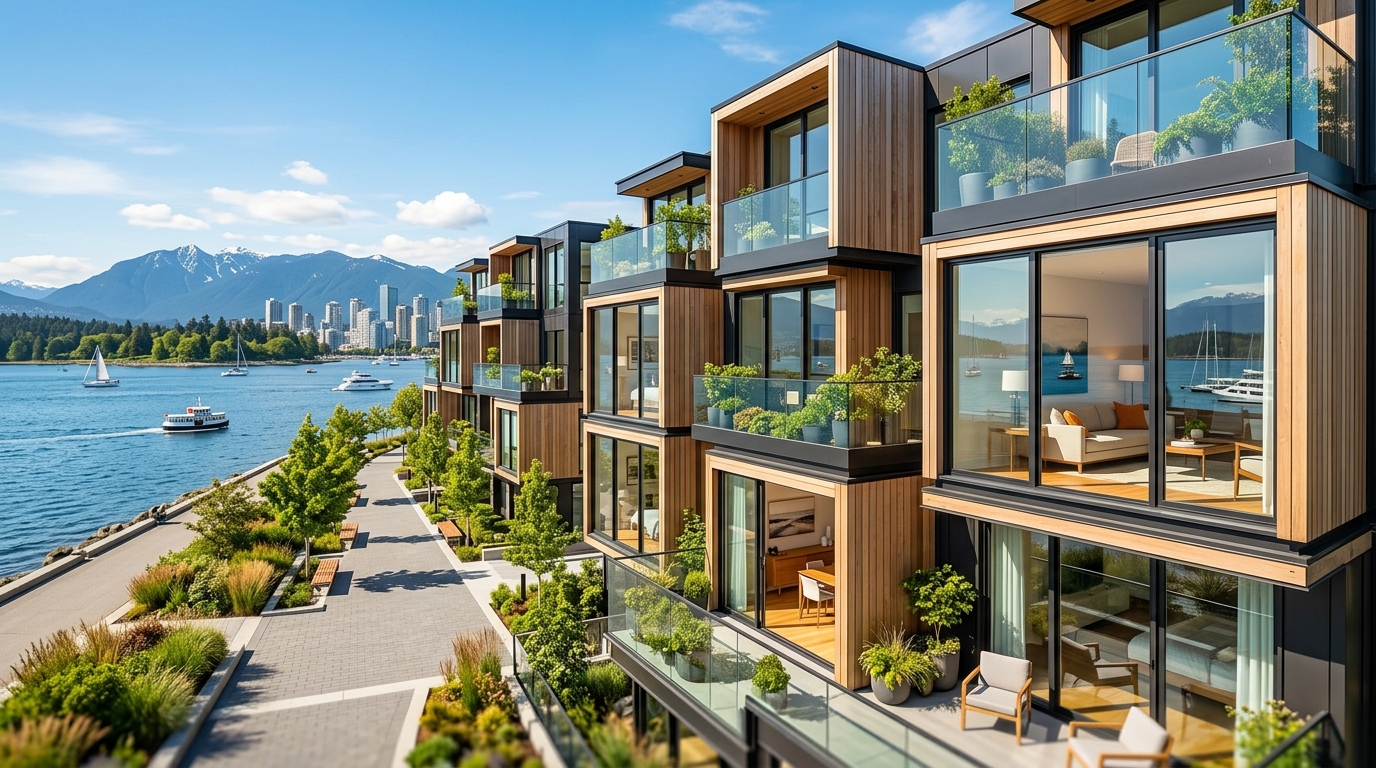
On a production floor in the Okanagan, wall panels, bathroom pods, and pre-wired electrical chases move down an assembly line. The product is a complete residential unit, ready to crane onto a foundation within days of delivery. What has changed in 2026 is not the technology, but the scale, the contract volume, and the growing list of developers who are no longer asking whether modular works, but how quickly they can secure a production slot.
BC's modular and factory-built housing sector has crossed an inflection point. A cluster of Okanagan and Lower Mainland fabricators has accumulated enough institutional contracts—anchored by BC Housing procurement and municipal affordable housing programs—to sustain industrial-scale production. Two firms are now delivering units at cost structures 20–25% below conventional stick-frame. A third is in late-stage talks with a major pension-fund developer.
For a development sector burdened by record labour costs and a rezoning backlog that stretches to 48 months in Metro Vancouver, that cost gap is significant.
Why Now?
The conditions making modular compelling in 2026 have compounded over time. BuildForce Canada data shows Metro Vancouver construction labour costs have risen sharply, driven by skilled trades shortages. Meanwhile, the provincial rezoning system creates significant pre-development costs.
Modular compresses the construction timeline, typically by 30–50% compared to conventional builds, according to CMHC Housing Supply Challenge program data. This compression improves carrying costs and revenue recognition.
BC Housing has been delivering modular units across municipal programs since 2018. This early procurement provided volume certainty, allowing firms to invest in factory infrastructure and refine supply chains.
Who’s Building It
Firms operating at scale are concentrated in the Okanagan and the Lower Mainland. Several are members of the Canadian Manufactured Housing Institute. Mass-timber fabricators are also entering the space; BC Wood WORKS! and FPInnovations have documented hybrid projects that combine mass-timber structural systems with modular volumetric units.
What Developers Need to Know
The Urban Development Institute Pacific has noted that while developers recognize modular's theoretical advantages, questions remain regarding procurement and design integration. Successful projects require site approval before factory booking, modular-compatible architectural drawings from the outset, and early engagement with municipal building departments.
Transportation logistics also require careful planning. Units must be modelled for transport on wide-load permits during the feasibility stage.
CMHC's Housing Supply Challenge program has funded several BC recipients working on modular integration, providing practical resources for developers.
The Bottom Line
Factory-built housing is becoming a mainstream delivery mechanism in BC. The cost advantage is established, and fabrication capacity is growing. For developers with ready sites, the focus is now on securing production slots. Key developments to watch include upcoming BC Housing procurement rounds and municipal efforts to create modular-specific approval streams.



