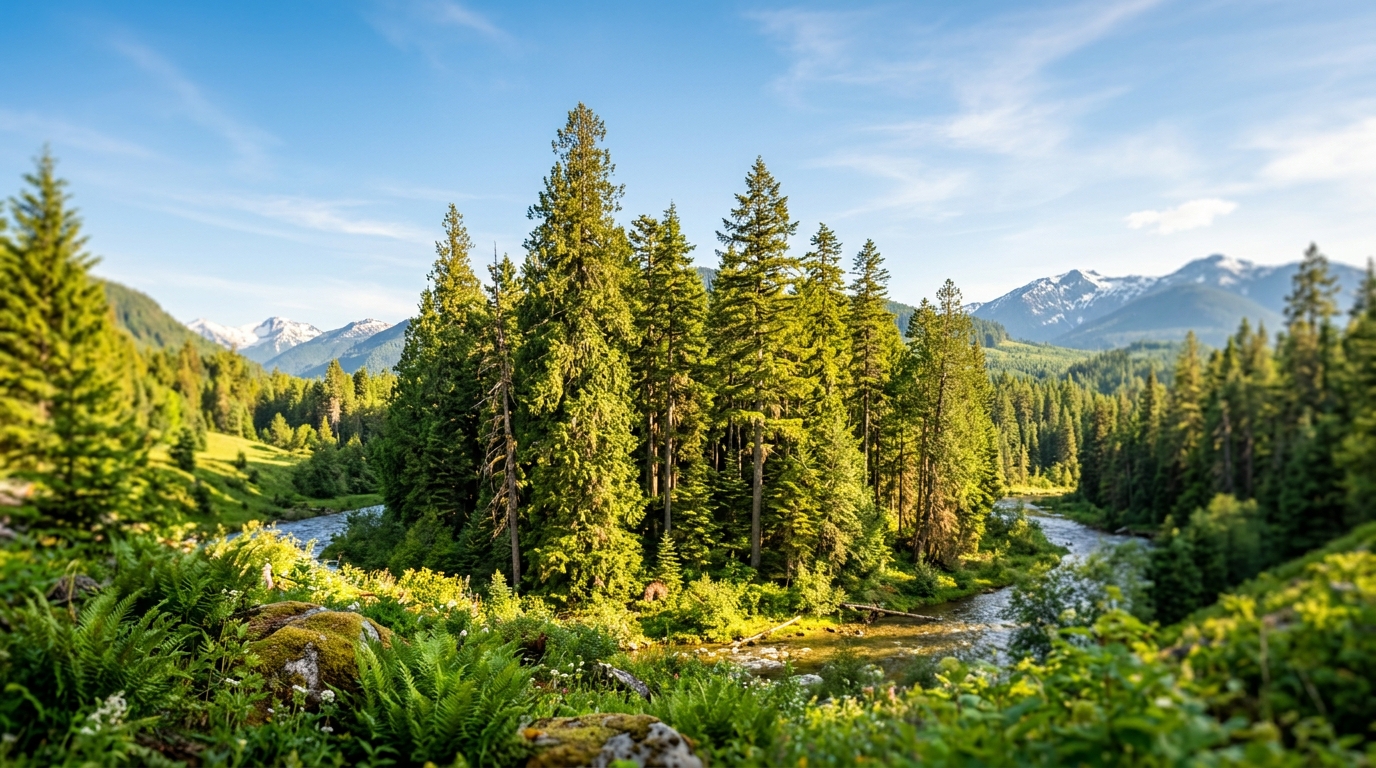
The numbers that matter most to Interior mill operators are no longer lumber prices or interest rates. They are the annual allowable cut figures flowing from BC Timber Sales. In regions where old-growth deferral commitments have taken hold, those figures are shifting. The provincial government’s 2021 pledge to defer logging across 2.6 million hectares of at-risk old-growth forest is now an operational reality. With a 2026 review milestone approaching, the enforcement posture has tightened, and the structural timber supply reductions that analysts once warned about have become the baseline for mill acquisition economics and community investment risk profiles.
This is not a story about the end of logging. It is a story about the permanent reallocation of volume and the emergence of new operators, tenure holders, and investors filling the gap.
The Supply Reality
Timber supply reductions in deferral-affected regions of the BC Interior have been material and, in several timber supply areas, ongoing since 2022. The BC Ministry of Forests' timber supply reviews document the mechanism: when old-growth stands are removed from the harvestable landbase, the short-term allowable cut falls. The mid-term supply profile shifts toward second-growth timber, which is younger, smaller in diameter, and less suited to commodity dimension lumber production.
For mill operators with capital infrastructure sized to old-growth log profiles, this presents an engineering and economic challenge. Sawmill lines optimized for large-diameter logs run inefficiently on second-growth stems. Operators who recognized this shift early have aggressively pursued retrofits; those who have not face a narrowing window.
The Forest Products Association of Canada maintains that the sector's long-term competitiveness depends on accelerating the transition to second-growth and value-added processing. This shift requires significant capital investment but offers a structural advantage for operators who complete the transition ahead of their peers.
The First Nations Tenure Shift
Parallel to the supply reduction is a tenure shift with significant investment implications. First Nations in BC now hold or are actively negotiating a significant share of the province's commercial forest tenures. This transition is accelerated by the province's implementation of the Declaration on the Rights of Indigenous Peoples Act and the old-growth deferral framework, which incorporates First Nations consent as a condition of deferral decisions.
This represents a reordering of timber supply control, with direct consequences for how forest companies structure partnerships, access fibre, and price acquisition risk. The Ecotrust Canada analysis of First Nations tenure arrangements documents a landscape where Nations are increasingly moving beyond tenure holding into active forest management and value-added processing, both through joint ventures and as independent economic actors.
For investors, the implication is clear: forest assets in BC without a clear First Nations partnership structure carry a different risk profile than they did five years ago. The focus is now on creating durable, equitable arrangements that avoid the legal or reputational challenges associated with purely extractive models.
Carbon and the Value-Added Pivot
Two opportunity streams are drawing investor attention. The first is carbon sequestration. Deferred old-growth forests accumulate carbon, and under BC's carbon offset protocols, that sequestration can be monetized. While the mechanics—including tenure rights, additionality requirements, and verification costs—require careful structuring, the revenue potential for First Nations and tenure holders with large deferred landbases is increasingly bankable.
The second stream is value-added wood processing. As the Truck Loggers Association of BC has noted, the transition toward engineered wood products, cross-laminated timber, and specialty wood products is a market imperative. BC's mass timber sector has demonstrated that second-growth fibre can command premium margins when processed into higher-order products. Interior mill towns investing in that capacity are building a competitive position that commodity-focused peers will struggle to replicate.
The 2026 Milestone and What Comes Next
The approaching 2026 review of BC's old-growth deferral commitments will sharpen existing structural questions. The review is expected to assess which deferred areas transition to permanent protection, which return to a managed harvesting regime, and the net effect on provincial timber supply over the next decade. The Ministry of Forests has indicated that First Nations consent will remain central to those determinations.
For investors and operators, the strategic move is to act rather than wait for the review's conclusions. The direction of old-growth policy has been consistent since 2021. Companies that have positioned themselves in value-added processing, First Nations partnerships, and carbon project development are building optionality. Those waiting for absolute policy certainty may find that the most attractive assets have already changed hands.
The Interior mill towns most exposed to this transition are not without agency. Communities and operators treating the timber supply reallocation as a design constraint are generating the most compelling investment cases in the sector today.