The last FIFA match at BC Place kicks off on July 2, 2026. The infrastructure investment that made it possible does not leave with the tournament. That is the story operators, event producers, and venue technology vendors need to understand.
The publicly disclosed capital program tied to BC Place's FIFA readiness includes an estimated $60 million allocated specifically for technology upgrades, covering three core layers: high-density wireless connectivity, an expanded point-of-sale network, and new crowd-management and analytics systems. Each of these investments has a useful life measured in years. FIFA 2026 is the catalyst; the resulting competitive advantage belongs to Vancouver.
Venue technology infrastructure is no longer a back-of-house consideration; it is a front-line factor in how major event rights holders choose host cities. The International Association of Venue Managers has documented a clear shift: rights holders for tier-one sporting and entertainment events now conduct technology audits alongside traditional capacity assessments. A stadium that cannot guarantee per-seat bandwidth, real-time transaction processing, or dynamic crowd flow data risks losing bids. BC Place is no longer in that category.
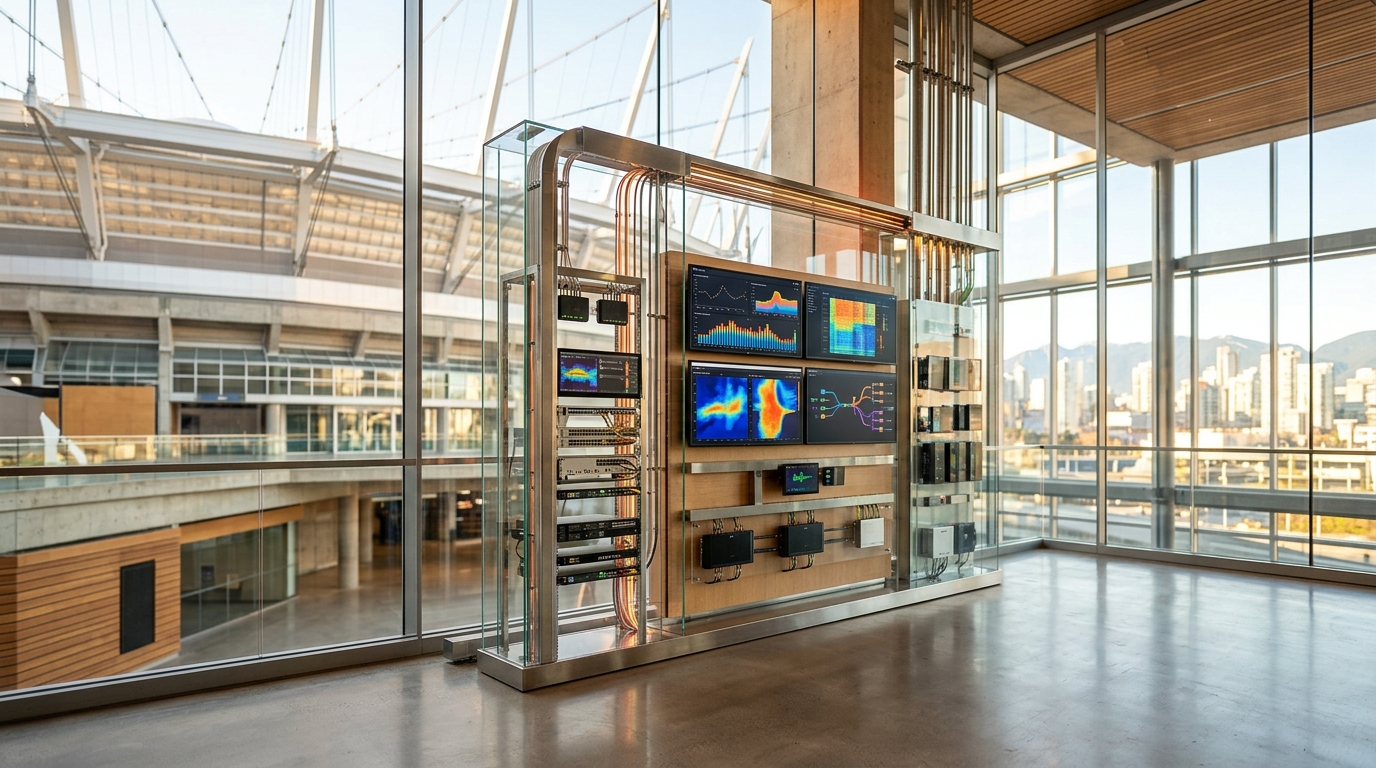
The connectivity piece is the foundation. BC Place's pre-upgrade wireless infrastructure was designed for a different era of device density. The FIFA-standard rebuild assumes multiple connected devices per seat, broadcast-quality uplink capacity, and redundant backbone architecture. The distributed antenna system installed as part of the upgrade is a permanent fixture. Every concert, Grey Cup, and NBA exhibition game that follows FIFA inherits this baseline.
Point-of-sale expansion changes the economics for operators. The upgraded network supports mobile terminals throughout the bowl, cashless-only transaction flows, and integration with event management systems. According to PavCo's FIFA preparation disclosures, the expanded network increases transaction points per event. Concession revenue per head correlates with transaction friction; fewer queues and shorter waits facilitate more impulse purchases. For promoters negotiating revenue-share arrangements, a higher per-cap concession number alters the value proposition of the venue.
The crowd analytics layer is the least visible but most durable upgrade. New sensor and camera infrastructure provides real-time visibility into crowd density, movement patterns, and bottleneck formation. While the immediate application is safety, the long-term benefit is operational efficiency: knowing where fans congregate and how entry and exit flows behave allows operators to staff smarter and reduce friction.
Toronto's investment cycle around the 2015 Pan Am Games offers a comparable case. Venues upgraded for Pan Am reported measurable gains in event-day revenue per attendee in the years following the Games, partly attributable to improved operational data. Vancouver's post-2010 Olympics experience was dominated by the $563-million roof replacement; the current FIFA cycle is leaner and more targeted.
The province's major events strategy ties post-FIFA bid activity to these upgraded capabilities. The argument to international rights holders is that BC Place now meets or exceeds the technology specifications of peer venues in Seattle, Los Angeles, and Toronto.
Esports is a key target. Major esports tournament operators require guaranteed low-latency connectivity and broadcast infrastructure, which map onto FIFA's technical demands. This positions BC Place to capture new revenue streams.
The caveat remains that infrastructure is necessary but not sufficient. Industry data shows that returns depend on operational capability—staffing, processes, and vendor relationships. BC Place's technology is only as effective as PavCo's ability to operate it at scale.
However, the infrastructure foundation is set. On July 3, 2026, BC Place will be a materially different building. The $60 million remains in the walls, the ceiling, and the concourse floors, shaping the economics of every event that follows.