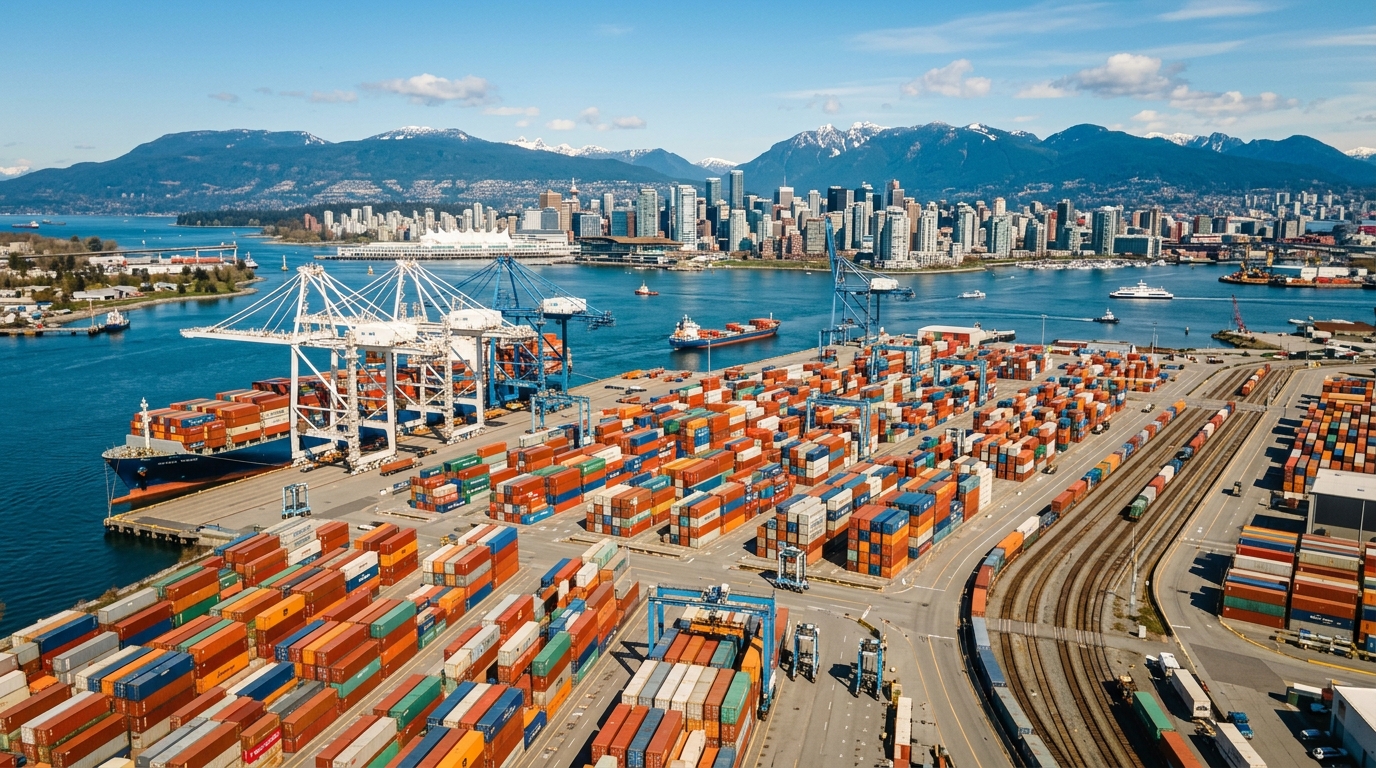
The last time Canada's west coast ports went dark, the bill came to roughly $10 billion in economic losses—a figure that still haunts the spreadsheets of every importer, distributor, and manufacturer dependent on the Port of Vancouver. With the ILWU Canada collective agreement set to expire on March 31, 2027, industry watchers have identified the summer of 2026 as a critical monitoring period.
Operators are not waiting for picket lines to appear. They are building inventory buffers, locking in alternative routing through Prince Rupert and U.S. Pacific Northwest gateways, and stress-testing supply chains while the cranes are still running.
What the contract clock means
The ILWU Canada collective agreement is the foundational labour contract for Canada's largest port. The Vancouver Fraser Port Authority handles more than $300 billion in trade annually, serving as the primary gateway for Canadian imports of consumer goods, auto parts, electronics, and food products.
When that gateway seizes, the effects are immediate. Retail shelves thin, manufacturing lines slow, and food distributors scramble for expensive airfreight. The Conference Board of Canada's estimate of $10 billion in economic damage from the 2023 disruption captured only the measurable portion of the harm; the reputational cost to Canadian supply chain reliability remains difficult to quantify.
What the prepared operators are doing
Across Metro Vancouver's import-dependent sectors—retail, food distribution, and light manufacturing—a pattern is emerging. The first move is inventory pre-positioning: pulling forward orders that would normally ship in late summer or autumn, accepting the carrying cost of additional warehouse space in exchange for certainty. In Metro Vancouver's tight industrial real estate market, this is a significant expense, but operators view the cost of buffer stock as predictable compared to the volatility of a potential port shutdown.
The second move is dual-routing contingency planning. The Port of Prince Rupert has emerged as a primary Canadian alternative, with CN Rail providing direct inland connections. Some importers are also re-examining U.S. Pacific Northwest ports—Seattle, Tacoma, and Portland—as overflow options, though cross-border logistics add complexity.
The third move is contractual: building force majeure and labour disruption clauses into supplier agreements now, while counterparties remain open to negotiation.
The cost of preparation
Pre-positioning two months of additional inventory typically costs between two and four per cent of the inventory's value in carrying, warehousing, and financing. A two-week supply chain shutdown, by contrast, can cost a mid-sized importer far more in lost sales and emergency logistics.
The Canadian Chamber of Commerce has noted the growing sophistication of Canadian businesses in supply chain risk management, though surveys suggest smaller operators often wait until a disruption is underway to activate contingency plans.
What this means for Vancouver
BC's economy is structurally exposed to port disruption. The province's geography—a Pacific gateway with limited overland import alternatives—means that a work stoppage at Vancouver often delays or eliminates cargo rather than simply redirecting it. The Retail Council of Canada has flagged port labour stability as a top operational concern for BC retailers heading into the second half of 2026.
Labour negotiations between ILWU Canada and the BC Maritime Employers Association are historically complex. Smart operators are not betting their third quarter on a smooth negotiation; they are building the resilience to absorb one that is not.



