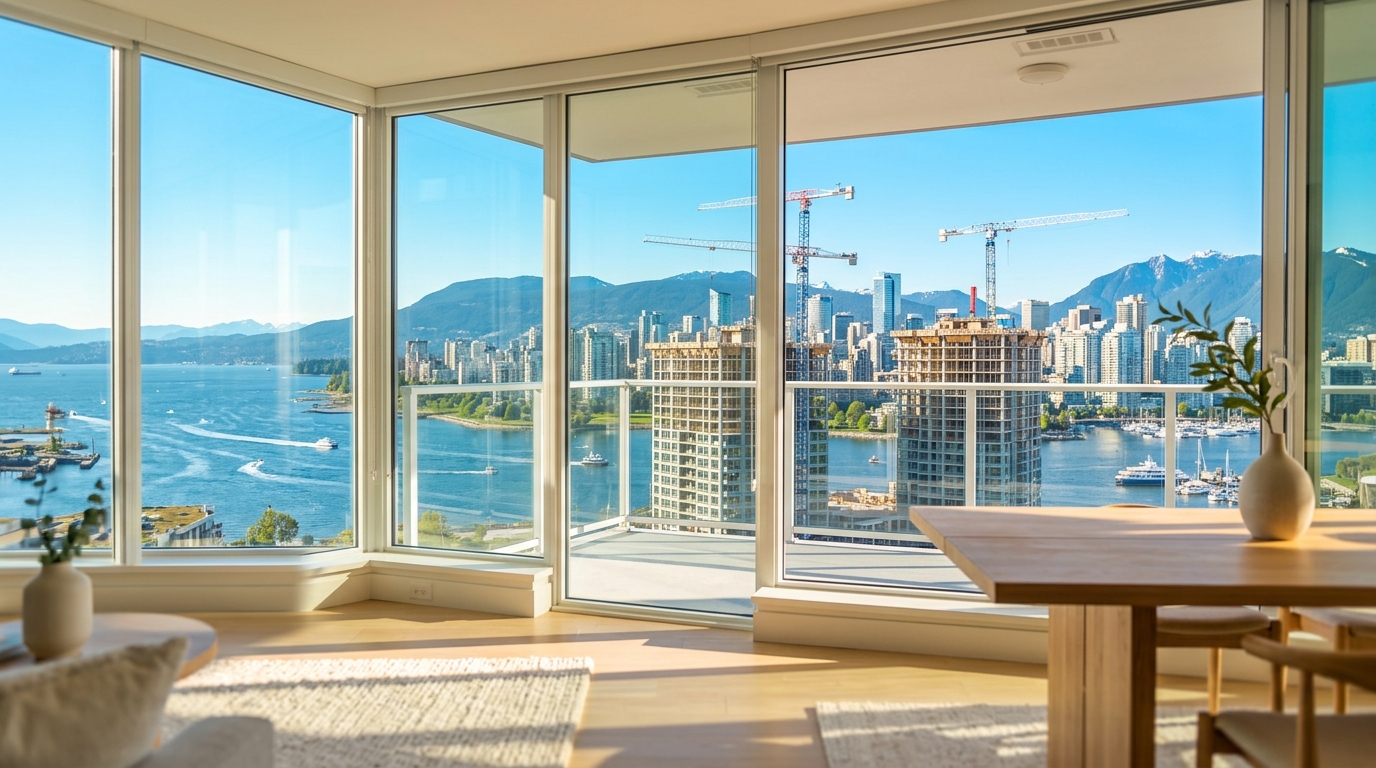
Walk the arterials of Burnaby’s Brentwood corridor or Coquitlam’s Burquitlam neighbourhood today and cranes still dominate the skyline. But developers report a quieter story: the next wave of purpose-built rental—the wood-frame, mid-density buildings expected to follow—is stalling before breaking ground.
Metro Vancouver’s purpose-built rental starts hit a record high in 2024, driven by federal financing incentives, a hungry lending environment, and the federal government's MLI Select program, which has channelled more than $20 billion in insured financing into purpose-built rental nationally since its 2022 launch. That momentum carried into early 2025. Now, industry data points to a measurable cooling in new project launches—concentrated in the inner-suburb, wood-frame segment essential to housing affordability.
The timing is critical. According to the January 2026 release of the CMHC’s fall 2025 rental market survey, Metro Vancouver’s vacancy rate sits at 0.9%—effectively full occupancy. Renters are already absorbing rent increases that outpace wage growth. If this contraction persists through 2026 and 2027, the resulting delivery gap between 2028 and 2030 will be structural, not cyclical.
Why the Pipeline Is Cooling
Three forces are slowing new project launches. First, construction costs across BC have risen sharply, compressing the pro forma margins lenders use to assess viability. Hard costs for wood-frame mid-rise projects—the six-storey product that pencils most readily in Burnaby, Coquitlam, and Surrey—have climbed to levels where projects that cleared underwriting in 2022 or 2023 would not qualify today without higher rent assumptions.
Second, lender conservatism has increased. While MLI Select offers favourable debt-coverage ratios and extended amortisation periods, conventional construction lenders have tightened criteria for deals outside the program. Equity requirements have risen, and the window between construction financing and take-out has become a point of negotiation.
Third, the development application backlog at the municipal level remains a significant hurdle. Burnaby, Coquitlam, and Surrey have seen processing timelines lengthen as planning departments manage the volume from the 2023–2024 surge. Longer timelines increase carrying costs, which further strain project viability. For smaller developers, this combination is enough to pause or abandon projects.
The 2028–2030 Gap
Purpose-built rental has a long gestation. A typical mid-density wood-frame project in the inner suburbs takes three to four years from application to occupancy. Projects not launched in 2026 will not deliver in 2029. This arithmetic is alarming given a 0.9% vacancy rate and a regional population that continues to grow through immigration and interprovincial migration.
The consequences are tangible. Tighter vacancy drives higher market rents, making it increasingly difficult for the workforce—nurses, tradespeople, hospitality staff, and early-career tech employees—to remain in the region. Employers who already cite housing costs as a recruitment barrier will face further challenges.
BC Housing’s rental starts tracking data and the Urban Development Institute’s Pacific Region pipeline reports serve as key indicators. A sustained decline in new application volumes through mid-2026 would confirm that the delivery gap is a structural problem requiring a policy response.
The Investor Signal
For investors holding stabilised rental assets in Metro Vancouver, this contraction may support yields. When new supply slows while demand remains constant, rent growth becomes more durable. Capitalisation rates for well-located, stabilised assets have compressed to reflect this scarcity; a prolonged supply drought would likely sustain that compression.
A potential opportunity exists in projects that are fully entitled but stalled—where developers cannot close construction financing. Patient capital with the balance sheet to bridge that gap, or to acquire entitled sites at a discount, is positioned to capture rent growth in the 2028–2030 cycle from a low-basis entry point.
The Bottom Line
Metro Vancouver’s rental market entered 2026 with near-zero vacancy and a pipeline that was, until recently, a source of optimism. That pipeline is now contracting due to cost pressures, lender caution, and municipal delays. The resulting supply gap will arrive in 2028, manifesting as higher rents and a strained labour market. Policy levers—including accelerated approvals, expanded MLI Select access, and cost-reduction incentives—are available to address these pressures.
What to watch: CMHC’s mid-year housing starts release for Metro Vancouver; the Urban Development Institute’s next member survey on application pipeline volumes; and federal or provincial announcements regarding MLI Select program adjustments.



