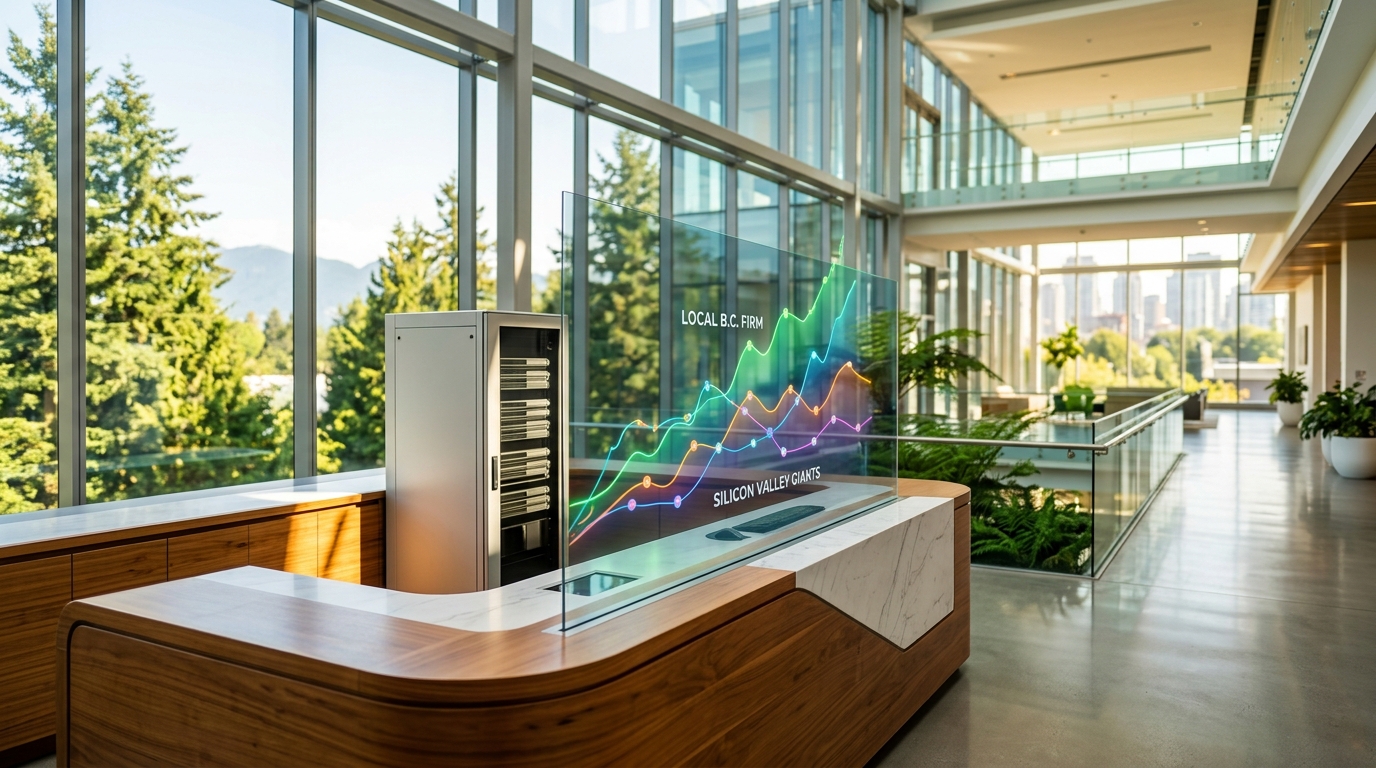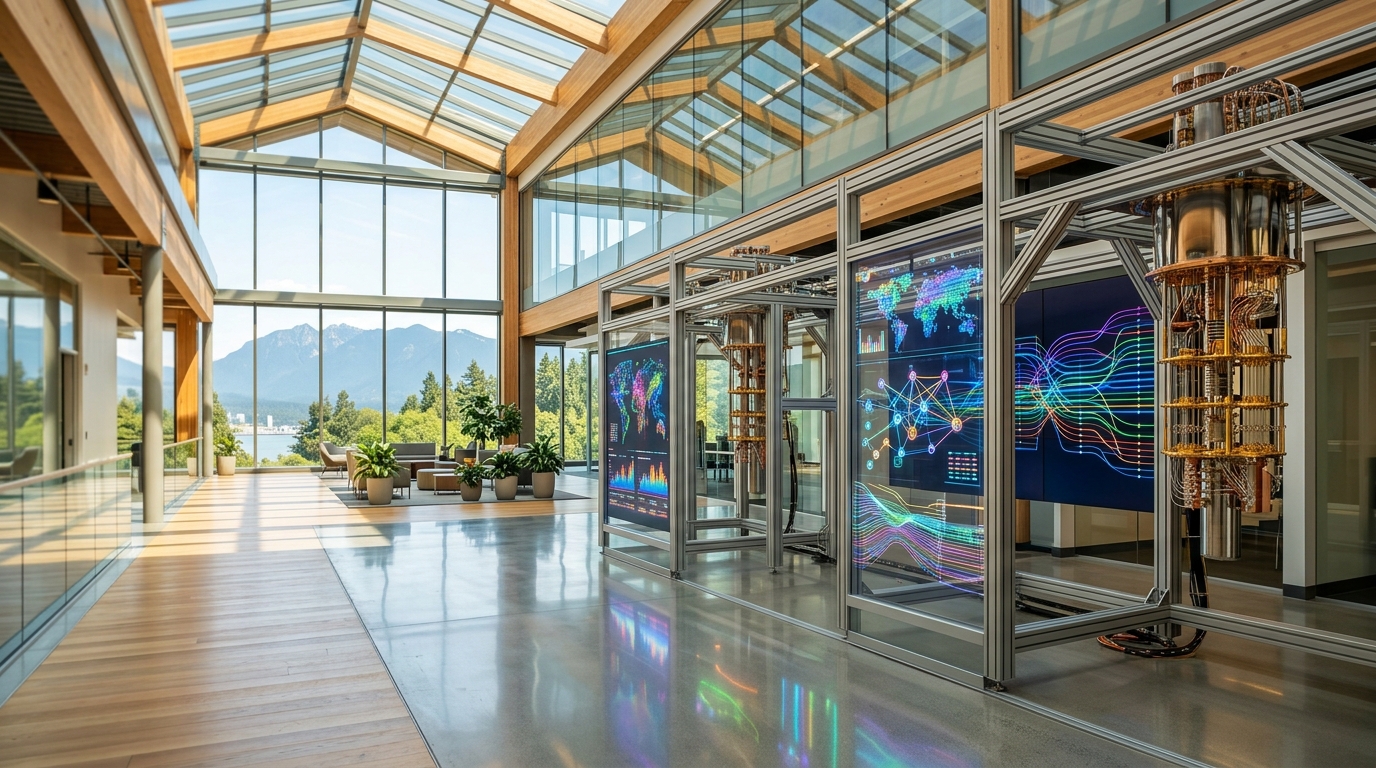
Forget the hype cycle. The most consequential development in Vancouver’s tech ecosystem isn't another AI wrapper startup; it is a quiet concentration of quantum computing talent and infrastructure, driven in part by tightening US export controls.
US export controls on quantum hardware and cryptographic technologies have created an unintended advantage for Canadian operators. Engineers and researchers who might otherwise have remained in California or Massachusetts are finding Vancouver’s proximity, stable immigration pathways, and world-class research institutions increasingly attractive. The talent is arriving; the question is whether local operators are paying attention.
The cluster anchoring this corridor is substantial. D-Wave Quantum, headquartered in Burnaby, is the only publicly traded pure-play quantum computing company in Canada, listed on the NYSE under the ticker QBTS. 1QBit, the Vancouver-based quantum software firm, has spent a decade building industry-specific applications for finance, materials science, and life sciences. Layered beneath them is significant academic infrastructure: UBC's Stewart Blusson Quantum Matter Institute and SFU's Quantum Algorithms Institute represent a depth of foundational research that few cities can match.
The federal government has taken note. Budget 2021 committed $360 million to Canada's National Quantum Strategy, with the National Research Council (NRC) administering a significant share through its infrastructure programs. The NRC's Industrial Research Assistance Program includes a quantum-specific stream that BC companies have been utilizing. Federal investment is flowing into the corridor, and the Waterloo cluster—long Canada's dominant quantum geography—now has a serious rival on the Pacific coast.
Vancouver sits at the intersection of Pacific Rim capital flows, a permissive immigration environment for specialized talent, and a post-secondary system producing quantum-trained graduates. While Toronto leads in finance and Waterloo in legacy infrastructure, Vancouver offers a unique combination of a talent pipeline, a Pacific gateway, and an increasing number of companies focused on commercialization.
For operators not building quantum hardware, the near-term commercial opportunity lies in the software and tooling layer: optimization algorithms, quantum-inspired solvers, and hybrid classical-quantum workflows that run on existing cloud infrastructure. These tools are available today, and Metro Vancouver hosts more companies building and deploying them than almost anywhere outside a few select US cities.
Consider the sector-specific applications. In logistics, quantum-inspired optimization can tackle route and warehouse problems at a scale and speed that classical solvers struggle to match; D-Wave has published case studies on these applications. In pharmaceutical research, quantum chemistry simulations are beginning to accelerate molecular modelling. In financial services, portfolio optimization and risk modelling are near-term targets, with 1QBit having developed financial-sector tools for over a decade. These applications do not require on-premises quantum computers; they require a software contract and a commitment to pilot programs.
The early-mover window is narrowing. While CVCA deal data shows quantum-adjacent investment in BC remains modest compared to AI, this gap is unlikely to persist. Companies building optimization tooling today are establishing the customer relationships, proprietary training data, and integration depth that latecomers will struggle to replicate.
The talent arbitrage angle is significant. While export controls are a blunt instrument, the pool of quantum-trained engineers available to Vancouver employers has grown over the past 18 months, and the compensation premium required to attract them remains lower than in comparable US markets. For a startup or mid-size operator, that gap is a distinct advantage.
To capitalize on this, operators should map their highest-complexity optimization problems—supply chain, scheduling, pricing, or molecular simulation—and evaluate whether quantum-inspired solvers can address them. Second, engage with 1QBit or university commercialization offices at UBC and SFU before looking to US vendors. Finally, monitor the NRC IRAP quantum stream, as subsidized pilot funding for Canadian companies remains an underutilized resource.
Vancouver has a history of building world-class technical ecosystems only to see the value captured elsewhere. The quantum corridor offers a chance to break that pattern, provided operators engage before institutional money arrives and prices them out. The hardware race may be a decade from resolution, but the software opportunity is open now.