The voluntary carbon market has spent years distinguishing credible credits from questionable ones. Blue carbon—the carbon sequestered by coastal ecosystems including seagrass beds, tidal marshes, and kelp forests—is emerging as one of the more defensible categories. It is grounded in measurable biology and, in British Columbia, tied to Indigenous stewardship agreements that add both legitimacy and long-term durability. The commercial question is no longer whether blue carbon is real; it is who reaches the market first.
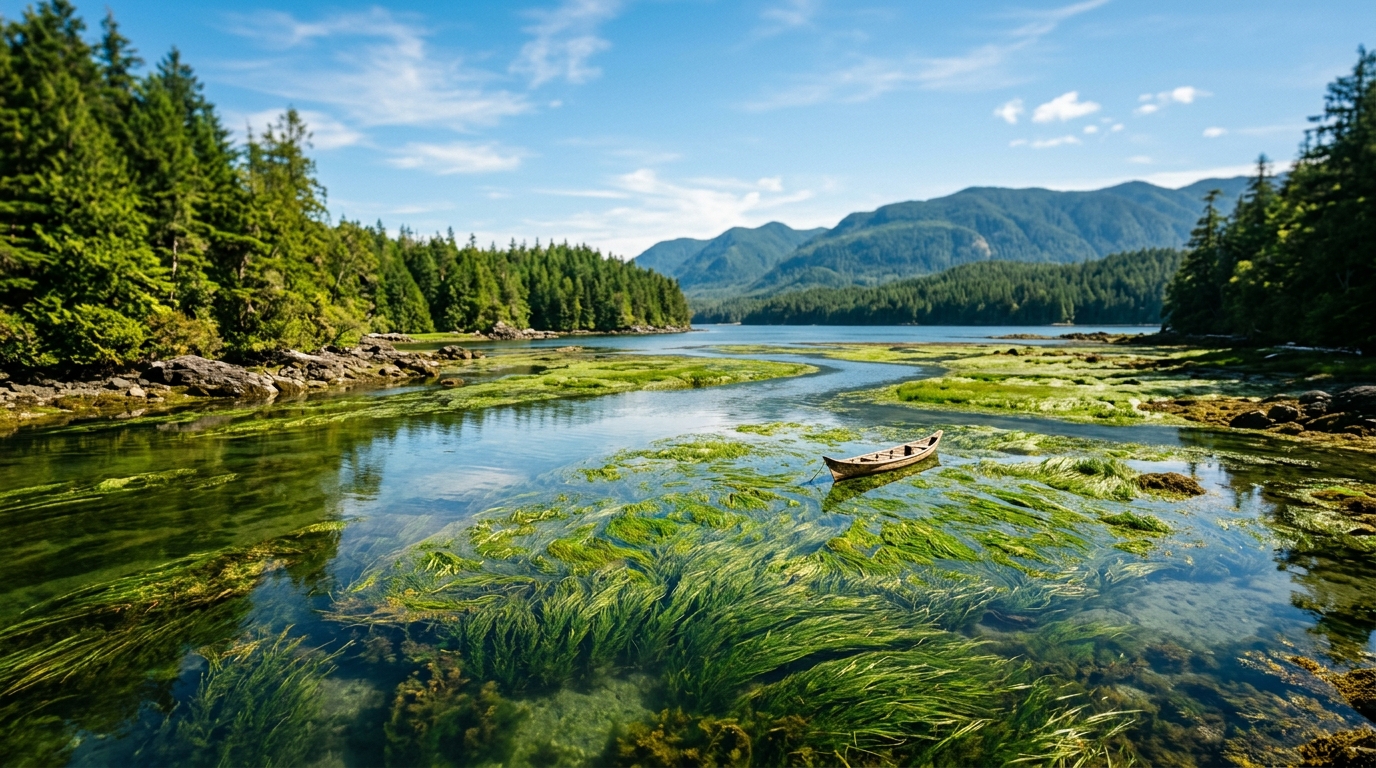
The province’s geographic position is difficult to overstate. BC’s coastline extends approximately 27,000 kilometres—among the most extensive on Earth—encompassing some of the most productive coastal ecosystems in the northern Pacific. Seagrass meadows, eelgrass beds, and salt marshes along that coastline sequester carbon at rates that can exceed terrestrial forests on a per-hectare basis, according to peer-reviewed estimates, while storing it in sediments over centuries.
The science has been advancing faster than the finance. Verra's Verified Carbon Standard (VCS) methodology VM0033, which covers tidal wetland and seagrass restoration, provides the primary accounting framework for developers seeking internationally recognized credits. Globally, the number of Verra-registered blue carbon projects remains small relative to the forestry and cookstove categories that have long dominated the voluntary market. Early-mover projects in credible jurisdictions command pricing premiums, and BC’s combination of ecosystem quality, legal tenure clarity, and Indigenous governance capacity is a structural differentiator.
Indigenous stewardship as a credit foundation
The most consequential development in BC blue carbon is jurisdictional. Coastal First Nations hold or are negotiating stewardship authority over significant stretches of shoreline under a mix of modern treaties, reconciliation agreements, and marine planning frameworks. That tenure is essential to project registration: crediting bodies require demonstrated control over the project area for the duration of the crediting period, typically 30 to 100 years. Nations with established stewardship agreements are not simply ethical partners; they are the legally necessary counterparties.
Several coastal First Nations are actively developing blue carbon projects, working with environmental finance intermediaries to move from ecosystem assessment to credit registration. The BC Treaty Commission’s registry documents the expanding scope of coastal stewardship authority that underpins these arrangements. For investors and corporate buyers, the combination of Indigenous tenure, third-party verification, and BC’s regulatory environment represents a stronger provenance story than most competing offset categories.
What the market is paying
Blue carbon credits have historically traded at a premium to the broader voluntary carbon market, reflecting both scarcity and co-benefits—biodiversity, coastal protection, and community economic development that ESG-mandated funds require. Ecosystem Marketplace data has tracked blue carbon credits trading in ranges above the depressed averages that affected lower-integrity forestry credits following high-profile integrity controversies in 2023 and 2024. The market's shift toward nature-based credits with verifiable permanence has worked in blue carbon's favour.
For BC project developers, the pricing environment is constructive. Corporate sustainability officers at firms facing mandatory climate disclosure requirements are sourcing credits that withstand scrutiny—those with clear additionality, measurable permanence, and a chain of custody that holds up to third-party audit. Locally rooted credits with Indigenous co-governance carry a narrative advantage in an era when greenwashing liability is a board-level concern.
Reality check: what is not yet resolved
The opportunity is genuine, but the timeline remains uncertain. Several methodological and regulatory questions persist. Kelp forests, despite their ecological prominence in BC coastal waters, are not yet fully integrated into the primary VCS crediting framework; kelp's carbon sequestration dynamics, including the fate of exported biomass in deep water, remain an area of active scientific debate. Research from the Pacific Institute for Climate Solutions and federal scientists at Environment and Climate Change Canada is helping to resolve these questions, but developers working with kelp should expect longer timelines to registration than those focused on seagrass and tidal marsh systems.
Baseline setting—establishing what the ecosystem would sequester absent the project—requires rigorous site-level data. Projects that shortcut this step face reversal risk if verification bodies challenge their baselines retroactively. The first BC projects to reach registration will have invested heavily in that groundwork, creating a barrier to entry that protects early movers.
The first-mover calculus
For ESG-mandated institutional funds and corporate buyers, the strategic question is whether to wait for a liquid, standardized BC blue carbon market or to engage now through offtake agreements with projects in development. The latter carries execution risk; the former risks paying higher prices for credits that will be scarcer once the market matures. Pembina Institute analysis of Canadian climate finance has consistently pointed to the gap between domestic offset supply and corporate demand—a gap that BC blue carbon is structurally positioned to help close.
The province's geography, its Indigenous stewardship architecture, and the improving integrity of the VCS blue carbon methodology are converging at a moment when corporate buyers need exactly what BC can offer: credits that are local, verifiable, and built on a governance foundation that reduces reputational risk. The projects moving through development now will define the market's standards.