For decades, the economic case for protecting British Columbia’s coastal ecosystems rested on grants, government programs, and conservation efforts. A maturing voluntary carbon market is now adding a fourth pillar: verified revenue. Blue carbon—the sequestration capacity of eelgrass beds, salt marshes, and kelp forests—is emerging as a credible offset category, and the coastal First Nations and conservation organizations moving earliest stand to claim the most valuable ground.
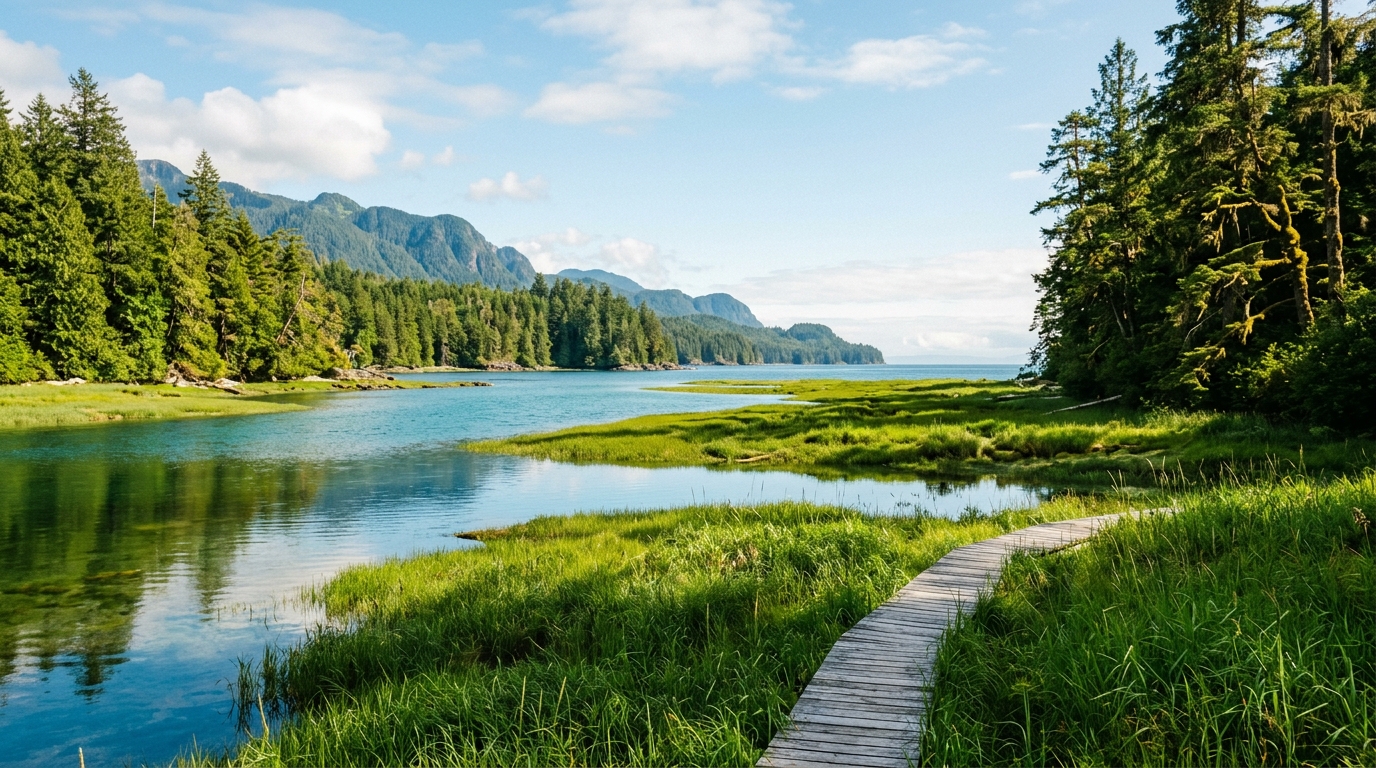
The scale of the opportunity is significant. According to the International Union for Conservation of Nature, coastal blue carbon ecosystems can sequester carbon at rates up to ten times higher per hectare than terrestrial forests. BC’s coastline spans approximately 27,000 kilometres, providing an asset base that few jurisdictions can replicate. Eelgrass meadows fringe thousands of kilometres of this shoreline, with salt marshes concentrated in river deltas from the Fraser to the Skeena.
On the voluntary market, high-integrity nature-based carbon credits have traded at between $15 and $50 or more per tonne. A credibly verified blue carbon project covering several thousand hectares of healthy eelgrass could generate hundreds of thousands of credits annually—a material revenue stream for stewardship operations that have historically operated on thin margins.
Strategic positioning
Several coastal First Nations are conducting feasibility assessments to determine if their marine territories—held under the framework of Aboriginal title and co-management agreements—can support verified blue carbon projects. The First Nations Fisheries Council of BC has identified blue carbon as a priority for nations with significant marine stewardship responsibilities, noting that those already conducting habitat monitoring are best positioned to provide the baseline data verification bodies require.
This work offers a structural advantage. First Nations with established programs—monitoring eelgrass extent, managing invasive species, and restricting harmful fishing practices—are already performing the conservation activities that generate credit eligibility. Monetizing this work converts an existing cost centre into a revenue line without requiring fundamental changes to operations.
Conservation organizations are also pursuing this opportunity. The Raincoast Conservation Foundation possesses ecological inventory data—including baseline carbon stocks and habitat extent—that is foundational to credible verification.
Verification and policy
The dominant pathway for blue carbon projects is the Verra Verified Carbon Standard (VCS), which offers methodologies for tidal wetland and seagrass restoration. Verra’s process requires rigorous baseline establishment, permanence risk assessment, and third-party auditing—a cycle that typically takes 18 to 36 months and carries significant upfront costs. For many, co-development partnerships with project finance investors offer a practical path forward.
Federal policy remains in development. While Environment and Climate Change Canada has identified coastal blue carbon as a priority, guidance on how it integrates into Canada’s domestic offset system is still being drafted. This ambiguity provides early participants the opportunity to help shape the emerging regulatory landscape.
Provincial oversight, managed by the Ministry of Water, Land and Resource Stewardship, involves complex questions regarding tenure, Crown land access, and marine use planning. Early engagement with provincial authorities is essential for project viability.
Viability and additionality
Not all coastal areas are suitable for blue carbon projects. The Blue Carbon Initiative emphasizes that projects must demonstrate "additionality," meaning the sequestration would not have occurred without the project intervention. Active restoration—such as replanting eelgrass or restoring tidal flow—offers a clearer case for additionality than protecting already healthy, stable ecosystems.
Permanence is equally critical. Coastal ecosystems face risks from sea-level rise and warming ocean temperatures. Verification bodies require buffer pools—credits held in reserve to account for potential losses—which necessitates honest modeling of environmental risks rather than relying on optimistic sequestration projections.
The first-mover advantage
The case for acting now is clear: baseline data collection is a multi-year process, and those who begin today will secure a significant head start. Corporate ESG buyers are increasingly seeking high-integrity offsets with Indigenous stewardship provenance and biodiversity co-benefits. BC’s blue carbon projects, if properly verified, satisfy both requirements.
The trajectory of BC’s terrestrial forest carbon offset market serves as a precedent. First Nations that entered that market early built substantial revenue streams and institutional capacity. Blue carbon is at a similar inflection point, offering significant upside for those willing to undertake the foundational work today.