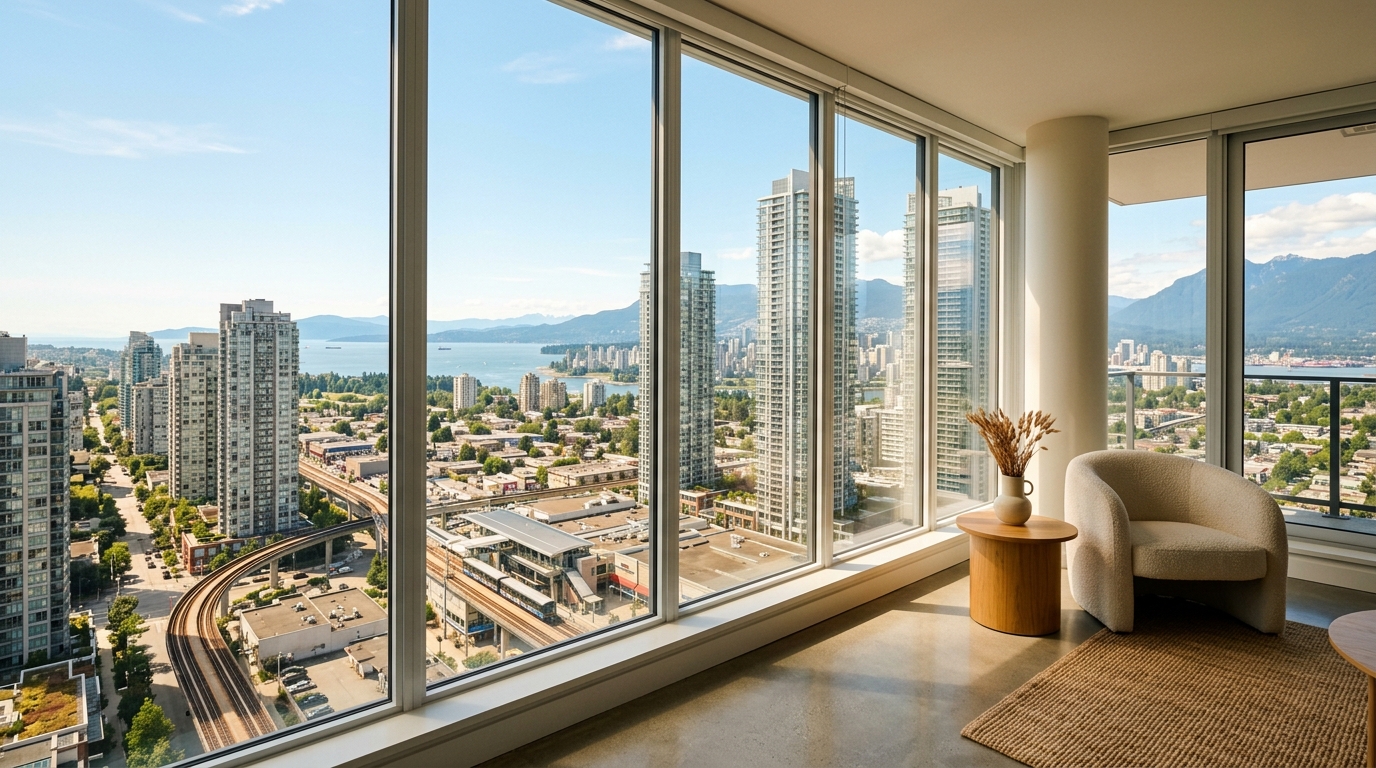
Stand at the corner of Kingsway and Beresford Street on a weekday morning and the scale of Burnaby's proposal comes into focus. The Metrotown SkyTrain station pulses with commuters. Towers already crowd the skyline, but under the city's proposed Downtown Plan amendment, buildings replacing the remaining low-rise parcels nearby could stretch past 60 storeys, reshaping the neighbourhood's silhouette and the development economics of the region.
Burnaby City Council is expected to vote this summer on amendments to the Metrotown Downtown Plan. While the 2017 plan established a framework for high-density growth, the 2026 update specifically codifies a new tier of development, permitting towers exceeding 60 storeys within a 400-metre radius of the station. This represents a significant increase from the current permitted heights, which have generally topped out between 40 and 50 storeys.
Why This Vote Is Different
British Columbia's Bill 47 — the Transit-Oriented Areas Act — requires municipalities to permit baseline densities near rapid transit stations. However, Burnaby's proposal exceeds the provincial floor. Where Bill 47 establishes a minimum, Burnaby is reaching for a ceiling few Canadian cities have attempted. This move signals an aggressive embrace of transit-oriented development (TOD) that treats a SkyTrain station as the primary organizing principle for a high-density urban neighbourhood.
The Urban Development Institute Pacific Region has long advocated for municipalities to treat rapid transit corridors as density anchors. The Metrotown amendment would be the most concrete expression of that principle in the region's recent planning history.
The Land and Units Equation
The practical consequences are significant. The Metrotown station area contains a substantial inventory of parcels—including older commercial strips, surface parking lots, and low-rise residential blocks—that sit within the proposed 400-metre density zone. Under the new permissions, these sites would carry higher development potential, directly influencing land value.
In comparable TOD corridors, such as Toronto's Yonge-Eglinton node, land values in the immediate station area rose sharply following rezoning approvals as developers competed for a finite supply of buildable parcels. Calgary's Green Line corridor provides a parallel, where TOD planning is used to model unit yield and fiscal returns to the municipality.
The unit yield potential at Metrotown is substantial. The combination of 60-plus storey permissions, a walkable station area, and strong demand creates conditions for a significant pipeline of new homes—the kind of supply acceleration that CMHC's Metro Vancouver housing supply assessments have identified as necessary to address the region's structural shortfall.
The Regional Domino
Burnaby's planning decisions carry weight because the city controls three of the region's busiest SkyTrain corridors. If council ratifies the 60-storey framework and the development economics prove viable over the next 18 to 24 months, the template will become difficult for other municipalities to ignore. Coquitlam, which anchors the Evergreen Extension and has station-area planning underway at Coquitlam Centre, would face immediate comparison pressure. Surrey and New Westminster would similarly have a local precedent to consider for their own Official Community Plan updates.
Development Economics
For developers holding land in the Metrotown area, a positive council vote would improve project economics. Higher permitted densities spread fixed land costs across more square footage, improving returns at a time when construction costs remain elevated. Smaller landowners, including commercial property holders and strata owners of older low-rise buildings, would also see their sites repriced upward, creating new assembly and sale opportunities.
Navigating this growth requires addressing complexities such as structural engineering, infrastructure capacity, and community impact. Burnaby has a track record of negotiating community amenity contributions from major developments to fund necessary infrastructure growth.
What to Watch
The council vote is the primary trigger. A strong majority approval would signal that Burnaby is committed to this framework, allowing projects to proceed with confidence. Beyond the vote, the market will look to the first wave of rezoning applications to determine if the framework functions as intended. For operators and investors, Metrotown this summer is the most consequential planning vote on the calendar.



