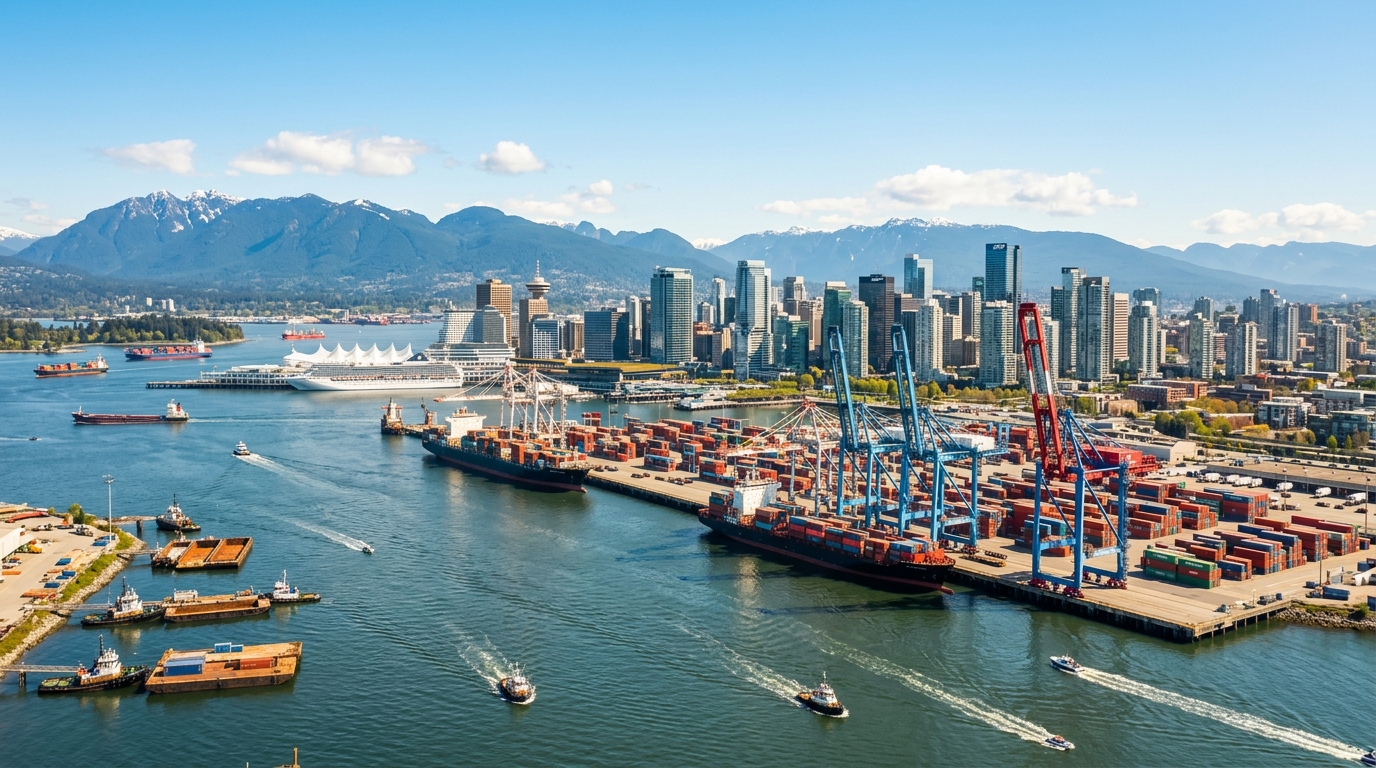
Since June 20, 2025, the rules governing every strike and lockout at a federally regulated Canadian workplace have changed permanently. Bill C-58 — An Act to amend the Canada Labour Code — prohibits employers from using replacement workers during a legal work stoppage. For Metro Vancouver, where the Port of Vancouver, major telecommunications carriers, national rail operators, and chartered banks fall under federal jurisdiction, this is a material shift in operational risk that belongs in every business continuity plan.
The stakes are clearest at the port. The Port of Vancouver facilitates approximately $306 billion in annual trade, making it a critical artery for the national economy. A prolonged work stoppage here ripples through grain exporters in Saskatchewan, auto-parts manufacturers in Ontario, and retailers nationwide. Under the previous framework, federally regulated employers could hire replacement workers to maintain partial operations, preserving leverage and limiting economic damage. That option is now closed.
What C-58 prohibits
The legislation bars employers from using any person—contractor, manager, or new hire—to perform the work of an employee who is lawfully on strike or locked out. Violations carry fines of up to $100,000 per day. Complaints are adjudicated by the Canadian Industrial Relations Board, which has the authority to order the immediate cessation of prohibited conduct.
There are narrow exemptions: managers and supervisors may continue performing their own regular duties, and employers may maintain operations to the extent necessary to prevent imminent threats to public health or safety. These exemptions are tightly drawn, and legal advisers caution clients against assuming they apply broadly.
The negotiating table has shifted
The practical effect of C-58 is that a work stoppage now costs an employer more, faster. The economic pain of a stoppage now falls on both sides of the table simultaneously, changing the calculus of how long either party can hold out. Labour lawyers in Vancouver are advising federally regulated clients to revisit their strike-risk assessments. The relevant calculation is now the full cost of zero production from day one.
For port employers and their supply chain clients, that number is significant. Under C-58, the economic pressure to settle is immediate and unrelenting from the first day of a stoppage.
Who is affected in Metro Vancouver
Federal jurisdiction covers approximately 900,000 Canadian workers in sectors including rail, air transport, banking, and telecommunications. In Metro Vancouver, this translates to a concentrated cluster of large employers whose labour relations now operate under materially different rules. The Vancouver Fraser Port Authority and the BC Maritime Employers Association oversee agreements covering longshore workers and grain handlers. Telecommunications carriers, major chartered banks, and national rail operators also fall under this jurisdiction.
What smart employers are doing now
Business continuity planning is the priority. Employers who previously relied on replacement-worker strategies must now model a complete shutdown and determine how long they can sustain it financially. This analysis should inform both contingency reserves and the pace of bargaining.
Second, lawyers are advising clients to enter negotiations earlier with more detailed preparation. The asymmetry of pain that once favoured employers in prolonged disputes has narrowed. Third, supply chain clients—manufacturers, retailers, and exporters—should review their own contingency plans, including inventory buffering, alternative routing, and contract force-majeure provisions.
C-58 does not necessarily make strikes more likely, but it makes the consequences of a failed negotiation more immediate and expensive for the entire supply chain. Employers and managers who update their planning now will be best positioned to navigate the new landscape.



