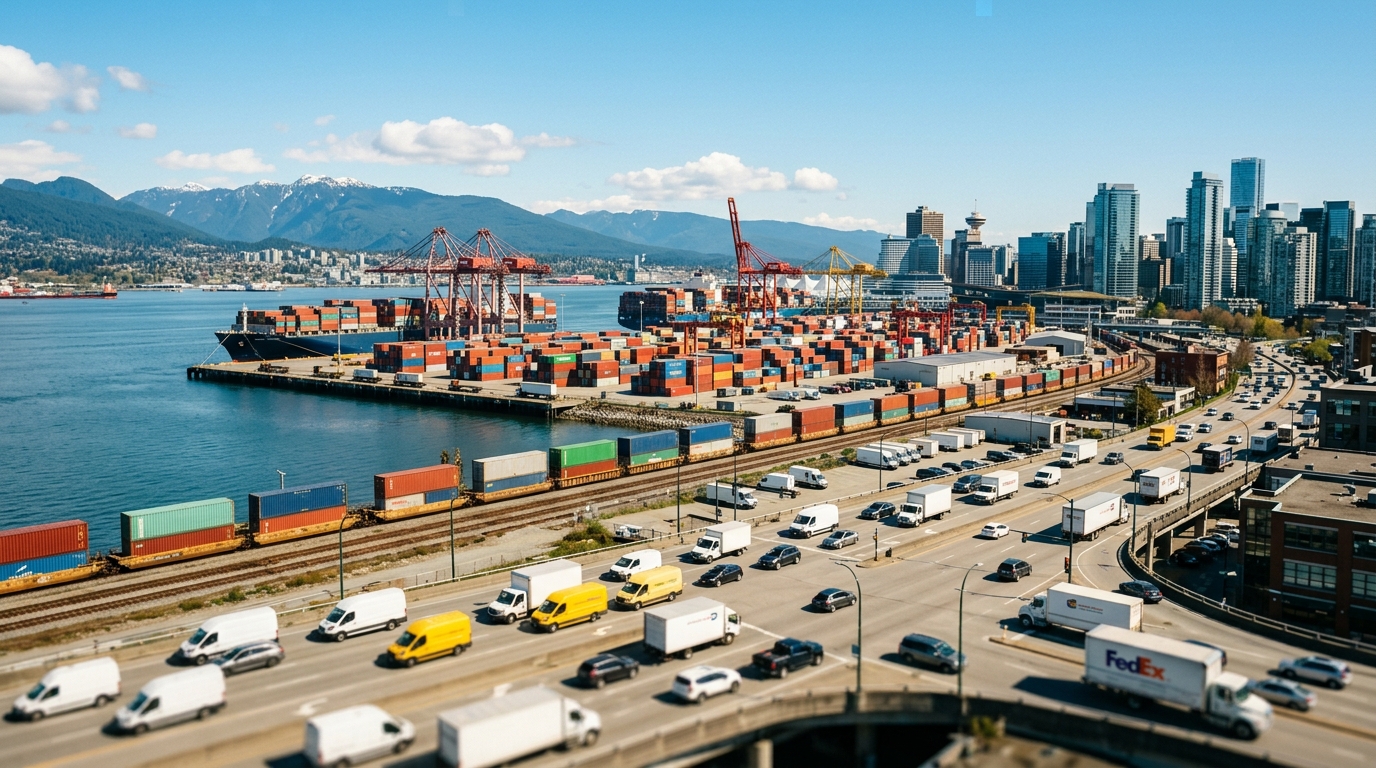
For Metro Vancouver's e-commerce operators, the question is no longer whether to build a Canada Post contingency plan—it is which alternative carrier to call first. The Crown corporation's ongoing restructuring and service disruptions have created a measurable gap in last-mile parcel delivery, and a growing roster of BC-based logistics startups and regional carriers are stepping in to fill it.
The numbers frame the stakes clearly. In 2023, Canada Post handled approximately 296 million parcels, with BC accounting for roughly 13 per cent of that volume—about 40 million parcels annually. When service reliability wavers at that scale, the downstream effect on merchants is not abstract. It shows up in delayed shipments, customer complaints, and lost repeat business.
The addressable market is real and large
Metro Vancouver is home to tens of thousands of e-commerce and product businesses. E-commerce now accounts for approximately 6 per cent of total Canadian retail sales, according to Statistics Canada. Every one of those merchants ships products, and last-mile delivery is where the economics are most punishing: last-mile costs represent 40 to 53 per cent of total supply chain costs in urban markets, according to McKinsey research. Getting this piece right is not a logistics footnote—it is a margin question.
Regional carriers that already operated in Canada Post's shadow—Purolator, Canpar, and GLS Canada among them—have seen BC volume inquiries accelerate as merchants seek alternatives. Smaller, technology-forward BC logistics startups are also building route-optimized, app-integrated delivery networks specifically for the urban and peri-urban corridors that Canada Post has struggled to serve reliably.
What smart operators are doing right now
The merchants moving fastest are those treating carrier diversification as a structural risk-management decision. The playbook emerging across Metro Vancouver involves splitting volume across two or three carriers by geography and parcel type: using regional startups for same-day and next-day Metro Vancouver runs, established regional carriers for BC Interior and Island routes, and reserving Canada Post for rural and remote addresses where the Crown's universal service obligation remains essential.
The opportunity for new entrants is concentrated in dense, high-frequency corridors: Metro Vancouver, the Fraser Valley, Greater Victoria, and Kelowna. These are the routes where last-mile unit economics work, where route density justifies investment, and where merchant demand is highest.
Is this shift permanent?
The structural argument for permanence is straightforward. Merchants who build multi-carrier logistics infrastructure do not dismantle it when service from one provider improves. The operational complexity of switching back—re-integrating APIs, retraining fulfilment staff, and renegotiating rates—creates genuine switching costs that favour the new incumbents. Every month a BC startup holds a merchant contract is a month of route data, customer relationship depth, and operational learning that compounds.
The Retail Council of Canada has documented the accelerating shift among its shipper members toward multi-carrier strategies, noting that confidence in single-carrier dependency has declined significantly among mid-sized merchants since Canada Post's service challenges began.
The kitchen table version
If you ship physical goods from BC, you now have more viable carrier options than at any point in the past decade. The Canada Post disruption is a genuine problem for the system, but for individual operators willing to diversify, it is also a negotiating opportunity. Lock in rates, test two carriers in parallel for 90 days, and let the data tell you which one earns the larger share of your volume. That is what the most resilient Metro Vancouver merchants are doing right now.



