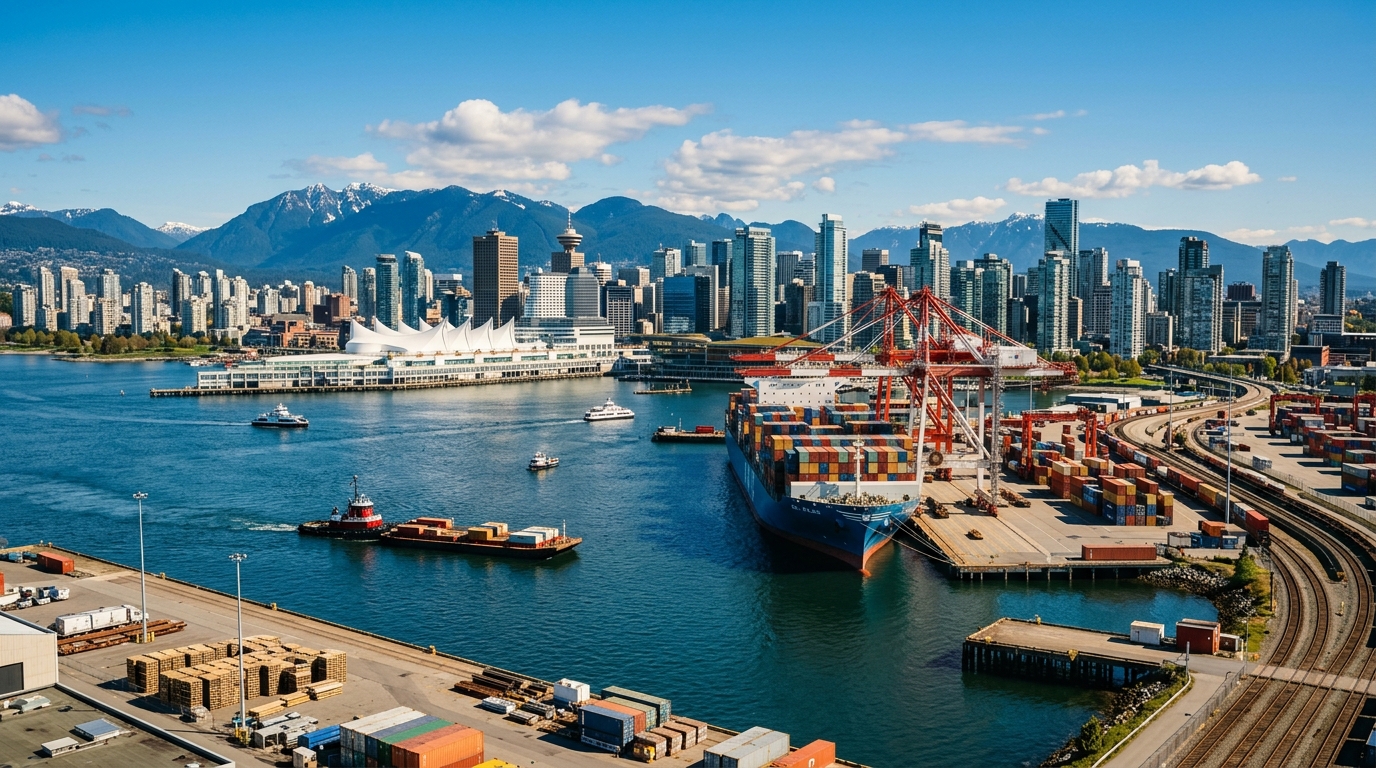
The numbers start with a gap. Canada negotiated generous tariff-free access to the European Union's 450-million-person market under the Comprehensive Economic and Trade Agreement (CETA), which came into provisional application in September 2017. Eight years on, BC's agri-food sector—among the most export-ready in the country—is leaving a substantial portion of that access unused. For exporters watching the Canadian dollar trade at a meaningful discount to the euro, that underutilization is not a policy abstraction. It is unrealized revenue, and the window to capture it is open.
CETA established tariff-rate quotas across dozens of agri-food categories, eliminating duties that previously reached 20 per cent on seafood and premium food products entering EU markets. Data from Global Affairs Canada shows that utilization rates across key Canadian agri-food quota categories have consistently fallen short of available entitlements. BC's share of that underperformance is disproportionate given the province's export profile: the sector has the product and the quality credentials. What it has often lacked is the EU distribution infrastructure to move volume at scale.
The exchange rate dimension sharpens the urgency. The Canadian dollar has weakened materially against the euro compared to 2023 levels, according to Bank of Canada exchange rate data, effectively giving BC exporters a built-in price advantage. A kilogram of BC sockeye that cost a Frankfurt importer a certain number of euros in 2023 now costs less, making Canadian product more competitive against Norwegian, Scottish, and Chilean alternatives. For a seafood processor or craft distiller operating on thin margins, that tailwind can be the difference between a viable EU market entry and one that pencils out only on paper.
What the quota gap means
CETA's tariff-rate quota system works as follows: Canada receives the right to export specified volumes of product into the EU at zero or near-zero duty. Exports above those thresholds revert to standard EU tariff rates. The opportunity cost of underutilization is direct: every tonne of BC salmon, every case of BC whisky, and every shipment of specialty mushrooms that could move tariff-free but does not represents margin left behind. Seafood represents the category with the largest gap between quota entitlement and actual uptake, partly because EU distribution relationships require significant capital to build, and partly because many smaller BC processors have historically focused on Asian and US markets.
The BC seafood sector exported approximately $180 million in product to EU markets in recent years—a figure that trade development advocates argue should be higher given CETA's terms and the quality premium BC wild-caught product commands in Germany, France, and Scandinavia. The craft spirits category presents a parallel story: BC's distilling industry has grown rapidly, producing single-malt whiskies, gins, and aquavits that compete credibly on European shelves, yet export volumes to EU markets remain a small fraction of total production, with most international sales concentrated in the United States and Asia-Pacific.
The distribution challenge
Trade commissioners in Brussels note that EU market entry requires sustained investment in importer relationships, regulatory compliance, and brand-building. The Canadian Trade Commissioner Service's Brussels office maintains active programming to help Canadian exporters navigate EU food safety certification, labelling requirements, and importer matchmaking, though uptake among BC's smaller agri-food operators has been limited.
The CAD/EUR pricing advantage changes that calculus. Building an EU distribution relationship is a multi-year investment; the returns compound once the infrastructure is in place. Operators who begin that work now—while the currency tailwind is structural and CETA quota remains underutilized—are buying into the trade relationship at a favourable entry point. Those who wait until the loonie recovers will be building the same infrastructure at a higher effective cost.
BC's Ministry of Agriculture and Food administers export market development programs that can offset a portion of the upfront costs associated with EU market entry, including trade mission participation, certification, and buyer introduction programs. These programs are currently undersubscribed, meaning operators who apply now face less competition for support funding.
The bottom line
If you run a seafood operation in Prince Rupert, a craft distillery in the Okanagan, or a specialty food business in BC, the reality is that Canada has negotiated a discount on Europe's front door that remains underused. The euro is strong, the tariff is gone, and support programs exist. The gap between current export levels and potential under CETA is a distribution and relationship challenge that patient capital can solve. Operators who start building those EU relationships in 2026, while the currency advantage compounds, will look back on this window as the moment the European market became a core pillar of their growth.
The quota does not wait. Each year of underutilization is a year of tariff-free access that expires unused. For BC's agri-food exporters, the most expensive decision may be the one not yet made.



