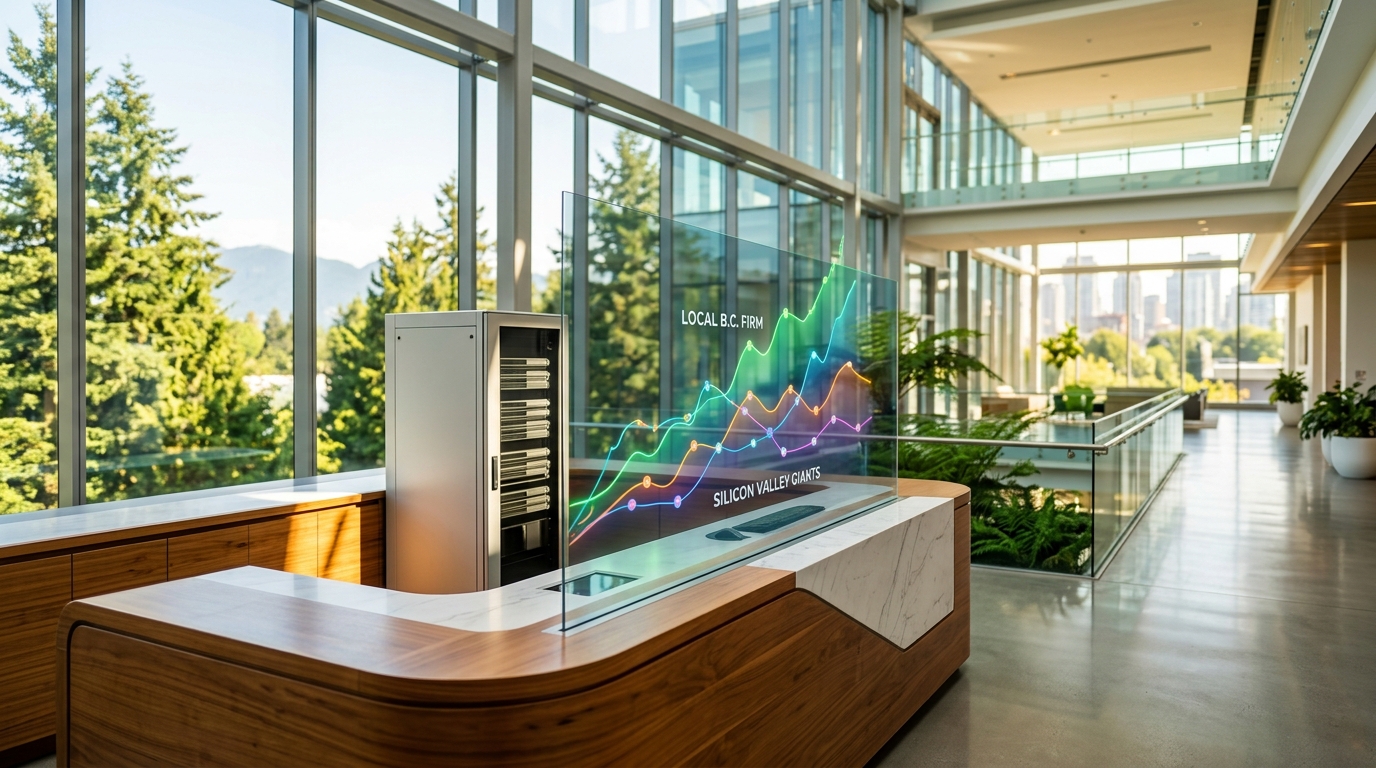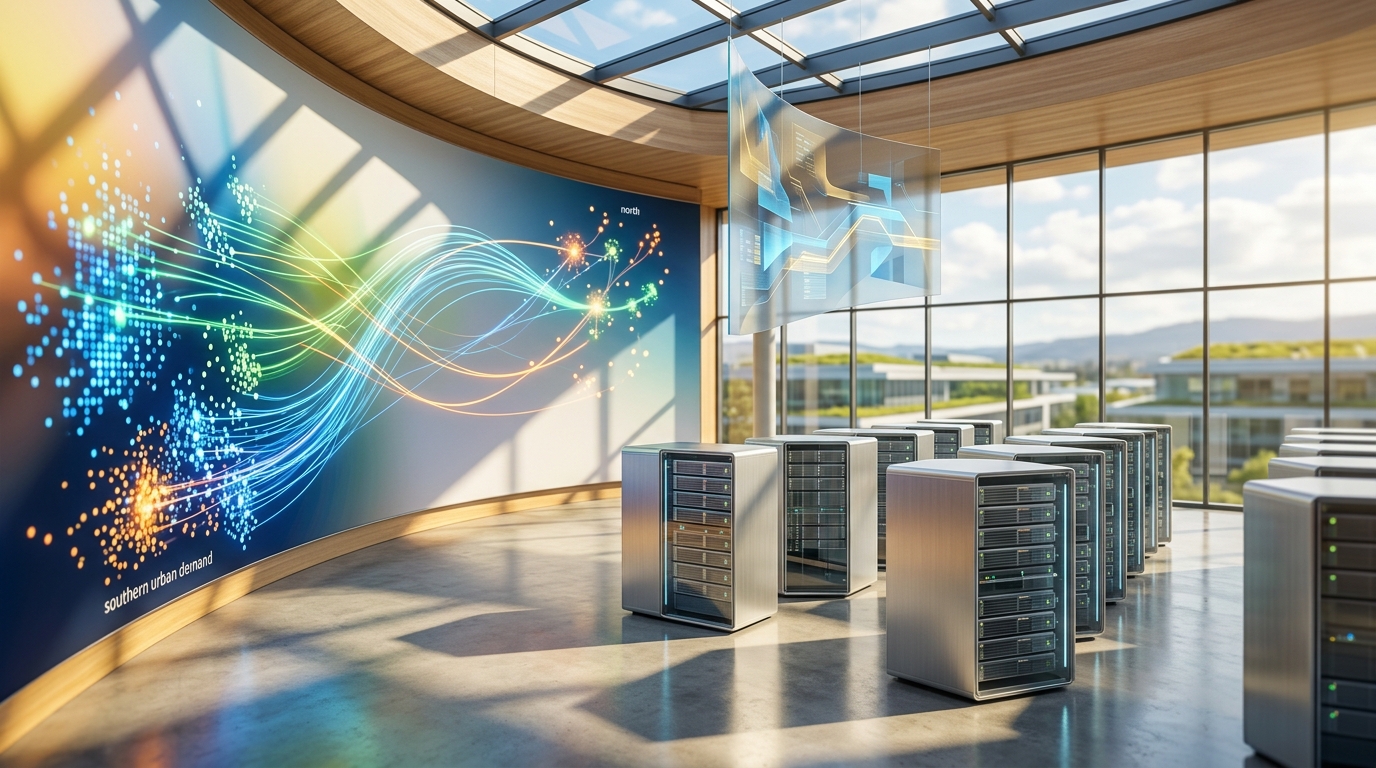
There is a queue in British Columbia that no amount of money can jump. BC Hydro's Lower Mainland substations serving industrial loads are at or near capacity for new large-load connections, with wait times for new connections now stretching three to five years. For hyperscale data centre operators—the Amazons, Microsofts, and their co-location proxies—that timeline is incompatible with the rapid pace of current AI infrastructure development.
The result is a bifurcated market that is reshaping where British Columbia's most capital-intensive tech infrastructure will be built over the next decade. Established operators holding existing Lower Mainland power allocations possess premium assets, while others are looking north and east.
Beyond real estate, this shift matters because data centres act as anchors for high-value tech jobs, property tax revenue, and supply chain ecosystems. For municipalities in Northern BC and the Interior, the power constraints choking Metro Vancouver represent a significant economic opportunity.
The physics of the problem
Data centres are essentially power infrastructure housing servers. A hyperscale facility—the kind required for large language model training or cloud compute—can draw between 100 and 500 megawatts. For context, that is roughly equivalent to the residential load of a small city. Such demand cannot be accommodated by substations already serving existing industrial bases and growing residential grids.
The International Energy Agency's 2026 outlook projects global data centre power demand will grow approximately 160% by 2030, driven primarily by AI compute workloads. AI model training and inference run at maximum utilization continuously, generating heat and drawing power at rates that render conventional planning assumptions obsolete.
The Lower Mainland was already constrained before the AI surge. The combination of residential densification, EV charging infrastructure, and existing industrial demand had pushed key substations to their limits. This surge, which accelerated through 2024 and 2025, arrived at a difficult time for operators hoping to site facilities near Vancouver’s fibre interconnects and talent pool.
The northern pivot
Kamloops, Prince George, and the Okanagan offer a different infrastructure landscape. BC Hydro's hydroelectric network means that stranded capacity—power that exists but lacks sufficient local demand—is available in corridors historically underserved by industrial investment. Transmission capacity in the northern interior is less constrained than in the Lower Mainland, and the province's clean hydroelectric baseload meets the sustainability criteria now embedded in hyperscaler procurement.
The land cost differential is stark. Industrial land in Kamloops and Prince George runs 60 to 80 percent below Metro Vancouver rates, according to CBRE Canada. For a facility requiring 50 to 100 acres, that gap translates to hundreds of millions of dollars in acquisition costs.
Cooling is a third factor. Northern BC's climate provides natural advantages, with ambient temperatures that reduce mechanical cooling loads and, in some cases, access to cold water sources for efficient heat exchange.
The economic development calculus
A single hyperscale data centre campus generates unique economic activity. Construction phases typically employ 1,500 to 2,500 tradespeople over two to three years. While operational phases are leaner, they provide high-wage technical and engineering roles. Furthermore, the property tax contribution from a $2-billion campus can significantly bolster a municipality's fiscal position.
Venture Kamloops has been actively positioning the city's power and land advantages as Metro Vancouver's constraints have become better understood. Prince George, with its position on Highway 16 and the CN Rail main line, offers logistics advantages for the equipment supply chain that coastal sites cannot match.
The follow-on ecosystem is also significant. Data centres attract fibre investment, which in turn draws other digital infrastructure. The presence of hyperscale compute changes the possibilities for local businesses, health authorities, and post-secondary institutions regarding connectivity and cloud access.
Who moves first wins
Public filings from major co-location operators including Digital Realty and Equinix reflect accelerating interest in Canadian expansion as US power markets face similar constraints. BC's clean power, political stability, and proximity to US markets make it a logical destination. The only question has been where within the province to build.
Metro Vancouver's power ceiling is answering that question. Municipalities that move quickly to streamline large-load industrial permitting and pre-negotiate power connection pathways with BC Hydro will capture investment that has nowhere else to go. The Lower Mainland queue is not shortening, and the AI compute buildout is not slowing down.
For Northern BC, the timing is advantageous. The infrastructure gap that historically made these communities less competitive for industrial investment is, in this sector, an asset. The land and power are available, and operators are looking for places to build.
The data centre land rush has begun. The question remains: which communities are ready to receive it?