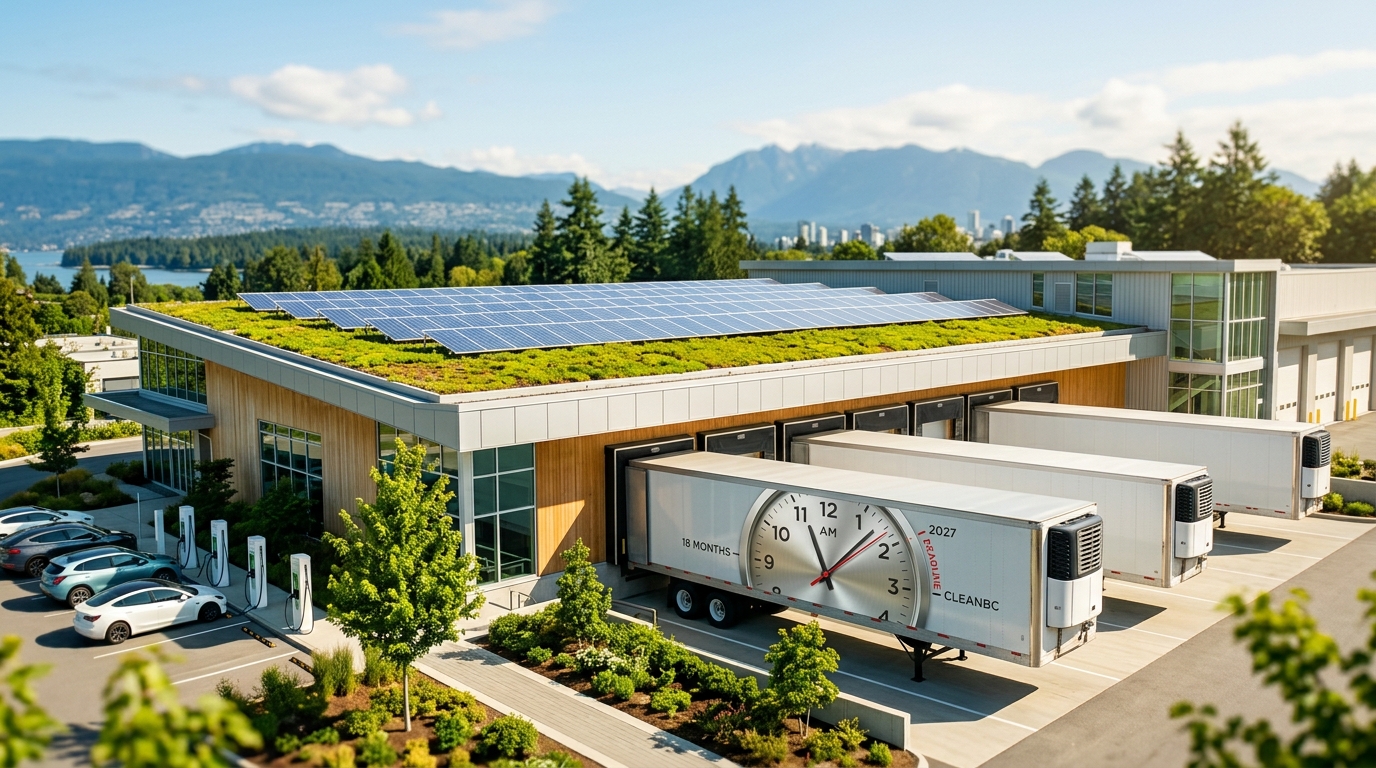
The temperature-controlled warehouses that keep Metro Vancouver's grocery shelves stocked, hospitals supplied, and restaurant kitchens running are largely aging infrastructure reliant on refrigerants that regulators are actively phasing out. The operators managing these facilities face a dual deadline—regulatory and mechanical—that will define the competitive landscape of BC's cold chain for a generation.
The pressure is precise. CleanBC's commercial building emissions standards tighten in 2027, making refrigeration systems a primary target for industrial compliance. Simultaneously, Canada's implementation of the Kigali Amendment is reducing hydrofluorocarbon (HFC) import caps annually through 2036, rendering legacy refrigerants increasingly expensive and difficult to source.
The BC Refrigeration and Air Conditioning Contractors Association estimates the total provincial upgrade cost at more than $500 million. The most consequential factor is that the majority of this capital has not yet been committed.
The refrigerant math
Most existing cold storage runs on either ammonia (R-717)—which is efficient but requires specialized handling and faces strict safety codes—or HFCs such as R-404A and R-507, which are potent greenhouse gases subject to federally mandated import restrictions. Operators deferring equipment upgrades are betting that these refrigerants will remain available and affordable as caps tighten.
Natural refrigerant systems—including CO₂ transcritical, ammonia-CO₂ cascade, and propane-based configurations—eliminate HFC exposure and align with CleanBC emissions targets. While the capital cost of a new CO₂ transcritical system is higher than an HFC replacement, early movers avoid the 2026–2027 bottleneck, when demand for qualified contractors and equipment will likely outpace supply.
The real estate constraint
Cold storage vacancy in Metro Vancouver sits below 1%, leaving operators little room to relocate to purpose-built facilities. Owners who upgrade their existing assets will secure a competitive advantage, while those who defer risk tenant attrition as occupiers prioritize compliant space.
The federal incentive window
Natural Resources Canada’s Cold Chain Electrification Program (a component of the Green Industrial Facilities and Manufacturing Program) provides cost-sharing support for upgrades. Because funding is allocated on a first-come basis, operators who have not yet applied are already at a disadvantage compared to those who moved in 2024 and 2025.
The path forward
The $500-million figure represents the industry’s total need, not current commitments. Most operators remain in the assessment phase. This creates a clear opportunity for cleantech vendors and engineering firms to engage with companies facing lease renewals or equipment end-of-life events. For operators, the most resilient strategy is to treat this transition as a capital allocation decision rather than a mere compliance exercise. In a sector with thin margins, the infrastructure choices made today will be reflected on income statements for the next decade.