Metro Vancouver drivers are paying $1.83 per litre at the pump—a brutal 25-cent jump in one week as Middle East conflict sends shockwaves through global oil markets. It's the highest price Vancouver has seen in six months, and for a city whose economy runs on moving goods, the timing couldn't be worse.
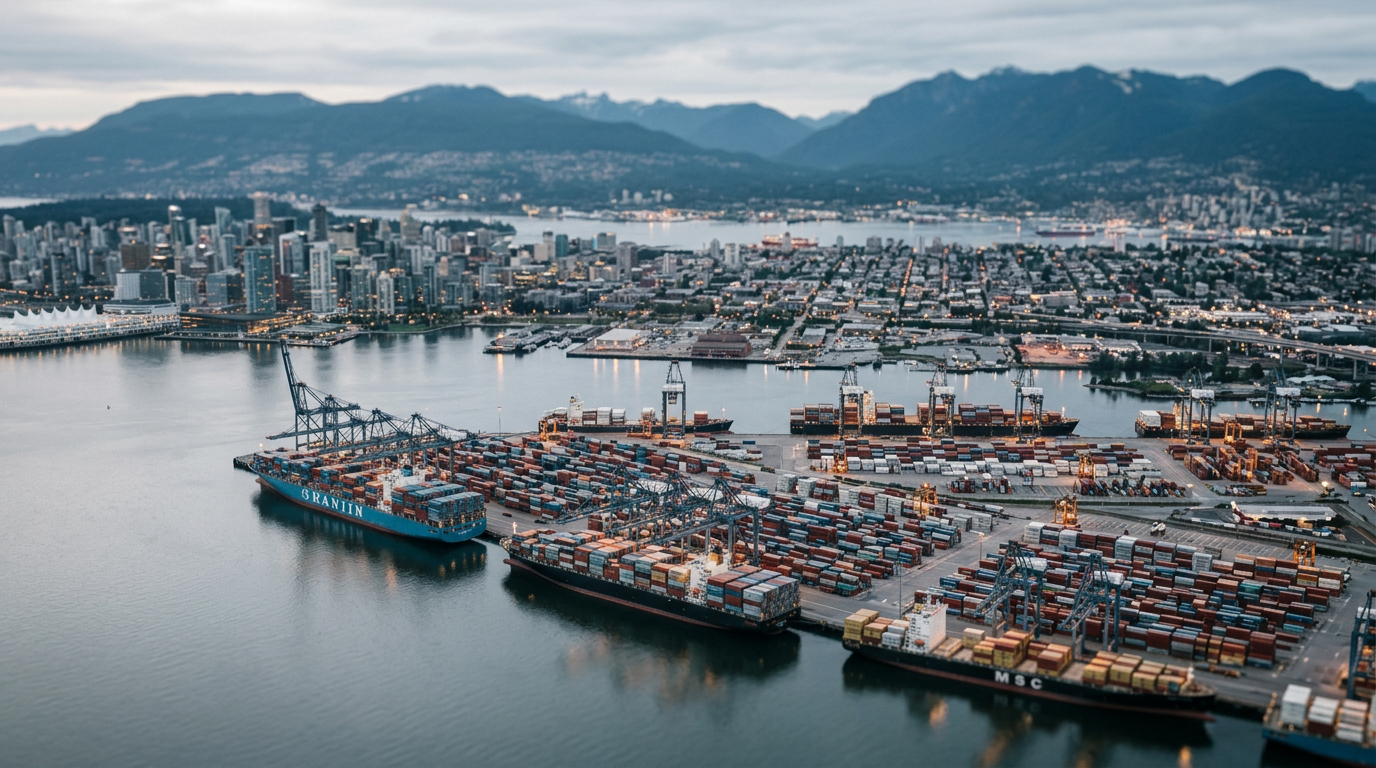
The culprit is crude oil breaking $100 per barrel as shipping disruptions in the Strait of Hormuz—a critical chokepoint for global oil transport—create supply fears. For Vancouver, where the Port moves $240 billion in goods annually, this isn't just a consumer inconvenience. It's an immediate threat to the logistics backbone that keeps the regional economy running.
What this means for Vancouver: Transportation and logistics companies face instant margin compression at the worst possible time. With inflation already squeezing businesses and consumers, this oil price shock could trigger a new wave of cost increases across supply chains that depend on Vancouver's port and rail connections.
The math is stark for trucking companies. A typical long-haul truck uses about 400-500 litres per 1,000 kilometres. At current prices, that 25-cent weekly jump translates to an extra $100-125 in fuel costs per thousand kilometres—money that has to come from somewhere. For smaller operators running thin margins, it's the difference between profitability and loss.
Local logistics companies are already adjusting. Several major carriers have implemented fuel surcharges this week, passing the increased costs directly to customers. The ripple effects will hit everything from grocery deliveries to construction materials, as transportation costs get baked into the price of goods moving through Metro Vancouver.
The Port of Vancouver, Canada's largest, processes 158 million tonnes of cargo annually. Much of that moves by truck to distribution centres across the Lower Mainland before heading to retailers and consumers. Port-dependent businesses are particularly vulnerable because they can't easily absorb sudden cost increases in competitive global markets.
This isn't Vancouver's first oil price shock. During the 2008 financial crisis, gas prices peaked at $1.485 per litre—well below today's levels—contributing to a broader economic slowdown that saw port volumes drop and logistics companies shed jobs. The 2014 oil price collapse had the opposite effect, with cheaper fuel helping Vancouver's goods movement sector.
The current spike comes with additional complications. Unlike previous oil shocks, this one hits as Vancouver faces broader economic pressures: rising interest rates, cooling real estate markets, and ongoing supply chain disruptions from global trade tensions. Industry associations warn that sustained high fuel costs could force some smaller operators out of business.
The kitchen table version: When oil prices spike, Vancouver feels it fast and hard because so much of our economy depends on moving things. Trucks, trains, and ships all need fuel, and those costs get passed along to consumers through higher prices for everything from groceries to Amazon deliveries.
For businesses, the challenge is immediate cash flow. Fuel is typically paid upfront, while the ability to pass costs to customers through higher prices takes weeks or months to negotiate. That gap can be fatal for companies operating on tight margins, particularly in competitive sectors like local delivery and regional trucking.
The broader economic risk is that sustained high transportation costs become embedded in inflation expectations. If businesses and consumers expect higher prices to stick around, they adjust behaviour in ways that can make those expectations self-fulfilling. Vancouver's economy, built on trade and goods movement, is particularly sensitive to these dynamics.
Whether this week's price shock becomes a longer-term problem depends largely on how quickly Middle East tensions resolve and global oil markets stabilize. But for Vancouver's logistics sector, the damage is already being done—in squeezed margins, passed-through costs, and the constant pressure of operating in an economy where fuel price volatility is just another cost of doing business.



