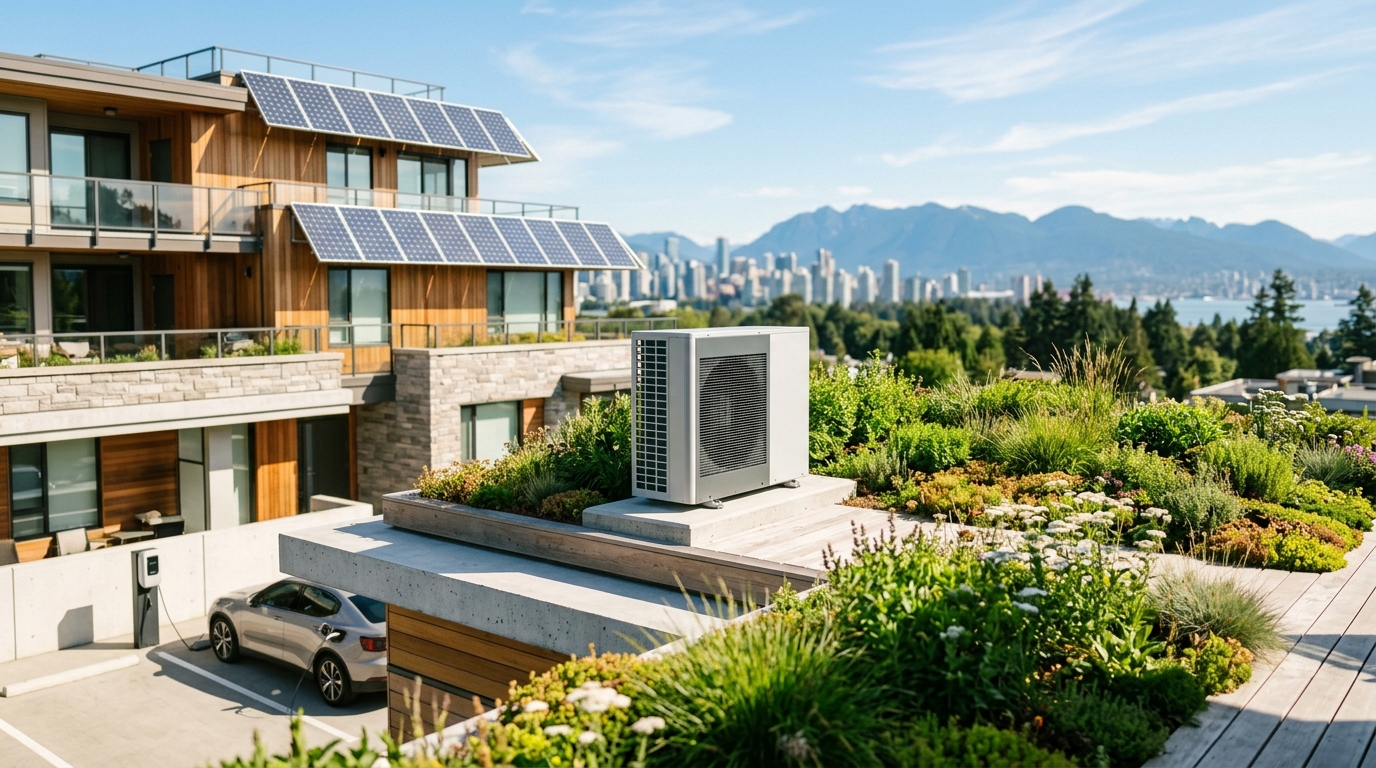
If you are planning a heat pump retrofit for a Metro Vancouver commercial property or multi-family building and you have not already started the procurement process, you are likely looking at 2027 before a certified installer sets foot on your site. Lead times from major manufacturers—including Mitsubishi Electric, Daikin, and Fujitsu—have stretched to 16 to 24 weeks for many ducted and commercial-grade units, and the certified contractors who install them are booking well into the first quarter of next year.
The proximate cause is straightforward: government incentive programs have stimulated demand faster than the installer workforce and equipment supply chain can absorb it. CleanBC's heat pump rebate program has seen sustained application growth since its expansion, and the federal Canada Greener Homes Initiative—specifically its interest-free loan component—continues to drive residential retrofits across BC. The 2021 heat dome remains the structural inflection point that reset the baseline for air-source heat pump adoption.
The constraint is logistical and human. The Heating, Refrigeration and Air Conditioning Institute of Canada has flagged the trained installer gap as a national issue, and BC is acutely exposed. SkilledTradesBC's certification pipeline for refrigeration mechanics and gas fitters has not kept pace with the demand curve. Training a certified installer takes years, meaning the capacity ceiling will not lift quickly even if enrolment in trades programs accelerates today.
The business case for moving early
For commercial property owners, the scheduling risk is compounding into a budget risk. A retrofit planned for a 2026 installation that is pushed to 2027 faces both equipment price inflation and the possibility that rebate program terms shift. BC Hydro's PowerSmart program offers demand-side incentives for qualifying commercial installations, but program structures are subject to annual review.
For building owners and developers, front-loading procurement and contractor engagement by six to twelve months is no longer conservative planning; it is the baseline requirement to stay on schedule. Waiting for a project to reach construction-ready status before engaging a heat pump contractor is a sequencing error that will cost time and money.
Reality check: where the opportunity sits
The supply crunch is a constraint for buyers, but it represents an opening for contractors and distributors willing to invest in capacity. BC's CleanBC buildings strategy requires progressive decarbonization of the province's building stock through the decade, ensuring a structural policy tailwind. A certified contractor who expands their crew and secures preferred distributor relationships today enters a market with years of backlogged demand and limited new competition.
The same logic applies to equipment distributors. Manufacturers have expanded North American production capacity, but regional distribution networks remain thin. A distributor that builds warehousing and logistics infrastructure in Metro Vancouver now is positioning for a market where the primary constraint is last-mile delivery and contractor support.
What smart operators should do now
For property owners and developers: treat heat pump procurement as a long-lead item on par with structural steel or elevators. Engage certified contractors at the design development stage. Confirm rebate eligibility and program timelines before finalizing budgets, and build schedule contingency for equipment lead times of at least five months.
For contractors considering capacity expansion: the SkilledTradesBC apprenticeship framework includes employer incentives for taking on registered apprentices. The upfront cost of expanding a crew is real, but the forward order book provides unusual revenue visibility for a construction-adjacent business.
The heat pump crunch is a bottleneck story, but it is also a first-mover story. The contractors and distributors who scale into this gap over the next 18 months will be difficult to dislodge when the market normalizes.