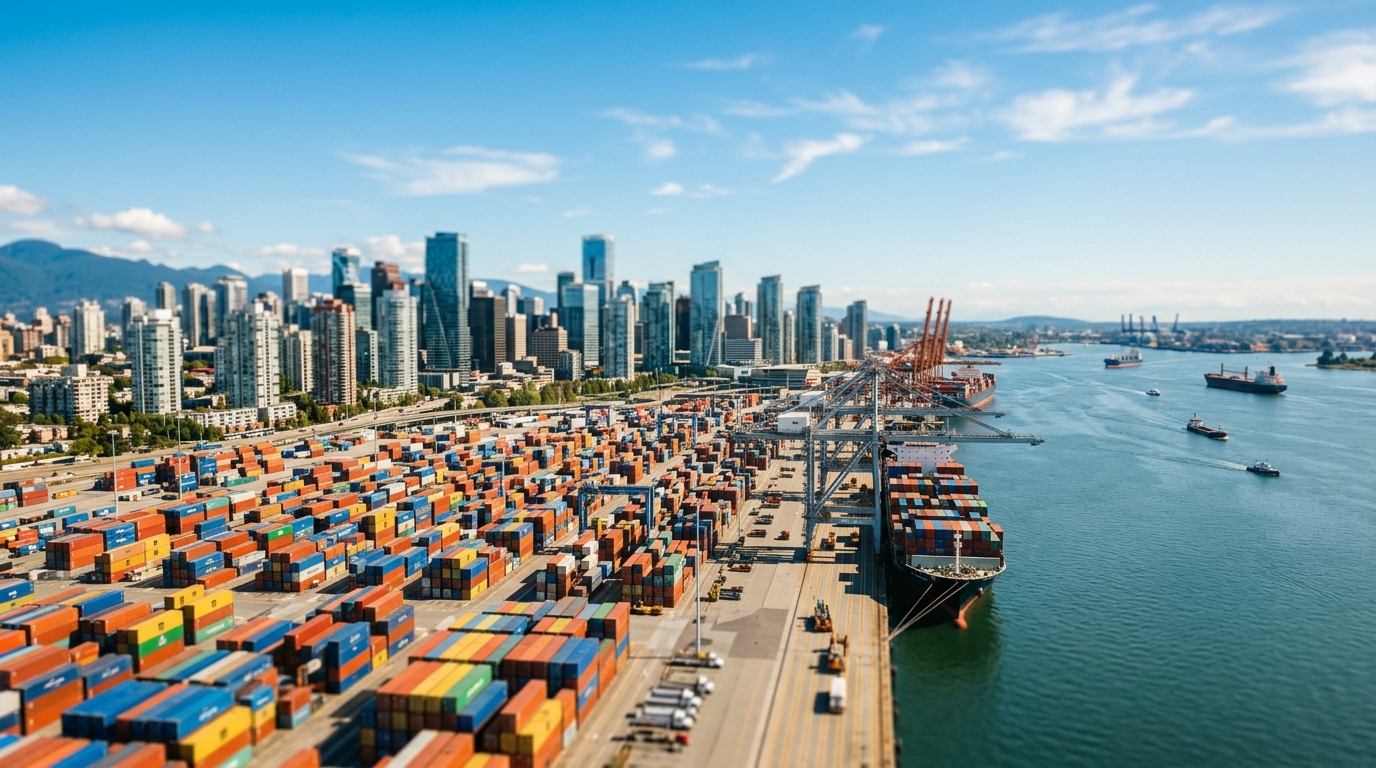
Before a single picket sign appears, the upcoming ILWU Canada contract negotiation is already costing BC businesses money. Not in lost cargo—not yet—but in the insurance premium embedded in every logistics decision that touches the Port of Vancouver, the busiest port in Canada by tonnage and the gateway through which an estimated $550 million in goods flows every single day.
The collective agreement between ILWU Canada and the BC Maritime Employers Association (BCMEA) is set to expire on March 31, 2027. Shippers are not waiting for formal talks to begin before they act. The 2023 strike, which idled terminals for nearly two weeks in the summer, is estimated to have cost the Canadian economy $10.8 billion, a figure that has become the benchmark against which every supply chain operator in BC now prices labour risk.
That number is not an abstraction. It represents the value of lumber sitting on docks, auto parts that did not reach assembly lines, perishable agricultural exports that spoiled, and import containers carrying retail inventory that arrived too late for the selling season. For BC's export-dependent economy—forestry, agri-food, mining, and manufacturing—the port is the economy.
What the timeline means for operators
Labour negotiations of this scale follow a predictable rhythm. Formal bargaining typically begins several months before a contract's expiry date. The federal government has the authority to appoint a mediator, though Ottawa has historically been reluctant to intervene early, preferring to let the parties exhaust direct bargaining. The federal Labour Minister's office played a role in 2023, and its posture in 2027 will be watched closely by both sides.
For logistics operators, the actionable window is the six-to-nine months before contract expiry. That is when inventory pre-loading decisions must be made, when alternative routing through Prince Rupert or US West Coast ports should be evaluated, and when freight forwarders begin quoting contingency premiums. The Canadian International Freight Forwarders Association (CIFFA) has documented how strike-threat periods drive up drayage costs and create terminal congestion as importers and exporters race to move cargo ahead of potential disruption.
If your business moves goods through Vancouver terminals, your planning cycle should already include a labour-risk scenario. That means knowing your inventory lead times, understanding your contract terms with freight forwarders regarding force majeure, and identifying diversion options before they are required.
What both sides want
ILWU Canada has consistently prioritized job security regarding terminal automation—a tension at the heart of the Port of Vancouver's long-term modernization agenda. The 2023 dispute was about who controls the pace and terms of technological change on the waterfront. That issue has been deferred, not resolved.
The BCMEA's position has centred on operational flexibility and competitiveness, arguing that Vancouver terminals must modernize to remain viable against competing North American gateways. The 2023 agreement bought time; it did not produce consensus on these structural questions.
The bottom line
For those who import or export through Vancouver, a work stoppage does not have to occur to impose costs. The credible threat of one changes freight pricing, triggers competitor pre-loading that tightens terminal capacity, and forces inventory decisions weeks before any picket line forms. The smart move is to treat the negotiating timeline as a logistics variable—similar to exchange rates or fuel surcharges—and build your operational plan accordingly.
The 2023 strike produced a settlement and a playbook. BC businesses that study it are already in a better position than those waiting to see how talks unfold.



