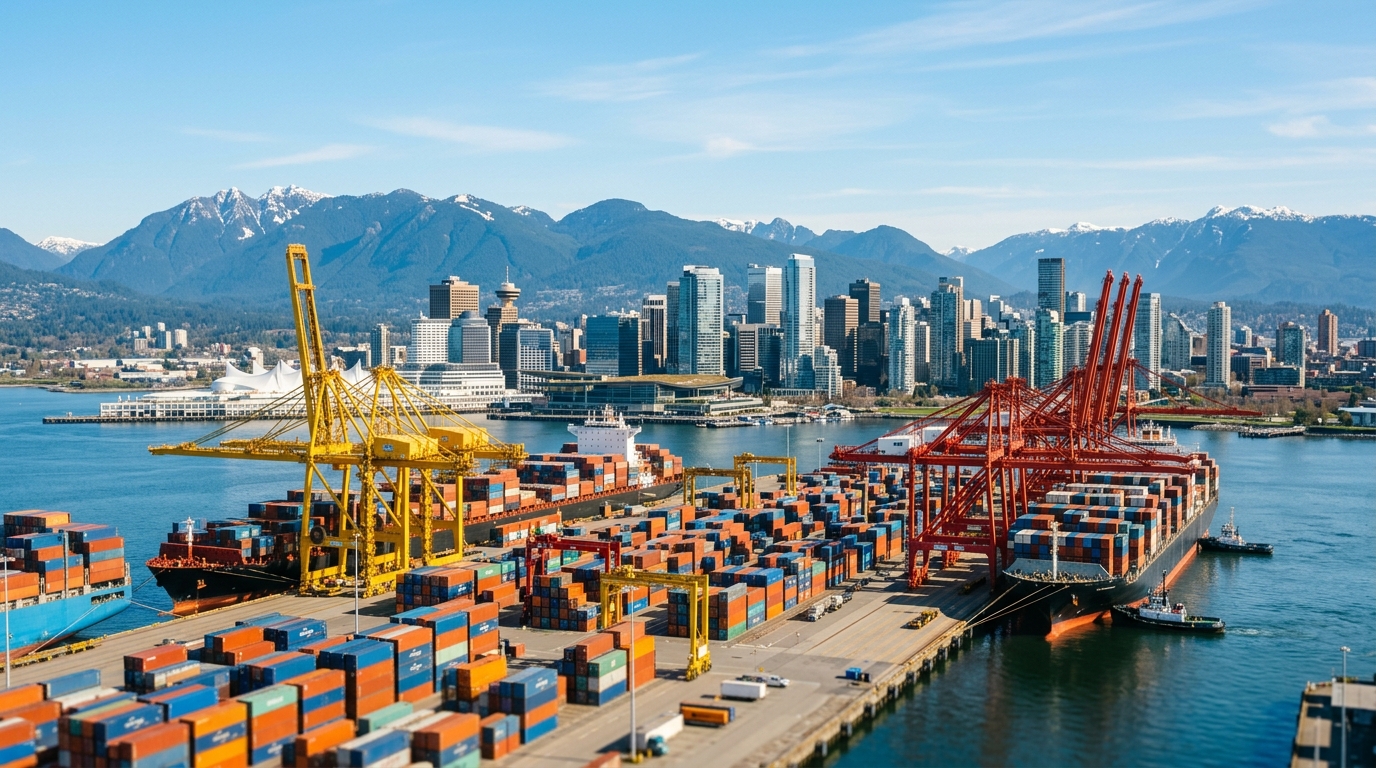
There is a number that concentrates the mind of every serious logistics operator in British Columbia: $310B. That is the approximate annual value of goods moving through the Port of Vancouver — Canada's largest port and the economic spine of the province's export sector. Agri-food, forestry products, potash, manufactured goods, and consumer imports flow through terminals staffed by members of the International Longshore and Warehouse Union (ILWU) Canada.
The ILWU Canada master agreement covering those terminals enters a new bargaining cycle in late 2026. Negotiations have not yet formally begun. There is no strike notice and no public acrimony. Yet, the most disciplined BC exporters are already adjusting their operations.
The 2023 lesson, still fresh
The 2023 ILWU Canada strike lasted 13 days. According to the Conference Board of Canada, the work stoppage cost the national economy an estimated $1B. This figure understates the damage to individual firms whose just-in-time supply chains seized up within 72 hours of the picket lines appearing. For BC's agri-food exporters, where perishability and seasonal harvest windows are non-negotiable, a 13-day stoppage is a significant financial write-off.
The disruption exposed a structural vulnerability that many operators previously treated as a tail risk. They are not making that mistake again.
What smart operators are doing right now
Across BC's export community, three hedging strategies are emerging ahead of the bargaining cycle.
The first is shipment acceleration. Exporters with flexible production and storage capacity—particularly in grain, pulses, and processed food—are pulling forward shipment schedules into the first half of 2026, building buffer inventory at destination markets. The cost is real: carrying inventory and booking forward freight capacity reduces margins. However, for firms operating on thin working capital, a two-week port closure is far more expensive than several weeks of additional warehousing.
The second is port diversification. Prince Rupert's Fairview Container Terminal has expanded capacity to 1.6 million TEUs, and the port is actively positioning itself as a resilience option for BC shippers. The routing math has improved: Prince Rupert offers the shortest maritime route from Asia and provides a direct rail link to the North American heartland. Some BC exporters are now splitting regular shipments between the two ports, accepting slightly higher per-unit logistics costs in exchange for reduced concentration risk.
The third is U.S. port optionality. A growing cohort of BC exporters—primarily those with U.S.-bonded trucking relationships—are mapping contingency routes through Seattle-Tacoma and the Port of Portland. Cross-border logistics add cost and complexity, but for high-value, time-sensitive cargo, having a signed contingency agreement with a U.S.-side freight forwarder is increasingly considered standard risk management.
The cost of hedging
None of this is free. Freight forwarders and logistics operators report that demand for multi-port contingency planning has risen noticeably since early 2026. Booking capacity on alternative routes requires relationships, deposits, and in some cases, minimum volume commitments. For a mid-sized BC food processor moving 50 containers a month, the incremental cost of a proper contingency protocol can reach several hundred thousand dollars annually when warehousing, alternative freight rates, and administrative overhead are factored in.
The calculus is straightforward. A two-week disruption at Vancouver can cost a mid-market exporter multiples of that annual hedging premium in a single event. The BC Chamber of Commerce has previously documented how port disruptions cascade through supply chains, affecting manufacturers, retailers, and agricultural producers who may not have a single container on the water.
What this means for Vancouver businesses
The ILWU bargaining cycle is a known variable, and known variables are manageable. The firms best positioned to navigate a potential 2026-27 disruption are those treating port risk the same way they treat currency or commodity price risk: as something to be modelled, hedged, and priced into operations before it materialises.
For BC exporters who have not yet stress-tested their logistics chains against a 10-to-14-day Vancouver port closure, the window to act at a reasonable cost is open. The $310B question is not whether disruption risk exists; it is whether your firm has a plan for the 13 days it might.



