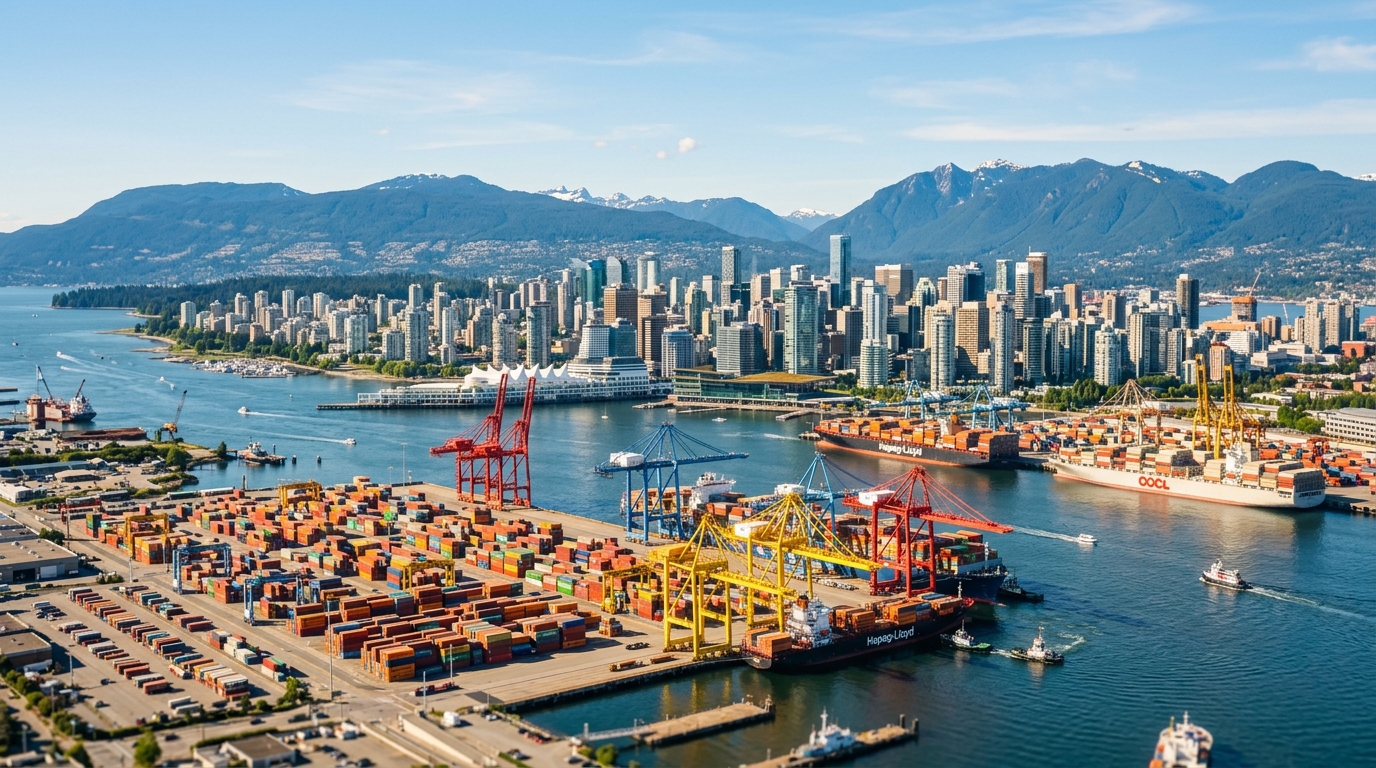
Canada’s largest port by tonnage is heading into a contract negotiation that will determine not just wages and working conditions for thousands of longshore workers, but the pace at which technology integrates into terminal operations. For the businesses that depend on the Port of Vancouver’s roughly $300-billion in annual trade flows, the stakes are immediate and operational.
The collective agreement between ILWU Canada and the BC Maritime Employers Association (BCMEA) is set to expire in March 2027, with the next negotiating window opening later this year. Automation rights—specifically the scope and pace of equipment deployment at Deltaport and Centerm—are the central flashpoint. The union has consistently defended its jurisdiction over work that technology might displace. Employers argue that automation is essential to maintain competitiveness with ports in Seattle, Prince Rupert, and across the Asia-Pacific.
The business community caught between these positions must plan for potential volatility.
What the 2023 strike cost
The last major work stoppage, a 13-day strike in the summer of 2023, cost the Canadian economy an estimated $10-billion, according to the Canadian Chamber of Commerce. Grain shipments stalled, auto parts sat on docks, and retailers scrambled to reroute containers. The disruption cascaded beyond the waterfront; Metro Vancouver’s industrial real estate tenants, operating in a market where vacancy has hovered between 3.5 and 4 per cent, faced limited options for redirecting overflow inventory.
Supply chain managers who once treated labour disruption as a tail risk now model it as a recurring scenario. The question for 2026 is whether your contingency plan remains current.
The automation flashpoint
The automation debate is not hypothetical. Deltaport’s Roberts Bank Terminal 2 project is designed with automation in mind, though the specific balance between semi-automated and fully automated systems remains a subject of ongoing regulatory and labour discussion. Centerm has also integrated automated equipment as part of its capacity expansion.
ILWU Canada has stated that any expansion of automated equipment that displaces bargaining unit work is a core issue. The union’s position is that automation gains must be shared with workers through retraining, income protection, and maintained headcount floors. The BCMEA maintains that operational flexibility on equipment deployment is a management right.
Strategic implications for business
For Metro Vancouver importers and exporters, the implications fall into three categories.
Inventory positioning. Businesses relying on just-in-time delivery should model the impact of a 10-to-14-day disruption. Operators with the balance sheet capacity to carry additional safety stock ahead of the negotiation window are already doing so.
Routing alternatives. Prince Rupert is the most practical Canadian alternative for trans-Pacific cargo, with CN Rail connections to the continental interior. While Prince Rupert has been investing in capacity, it cannot absorb a full diversion of Vancouver’s volume. U.S. West Coast ports are options, but cross-border logistics add cost and complexity.
Contract language. Logistics and warehousing contracts should include force majeure and disruption clauses that explicitly address port labour action. Tenants in industrial corridors should review lease terms for flexibility provisions.
Economic context
The negotiation unfolds against a backdrop of trade uncertainty. Export Development Canada has identified supply chain resilience as a top risk in its 2026 Global Export Forecast, citing port disruption alongside tariff volatility and shipping route shifts. Vancouver’s role as Canada’s Pacific gateway makes it disproportionately exposed.
If your business ships through Vancouver, the takeaway is clear: a contract negotiation with potential for disruption is approaching. The operators who emerge in the best shape will be those who treat this as a planning problem in July, rather than a crisis in November.



