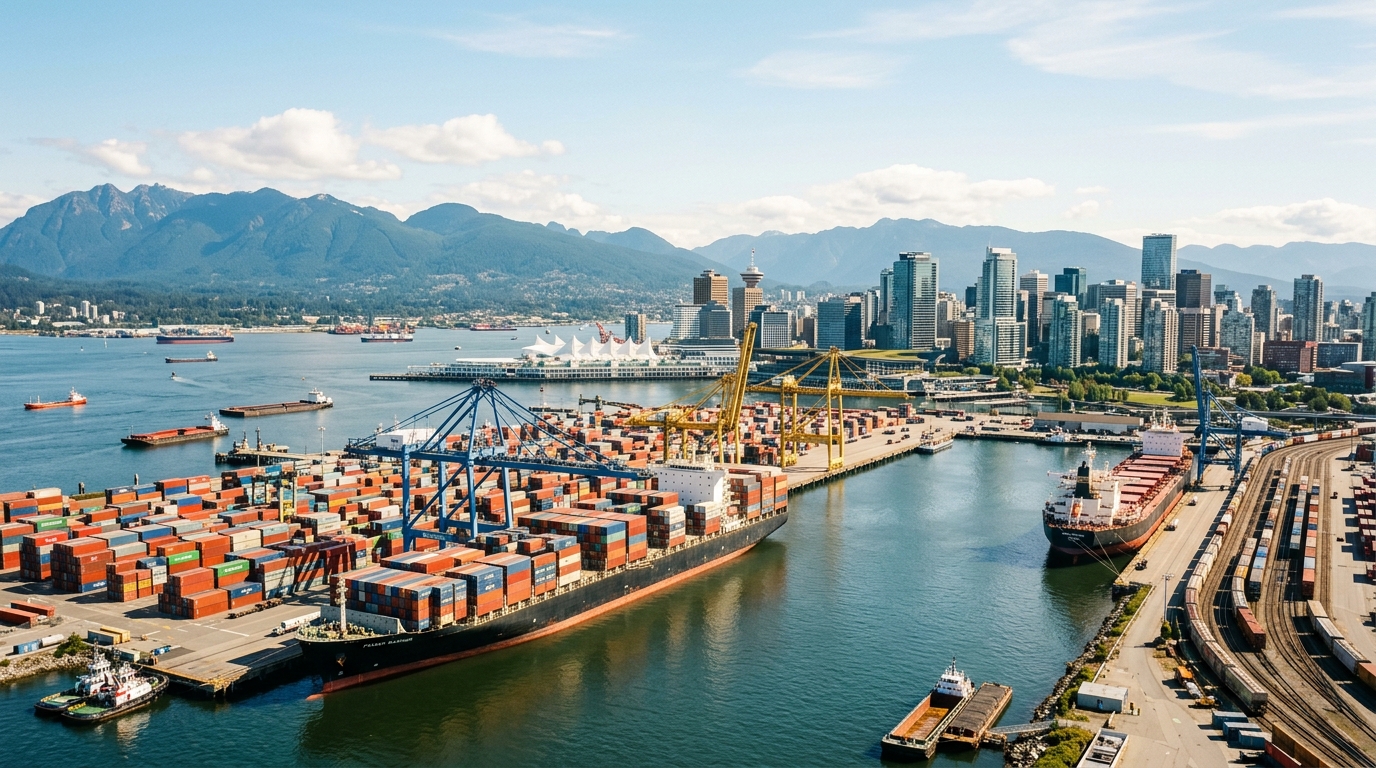
The clock has run out on deliberation. As of Monday morning, BC exporters have roughly 72 hours before the 90-day pause on US reciprocal tariffs expires—and with no confirmed extension or framework deal in place, Thursday, July 9, is no longer a planning horizon. It is a hard deadline.
This is not the same story we told ten days ago. When The Yaletown Ledger reported on the July 9 deadline on June 29, operators still had time to model scenarios and consult advisors. That window is closed. What separates the businesses that will navigate Q3 intact from those that won't is whether they acted in the past ten days—and whether they act in the next 72 hours.
BC exports roughly $50 billion annually to the US market, making it the province's dominant trading relationship. The sectors most exposed—softwood lumber, fresh and frozen seafood, agri-food, auto parts, and aluminum fabrication—are the economic backbone of communities from Prince Rupert to the Fraser Valley to the Interior.
What full reinstatement actually costs
The numbers are concrete. Export Development Canada estimates that a sustained 10% tariff increases annual costs for a mid-size BC exporter by $400,000 to $1.2 million, depending on the sector and US market exposure. For a seafood processor running on five-to-eight per cent margins, that range is an existential pressure on the business model.
The Council of Forest Industries has consistently flagged that BC's softwood lumber sector enters this moment already carrying the weight of existing countervailing and anti-dumping duties. New reciprocal tariffs stacked on top of those duties would compound costs in ways that smaller, independent mill operators are least equipped to absorb.
Who has moved—and how
The operators best positioned heading into Thursday are those who treated the 90-day pause as a working period. Across BC's export sectors, the most common moves fall into three categories.
Pricing adjustments. Exporters with market leverage have been quietly renegotiating Q3 and Q4 pricing with US buyers to share tariff exposure. While US buyers—particularly in retail grocery and construction supply chains—have resisted absorbing cost increases, some BC seafood and agri-food operators have reached agreements that split the tariff burden, protecting margins at the cost of some volume.
Inventory repositioning. Processors and manufacturers with warehouse capacity have been accelerating shipments ahead of the July 9 date, moving product across the border while the pause still applies. This strategy requires capital to carry the inventory and only defers the problem, but it buys time for longer-term contract renegotiations to play out.
Market diversification. The BC Ministry of Trade and Export Development has been promoting Pacific Rim market diversification as a structural response to US tariff risk. The BC Seafood Alliance has been actively supporting members in exploring alternative markets, though building new buyer relationships takes quarters, not weeks.
Who is still exposed
The businesses most at risk heading into Thursday are those with high US revenue concentration, thin margins, and limited ability to pass costs downstream. This includes many of BC's small and mid-size exporters that lack dedicated trade lawyers or treasury teams to run scenario models.
The BC chapter of Canadian Manufacturers & Exporters has been urging members to stress-test their Q3 margins against full tariff reinstatement. For operators who have not done that modelling, the next 72 hours are the final window to run the numbers and make decisions before the tariff environment changes.
The Business Council of BC has noted that uncertainty carries an economic cost—delayed investment, deferred hiring, and hesitation on capital expenditure that compounds regardless of whether tariffs are reinstated or negotiated away.
What to do right now
The priority list is concrete. First, run the margin stress test: model Q3 revenue and cost assumptions under full tariff reinstatement and identify the break-even point. Second, contact US buyers this week—not after July 9—to advance conversations about cost-sharing. Third, check eligibility for EDC's tariff support financing tools. Fourth, document your exposure clearly for lenders and investors.
If your business sells to American customers and you haven't modelled the impact of tariff reinstatement, this week is the last opportunity to act before you are managing a crisis instead of preventing one.
What comes next
The most likely near-term scenarios are reinstatement, a short technical extension, or a partial sectoral carve-out. None of these outcomes is confirmed. Operators who have built their Q3 plans around a hopeful extension are the most exposed—not because an extension is impossible, but because betting on it without a contingency is a decision with asymmetric downside.
The businesses that will look back on this week as a turning point are those treating Thursday as a real deadline, not a negotiating drama to watch from the sidelines.



