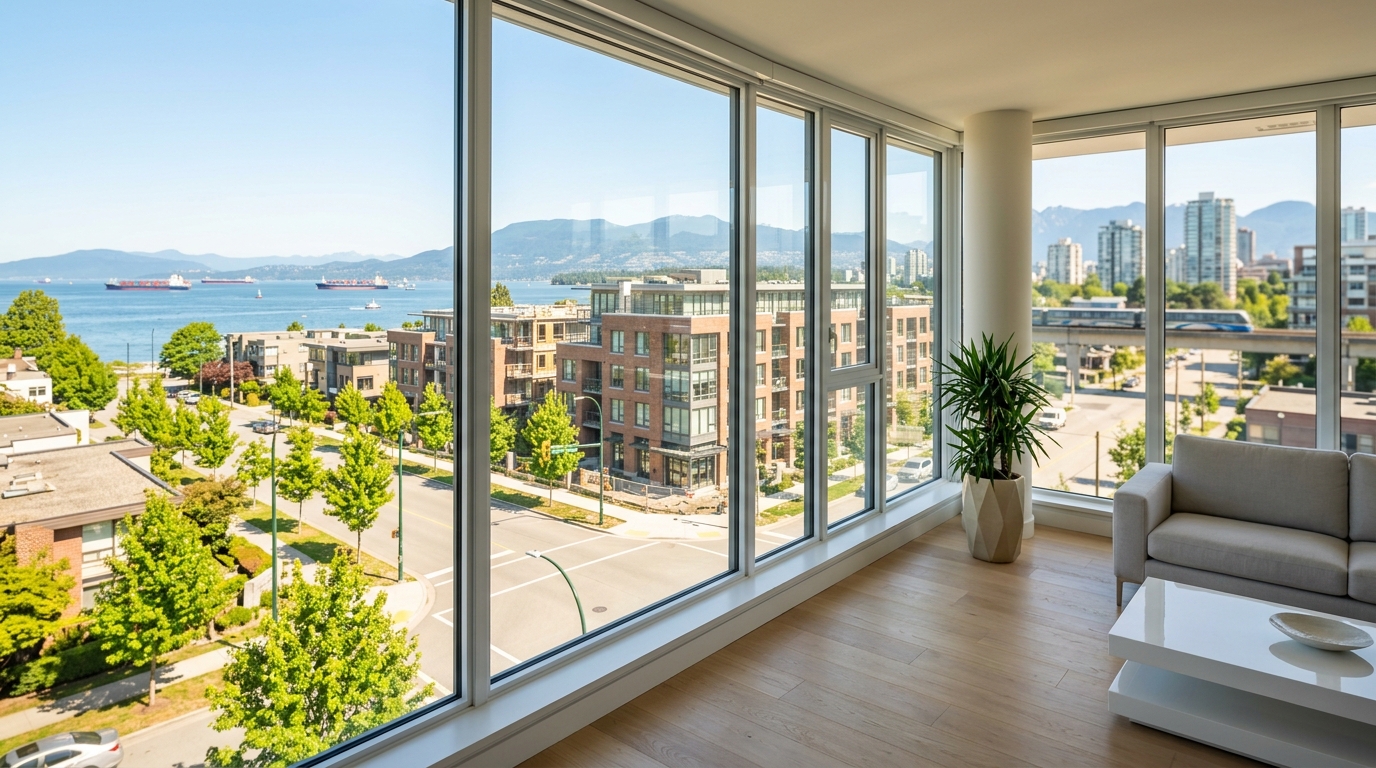
The quietest deals are rarely the station-adjacent parcels. Those are snapped up quickly, in plain sight, with price tags that announce themselves. The real action in Metro Vancouver’s land market is happening one or two blocks further out—on the arterial mid-blocks and residential side streets 400 to 800 metres from SkyTrain stations, just beyond the primary radius of BC’s Transit-Oriented Areas Act (Bill 47). Investors are assembling these parcels lot by lot, before the broader market fully prices in the density they now have a credible path to unlock.
Eighteen months after Bill 47 came into force, the first wave of activity concentrated on Tier 1 station cores—the 200-metre rings where the legislation permits the highest densities, in some cases up to 20-storey towers at a floor area ratio of 5.0. The second wave is now washing into the arterial and mid-block parcels surrounding those cores. These lots sit in the 400-to-800-metre band: close enough to benefit from municipal rezoning confidence, but far enough that their price-per-buildable-square-foot has not yet caught up.
The geography of this wave is specific. Burnaby’s Metrotown periphery—particularly the blocks flanking Beresford Street and the mid-block parcels between Kingsway and Imperial—is seeing coordinated acquisitions as developers stitch together sites for mid-rise and high-rise applications. Along Surrey City Centre’s edges, brokers report growing interest in older single-family and duplex lots not yet folded into formal TOD planning areas. In East Vancouver, the Hastings Street arterial corridor is drawing attention from operators and out-of-province capital priced out of the inner core.
A land assembly requires an anchor buyer to secure an option or purchase agreement on one parcel, then systematically approach neighbours. The logic is cumulative: a single 33-foot lot in Metrotown’s periphery might trade at $1.8 million to $2.2 million based on current use. Assemble four or five lots into a site for a six-to-eight-storey mid-rise, and the per-lot value climbs substantially. However, this relies on every owner in the target block signing on. The "holdout problem" is real: one owner who refuses can collapse an entire assembly. Consequently, brokers rarely advertise these deals, preferring direct outreach over 12 to 18 months.
BC Assessment data tracking assessed value changes in Tier 1 station areas since 2024 illustrates the uplift already baked into inner rings, and the runway remaining in outer bands. The "density premium"—the spread between current assessed value and potential assembled value—is widest in the 400-to-800-metre band. This window is finite; as the market catches up, that spread compresses.
For property owners, the leverage dynamic shifts based on parcel location. Corner lots and mid-block parcels that an assembler cannot route around command a structural premium. Owners of these keystones should understand their negotiating power before signing. Owners of interior parcels face a different calculation: early signers may receive a premium for reducing uncertainty, while late holdouts risk being left with a single parcel surrounded by new development.
Transaction records from the Land Title and Survey Authority of BC show the pace of multi-lot consolidations has accelerated since mid-2025. The Urban Development Institute of BC has noted that second-ring arterial parcels represent the next logical frontier for redevelopment as inner-ring supply tightens.
Many active assemblers are not conventional developers, but land-banking funds and private syndicates that acquire sites, rezone them, and sell to builders. This two-stage model has become common as construction financing has tightened. Property owners should verify whether a buyer intends to build or flip the site, as this shapes the timeline and the offer price.
The bottom line: if you have received unsolicited outreach, the assembly process has likely started. Obtaining independent legal advice and a current land appraisal that explicitly accounts for assembly potential is essential. Within 18 to 24 months, as more rezoning applications move through municipal processes, the remaining mid-block parcels will fully price in the uplift, narrowing the spread that makes today’s deals attractive.
What to watch: Municipal council decisions in Burnaby and Surrey on OCP amendments extending TOD-supportive zoning will be the clearest leading indicator of where the second wave moves next. Watch also for Metro Vancouver’s regional planning updates on arterial corridor policy, which could formalize the framework for these informally assembled parcels.



