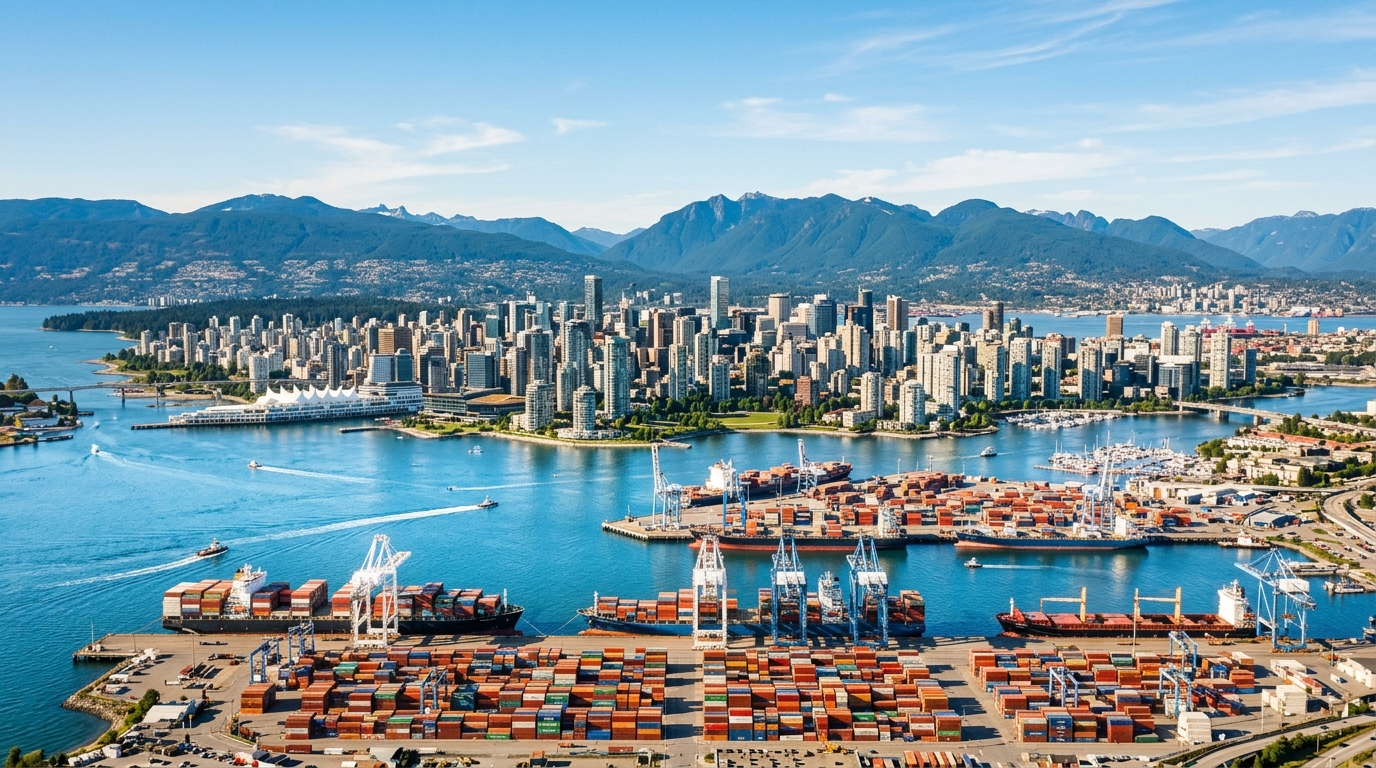
The labour market signal that Metro Vancouver contractors have been anticipating is now appearing in their crew schedules. LNG Canada’s Kitimat facility—the country’s largest private infrastructure investment—is entering its commissioning and final construction phase in 2026, and the demand for certified trades workers is being felt 800 kilometres south.
Pipefitters, instrumentation technicians, and industrial electricians are the most acutely affected. These skilled workers are essential to Metro Vancouver’s active infrastructure and residential pipeline, but they are being drawn north by high wages and the promise of extended rotational work that local residential projects struggle to match.
The numbers behind the pressure
The scale of LNG Canada’s workforce demand explains the intensity of this shift. Peak construction at the Kitimat site exceeded 10,000 workers, and commissioning requires a concentrated cohort of experienced, highly certified tradespeople—journeypeople with pressure-vessel and instrumentation credentials that take years to earn.
This concentration is significant because Metro Vancouver’s labour pool is already stretched. BuildForce Canada’s 2026 workforce forecast projects a shortage of 14,000 construction workers in BC by 2027, a figure that was already central to contractor risk assessments. The mega-project is not creating the shortage, but it is compressing it.
Against that backdrop, Metro Vancouver currently has more than $30 billion in active infrastructure and residential construction underway. Every certified worker who rotates to Kitimat is a worker unavailable to pull wire on a Burnaby mid-rise or commission mechanical systems on a new community health centre.
What this means for Vancouver
For developers and general contractors, the impact is manifesting in crew availability and subcontractor bid prices. When a specialized trade is in short supply, subcontractors gain pricing power. Wage competition with LNG-scale projects means that journeyperson pipefitters and instrumentation technicians are commanding premiums not accounted for in pro formas signed twelve months ago.
The BC Construction Association has tracked tightening labour availability across the Lower Mainland throughout the current construction cycle. The commissioning phase adds a variable that is difficult to hedge: a time-limited pull that concentrates demand on the exact trades already in short supply.
The connection to housing delivery is direct. Schedule slippage on mechanical and electrical rough-in—both labour-intensive phases—pushes occupancy timelines, delaying revenue for developers and keeping units off the market. In a city where housing supply is a central policy priority, this trades drain is a measurable constraint on housing production.
The retrofit and infrastructure overlap
The timing compounds existing challenges. BC’s CleanBC retrofit incentive programs are also competing for the same pipefitters and electricians, while Infrastructure BC’s active project portfolio adds a third layer of demand. The LNG commissioning pull arrives into a market that was already operating at capacity.
BC’s apprenticeship registry shows enrollment growth in several trades, but the transition from apprentice to journeyperson takes three to five years. There is no short-term supply-side fix. Contractors are managing the constraint through crew rotation agreements, accelerated apprentice-to-journeyperson ratios where safety regulations permit, and increased selectivity in bidding.
The opportunity inside the constraint
For contractors who have invested in workforce retention—competitive wages, benefits, and stable scheduling—this moment offers a competitive advantage. Firms that maintained crews through the slower periods of 2023 and 2024 now possess the capacity to bid. For developers, the lesson is clear: trades availability must be underwritten at the project-planning stage, not assumed.
The Urban Development Institute’s member surveys have consistently flagged labour availability as a top-tier risk for Metro Vancouver project delivery. The LNG commissioning phase makes that risk concrete. The pressure will be most acute through the second and third quarters of 2026, as Kitimat’s commissioning schedule peaks, before easing as that work concludes and tradespeople return to the regional market.
Until then, contractors who plan around the constraint rather than hoping it resolves itself will be best positioned to keep projects on schedule.



