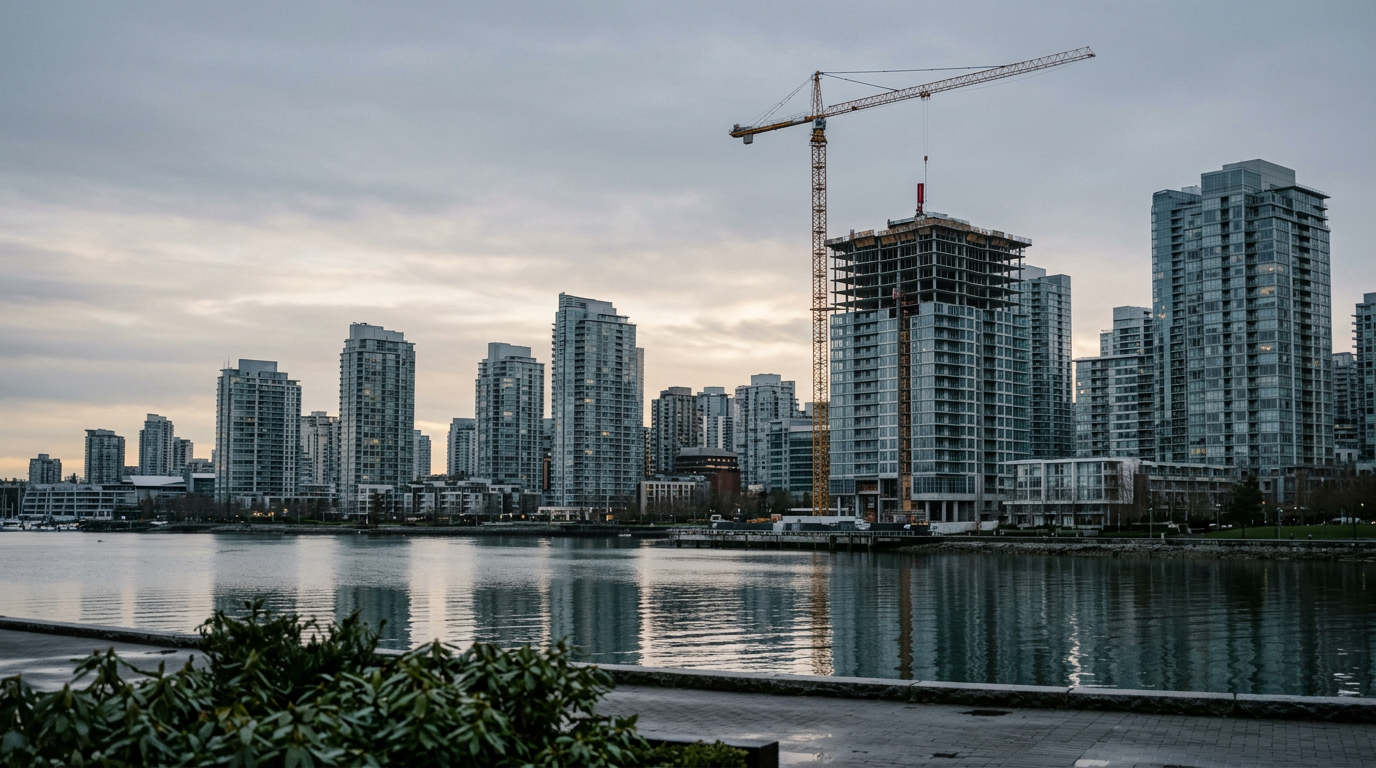
Sarah Chen walks through a show home in Richmond's Golden Village development, where the pace of sales has noticeably slowed from the frenetic activity of previous months. The 34-year-old marketing manager is finding more options and time to consider her purchase decision—a stark contrast to the bidding wars that defined recent years.
"It feels different now," Chen says, examining granite countertops without the pressure of competing offers. "I can actually take time to think about my decision."
Chen's experience reflects early signs of change in Metro Vancouver's housing market, as February sales increased 13.5% year-over-year while benchmark prices rose 4.5% annually to $1.2 million, showing continued growth but at a more moderate pace than the explosive gains of recent years.
The market is showing signs of transitioning from the extreme seller's advantage that characterized the pandemic boom, with implications rippling through construction, municipal planning, and mortgage markets.
Construction Sector Adapts to New Reality
Developers are adjusting project timelines and sales strategies as market conditions evolve. While construction employment has remained stable, industry sources report that developers are taking a more cautious approach to new launches.
Some projects are experiencing delays, including a 38-unit development in Burnaby that has been postponed pending market assessment. Industry sources report that lenders are requiring higher pre-sale thresholds—often 70% compared to 50% during peak demand periods.
The condo segment continues to show strength, with sales up 15% compared to February 2023. Detached home sales also posted gains of 12% annually, while townhomes showed the strongest growth at 18%.
Regional Variations Emerge
Price growth varies significantly across Metro Vancouver communities. Richmond and Burnaby continue to see robust appreciation, with benchmark prices up 8.2% and 7.9% respectively. Vancouver proper has shown more moderate gains at 5.1%, while North Vancouver has experienced the strongest growth at 12.8%.
These variations reflect different buyer demographics and housing stock. Areas with strong employment growth and transit connectivity continue to attract premium pricing, while established neighbourhoods show steadier, more sustainable appreciation.
Municipal Planning Adjusts
The evolving market is influencing municipal revenue projections and infrastructure planning. Property transfer tax collections remain strong but growth has moderated, prompting cities to reassess the pace of infrastructure investments.
Development cost charges continue to provide substantial revenue as projects move forward, though municipalities are monitoring market conditions closely. Cities like Surrey and Coquitlam are adjusting the timing of major transit and recreation investments based on evolving development patterns.
Lending Market Evolves
Financial institutions are adapting their lending practices to current market conditions. Mortgage approval processes have become more rigorous, with lenders requiring more comprehensive documentation and higher credit standards.
The combination of elevated interest rates and enhanced due diligence is creating a more selective lending environment. First-time buyers are finding success by working with mortgage brokers and taking advantage of government programs designed to support homeownership.
Market Outlook
Real estate professionals are adapting their services to match current market dynamics, offering more comprehensive buyer education and market analysis. Industry observers expect continued growth through the spring selling season, though at a more sustainable pace than the dramatic increases of recent years.
For buyers like Chen, the current market offers more choice and time for decision-making. She's planning to make an offer on the Richmond townhome next week, appreciating the opportunity to make a thoughtful purchase decision.
The Bottom Line: Metro Vancouver's housing market continues to show growth with February sales up 13.5% and prices rising 4.5% annually, but the pace has moderated from previous years. This evolution is creating a more balanced environment for buyers while requiring developers, municipalities, and real estate professionals to adapt their strategies to changing conditions.



