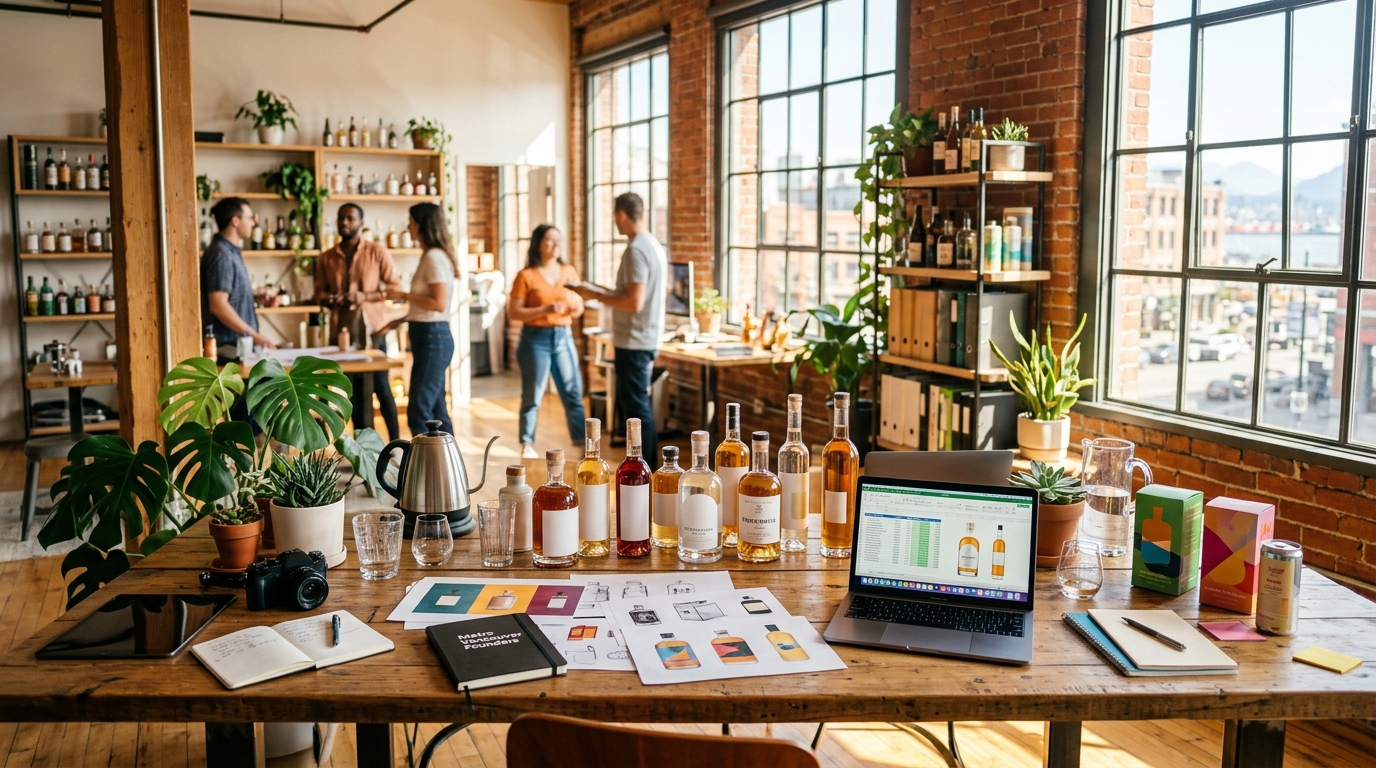
The shelf used to be a single dusty row near the back. Today, BC Liquor Stores have carved out dedicated no- and low-alcohol sections that did not exist in any meaningful form three years ago. That physical real estate—a few feet of refrigerated glass in hundreds of stores—is the most contested terrain in Metro Vancouver’s startup scene.
A cohort of local founders is sprinting to claim it. They are building premium non-alcoholic spirits, functional tonics, and adaptogen-spiked drinks with the knowledge that the category clock is ticking. Canadian non-alcoholic beverage sales have accelerated sharply since 2023, with NielsenIQ tracking double-digit annual growth in the category, a pace that has caught the attention of national grocery buyers and U.S. incumbents.
The opportunity is real. So is the urgency.
The Retail Moment
Getting listed is hard; staying listed is harder. Grocery and liquor retail in BC operates on brutal margin math: founders typically absorb listing fees, promotional commitments, and distributor margins that can stack to 40–55 cents on every dollar of retail price, before a single unit moves. For a startup operating on seed or pre-Series A capital, that compression is existential.
What has changed is buyer appetite. Overwaitea Food Group and Save-On-Foods have both expanded their non-alcoholic and functional beverage sets in the past 18 months, responding to measurable consumer pull. Buyers who once needed convincing now have internal mandates to find credible local products.
Who’s Building
The local cohort is diverse. Some founders target the premium spirits-replacement consumer—those seeking a complex, botanical drink for social occasions. Others target the functional wellness aisle, with drinks built around ashwagandha, lion’s mane, or reishi, positioned as daily rituals.
The unit economics differ significantly between these segments. Spirits-replacement products can carry retail price points of $18–$40 per bottle, supporting margins that make the distributor stack survivable. Functional ready-to-drink formats face more compression, competing on velocity rather than margin per unit—a difficult model for a startup without the production scale to drive costs down.
Several founders have connections to the VANTEC Angel Network, which has served as an early-stage backstop for BC consumer goods companies that do not fit the pure-software mould preferred by many venture funds. That angel infrastructure is vital; the gap between a promising product and a viable retail business is often a working capital problem.
The Window, Measured in Months
The competitive reality is clear: well-capitalised U.S. non-alcoholic brands are already in Canadian distribution, and more are arriving. Brands that have established shelf presence in BC—building local recognition and locking in promotional relationships—will be harder to displace.
The window is defined by procurement cycles. Grocery buyers typically review category sets once or twice a year. A local brand that secures a listing in the next cycle and performs has a defensible position. A brand that misses that window may find the shelf already occupied by a U.S. entrant with a national marketing budget.
On-premise adoption—restaurants, bars, and hotels offering curated non-alcoholic menus—is accelerating the consumer education curve, which benefits retail. When a guest discovers a non-alcoholic spirit at a Vancouver restaurant, the retail listing needs to exist. Founders who crack both channels simultaneously build brand awareness that is expensive to replicate.
The Investor Case
For early-stage investors, the calculus is specific. This is not a technology bet with a 10-year liquidity horizon. Consumer packaged goods exits typically occur through acquisition by larger beverage companies seeking category exposure without the R&D risk. Major beverage companies have already begun acquiring non-alcoholic brands to rebalance portfolios.
A BC-based brand with confirmed retail listings, demonstrable velocity data, and a clean Health Canada compliance record—Natural Product Number registration is required for any functional claims—is a legible acquisition target. The risk is equally specific: burn rate on inventory-heavy consumer businesses is punishing. Investors should focus on cash conversion cycles rather than just tasting notes.
The Bigger Picture
Vancouver has quietly built credibility in premium consumer goods. The non-alcoholic beverage cluster is the latest expression of that capability. The founders who win this race will solve the distribution economics, survive margin compression, and establish the retail velocity that makes a buyer’s decision to keep them on the shelf an easy one. The number of BC-based non-alcoholic brands with confirmed retail listings has grown meaningfully in the past 12 months, a signal that local product is clearing the bar.
The shelf is there. The consumer is there. The question is whether local capital moves fast enough to back the founders already in the room.