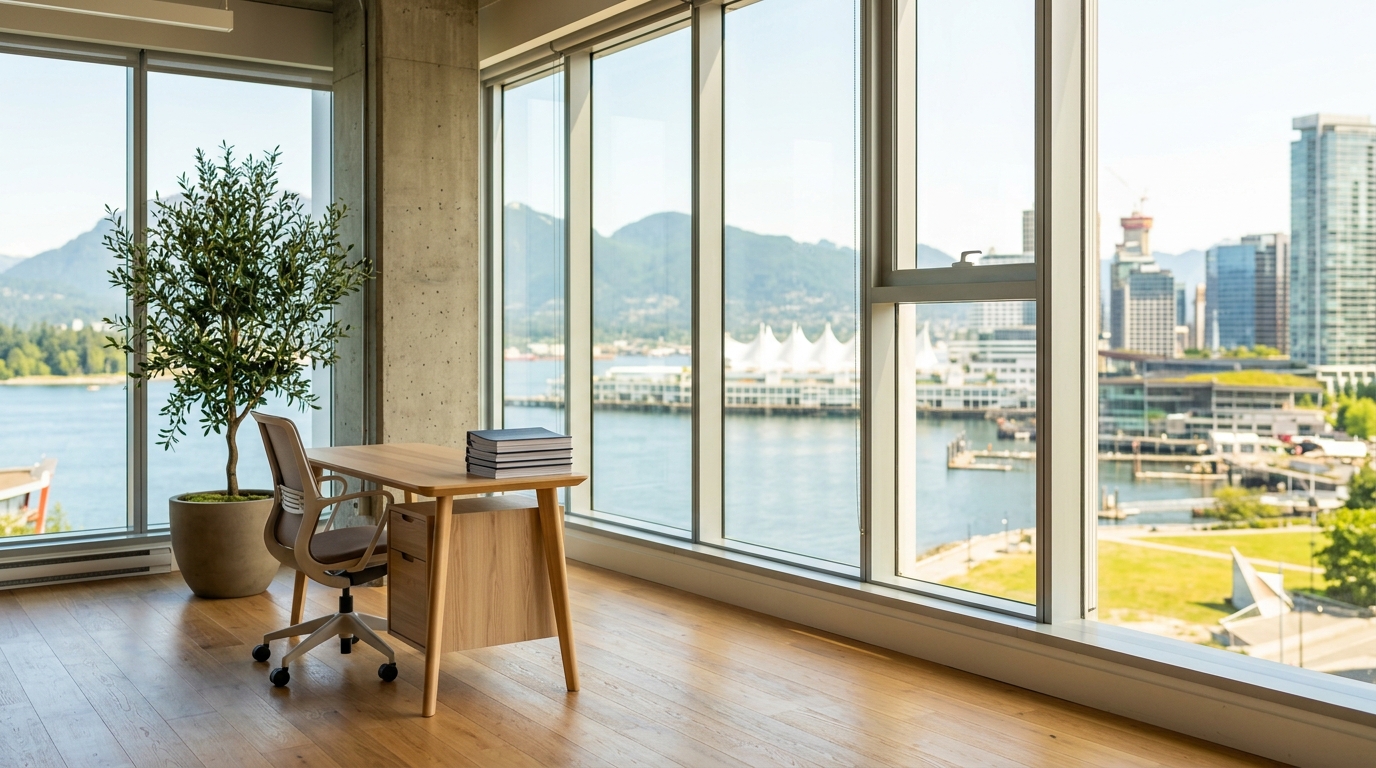
Picture a fully fitted-out floor in a Broadway tech corridor building—complete with workstations, wired boardrooms, and a kitchen—available at roughly $28 per square foot when the comparable direct lease down the hall asks $40. That gap, multiplied across 5,000 square feet over five years, adds up to $300,000 in occupancy savings. This is the Metro Vancouver office sublease market in the summer of 2026, and for the right company, it is one of the most favourable real estate environments in a generation.
Metro Vancouver's office sublease inventory has climbed to approximately 3.2 million square feet—the highest level since 2009—spread across Downtown Vancouver, the Broadway Corridor, and Burnaby's Metrotown and Brentwood nodes. This surge stems from pandemic-era over-leasing, hybrid work policies that have reduced per-employee footprints, and a wave of tech sector contractions. The original tenants, still bound by their leases, are now highly motivated sublessors.
Sublease rates across Metro Vancouver are running 25 to 35 per cent below direct lease comparables, according to market data tracked by major commercial brokers. A company that would pay $42 per square foot on a direct deal in Downtown Vancouver can find equivalent sublet space in the $27–$32 range. For a firm taking 8,000 square feet on a five-year term, the savings versus a direct lease can exceed $500,000—capital that stays in payroll or product development rather than flowing to a landlord.
The backdrop is a Downtown Vancouver overall office vacancy rate tracking above 12 per cent, giving tenants negotiating leverage not seen in over a decade. Landlords who once had waiting lists for premium floors are now competing to fill them, and sublessors are competing against those landlords simultaneously. This creates a rare moment of genuine buyer power in a market that has been firmly in the hands of the supply side for most of the past fifteen years.
This window, however, is not permanent. Commercial real estate analysts expect the sublease overhang to begin absorbing by late 2027 as lease expirations roll off, remote-work policies stabilize, and new demand from sectors including life sciences and financial services fills the gap. Once vacancy normalizes toward the 8–9 per cent range that characterized the pre-pandemic equilibrium, current tenant leverage will compress. Firms that move in the next 12 to 18 months can lock in savings for the full term of their lease, insulating themselves from the next upcycle.
The strategic play is clearest for companies in a specific growth band: too large to hot-desk, too early-stage to commit to a long-term direct lease at full market rates, and operationally ready to occupy built-out space. Professional services partnerships, health-tech firms that have closed a Series A, and creative companies relocating from more expensive markets are natural fits. Many sublet floors in the Broadway and Brentwood corridors are already wired for collaborative, open-plan work and sit within walking distance of SkyTrain stations.
Due diligence is essential. Sublease agreements carry structural differences from direct leases. A subtenant's rights are derivative of the original lease; if the head tenant defaults, the subtenant's position can become complicated. Lease term alignment is also critical: a sublease expiring in 2029 may not match a company's five-year growth plan. Engaging a tenant-side commercial broker and legal counsel before signing is the cost of accessing the discount safely.
The bottom line: Metro Vancouver's office sublease glut is a structural cost opportunity. For scaling companies with space needs in the 3,000–15,000 square foot range, the combination of below-market rates and built-out interiors represents a competitive advantage. The market will not stay this soft. Firms that act before late 2027 will secure well-appointed offices at below-market rents, gaining a meaningful edge over competitors in a tighter environment.
What to watch: CBRE and Colliers publish quarterly Metro Vancouver office market reports. The Q3 2026 editions, due in October, will provide the first signal of whether sublease absorption is accelerating. Watch the Downtown and Broadway submarket figures; a sublease availability drop of more than 200,000 square feet in a single quarter would suggest the window is closing faster than the 18-month baseline.



