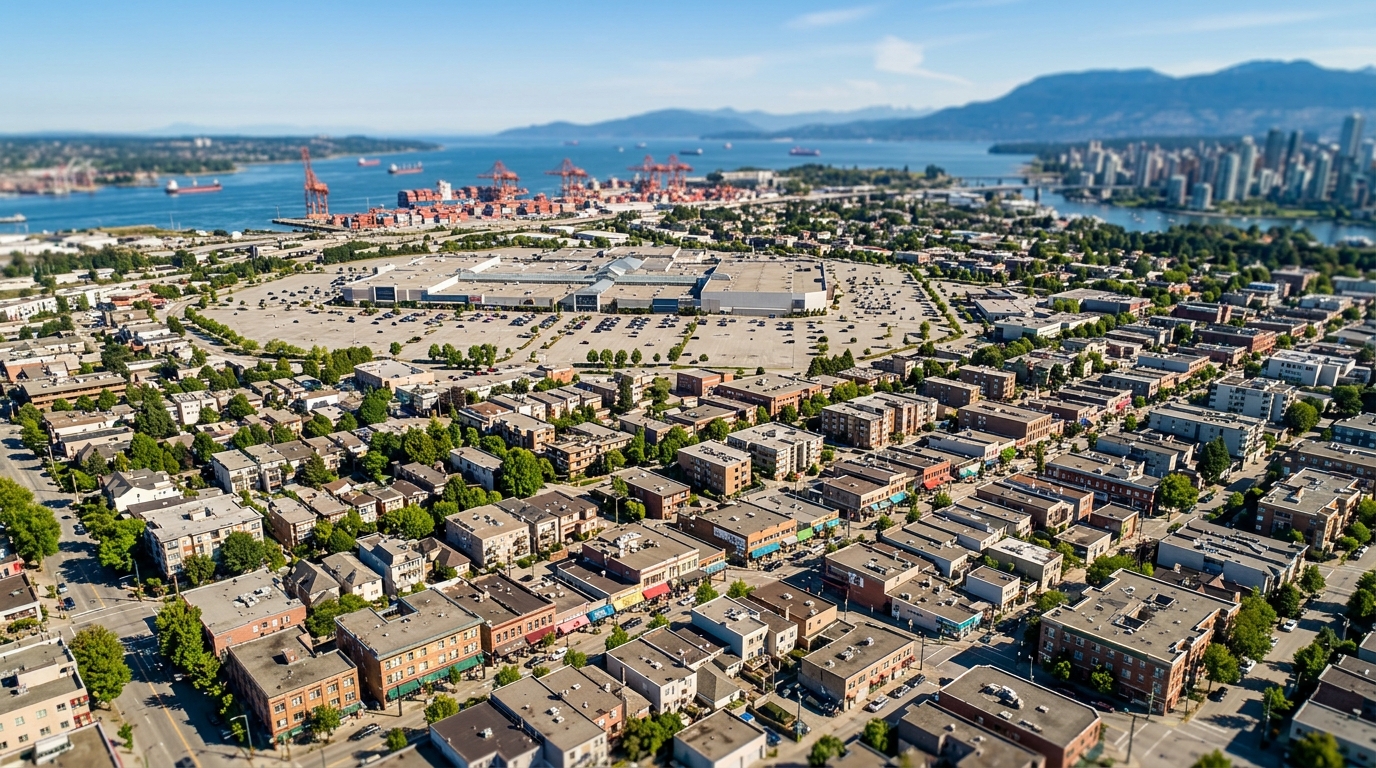
Metro Vancouver’s retail landscape is bifurcating. Neighbourhood commercial strips—including Main Street, Commercial Drive, Dunbar, and Moody Centre—are operating at roughly 3–4% vacancy, the lowest levels since 2018. Conversely, enclosed malls in Burnaby and Richmond are navigating 8–11% vacancy, struggling with anchor tenant churn and the ongoing retreat of national chains. For landlords, retailers, and investors, identifying which side of this divide an asset occupies is now a critical market strategy.
This divergence is structural. Between 2023 and 2025, more than 400,000 square feet of enclosed mall space across Metro Vancouver was vacated by national anchor tenants, including department stores and mid-market apparel chains. Mall landlords are now pivoting toward entertainment, food and beverage, and mixed-use conversion, though these transitions require significant time and capital.
In contrast, Main Street and Commercial Drive saw rent increases of 6–9% year-over-year in 2025, defying the broader retail softness seen in other North American markets. Landlords in these corridors currently hold significant pricing power as tenants compete for limited space.
Drivers of the split
The shift is rooted in consumer preference for walkable, mixed-use environments—a trend that accelerated during the pandemic. Metro Vancouver’s demographics, characterized by a dense, transit-oriented population in inner-city neighbourhoods, have established the high street as the primary format for daily spending. Retail trade data from Statistics Canada for BC in Q1 2026 confirms continued strength in food, personal services, and specialty retail—sectors that thrive in strip formats.
Lease structures also play a role. Strip retail typically features shorter terms and smaller footprints, which appeal to independent operators. Meanwhile, national chains that previously consolidated into mall anchors are now seeking to re-enter neighbourhood corridors with smaller, more flexible store formats.
Market implications
For retail operators, the data favours neighbourhood strips due to rent stability and lease flexibility. In corridors like Main Street, where vacancy is 3–4%, competition for space is high, necessitating quick, decisive action. The City of Vancouver's commercial vacancy data and Healthy Retail program provide resources for those navigating this competitive environment.
Investors should look toward smaller-format strip assets, such as the mixed-use buildings lining Dunbar Street or lower Commercial Drive. These properties have historically traded at a discount, but their current vacancy profiles and rent growth potential suggest a need for repricing. The Metro Vancouver Regional District's commercial land use inventory offers guidance on where these assets are concentrated.
Mall assets remain viable, but require a different investment thesis. Successful centres are prioritizing food, fitness, and experiential tenants. The Retail Council of Canada's BC chapter notes that malls successfully navigating this transition are those moving fastest to integrate services that cannot be replicated online.



