A quiet but consequential change is moving through Metro Vancouver's municipal billing systems. Cities including Surrey, Burnaby, and Coquitlam are replacing flat-rate stormwater levies—a fixed annual charge regardless of site characteristics—with pricing models tied directly to a property's impervious surface area. For owners of industrial yards, big-box retail centres, and surface-parking-heavy commercial properties, the financial exposure is material.
Under impervious-surface-area pricing, a large industrial site covered in asphalt and concrete can face stormwater fee increases of 200 to 400 per cent compared to the previous flat-rate model. On a large logistics yard or distribution centre, that arithmetic translates to tens of thousands of dollars added to annual operating costs—a line item not yet reflected in most cap rate assumptions or lease negotiations.
The policy shift is driven by two converging forces: the funding conditions attached to federal green infrastructure programmes, which require municipalities to demonstrate cost-recovery mechanisms tied to actual runoff generation, and the investment imperatives of Metro Vancouver's Integrated Liquid Waste and Resource Management Plan. That plan identifies an estimated $9 billion in liquid waste infrastructure investment required over the next 30 years, rendering the old flat-rate model fiscally untenable for regional governments.
The logic of impervious-surface pricing is straightforward: a property blanketed in asphalt generates far more stormwater runoff than a landscaped site of the same footprint, placing a proportionally greater burden on municipal drainage systems. The new models capture this distinction, and large industrial and commercial operators will feel the impact most acutely.
Reality check: What the numbers mean for operators
Consider a 150,000-square-foot distribution centre on a 6-acre lot in Surrey, with a loading yard and minimal landscaping. Under a flat commercial rate, the annual stormwater levy might have been a minor line item. Under Surrey's revised drainage utility structure, the fee is calculated against measured impervious area, resulting in a substantially different bill. For REITs and institutional owners managing portfolios across multiple municipalities, the aggregate exposure could reach six figures annually.
The transition is occurring municipality by municipality on different timelines, with no single regional announcement. BOMA BC has been tracking the issue as municipalities roll out their revised fee structures, but awareness among individual asset managers remains uneven.
The green infrastructure offset
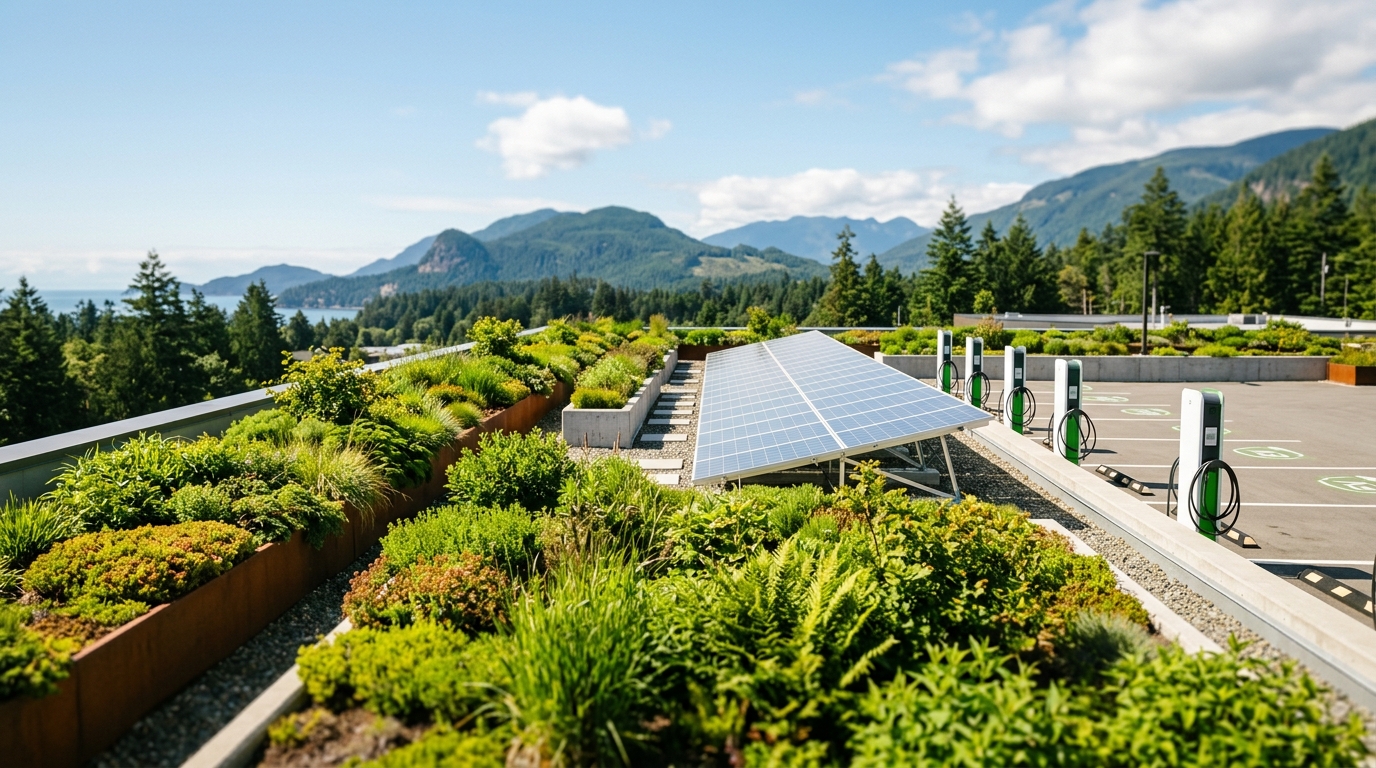
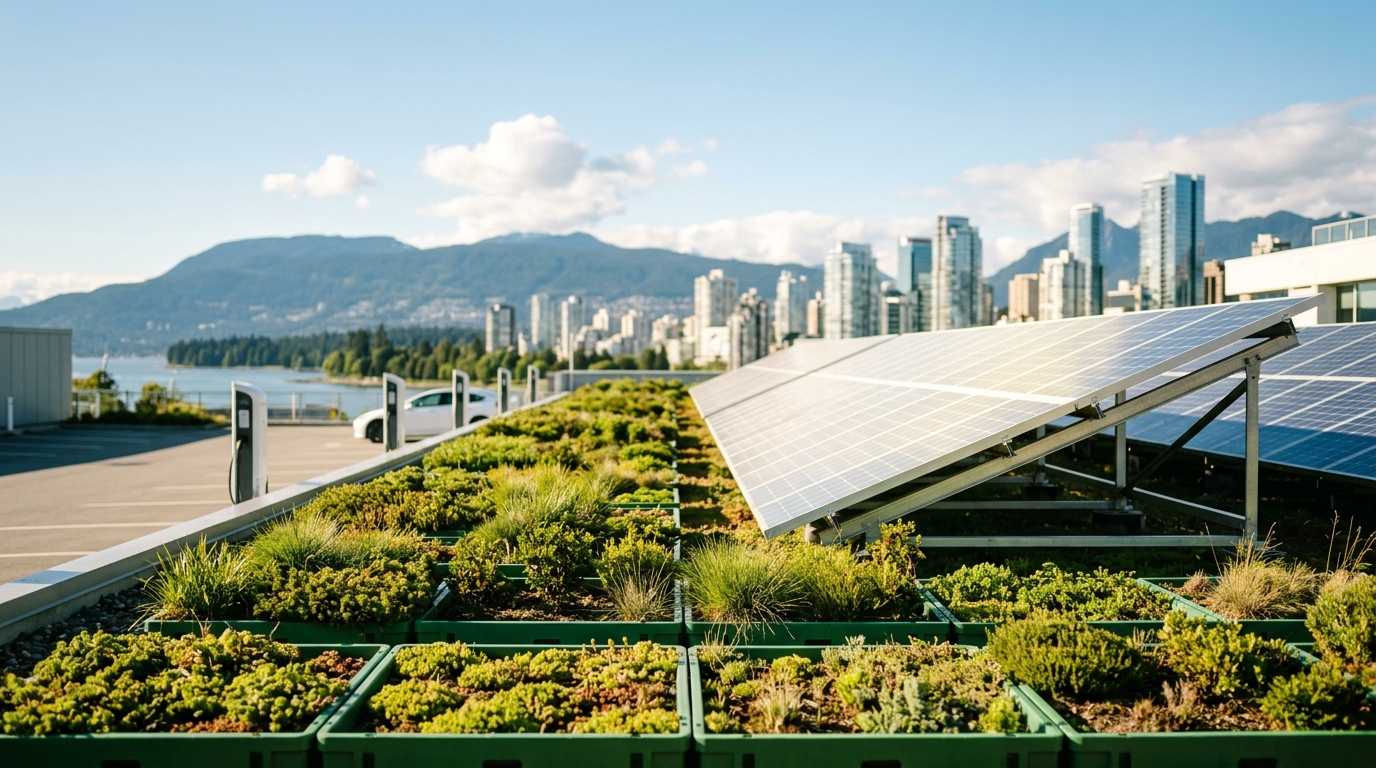
Both Surrey and Burnaby have built credit mechanisms into their new stormwater pricing models that reward properties for reducing runoff at the source. Green infrastructure retrofits—permeable paving, bioswales, green roofs, and detention cisterns—can reduce the impervious surface calculation, with documented offsets of 20 to 50 per cent on annual stormwater charges.
For a large industrial property facing a $40,000 annual stormwater bill, a 30 per cent reduction through retrofits represents $12,000 in annual savings. Depending on retrofit costs and financing terms—and BC's commercial green infrastructure financing programmes—payback periods on permeable paving and bioswale installations can fall within five to eight years. That is a straightforward capital allocation argument.
Smart operators are already running the numbers. Industrial developers active in the Fraser Valley and Burnaby's Still Creek corridor have begun incorporating stormwater management into site design at the planning stage rather than treating it as a compliance afterthought.
What property owners should do now
The immediate priority is an audit. Owners of industrial and commercial properties in Surrey, Burnaby, and Coquitlam should request a current impervious surface assessment from their municipality and model their fee exposure under the new rate schedules. For portfolio owners, this means running the exercise across every asset in the affected jurisdictions.
The second step is evaluating retrofit options against the fee offset schedules published by each municipality. Targeted interventions—a bioswale along a loading dock perimeter or a detention feature in an underused corner of a yard—can move the impervious surface calculation meaningfully at a lower capital cost.
Stormwater repricing is the direction of travel for municipal infrastructure finance across Canada. Properties that adapt their site design and financial modelling now will be better positioned as the repricing wave extends to additional municipalities and rate schedules tighten over the decade ahead.