Walk the loading docks of a small-bay industrial unit in South Surrey on a Tuesday morning and you will find a scene that would have seemed unremarkable five years ago: every bay occupied, every truck slot spoken for, and a property manager fielding calls from tenants hoping for a vacancy. It rarely happens.
Metro Vancouver's industrial vacancy rate has remained below 2% for several consecutive quarters, according to market data tracked by CBRE. That figure—stubbornly low and seemingly abstract—has become a primary cost variable for e-commerce fulfillment operators, food distributors, and third-party logistics providers across the region. When space is this scarce, the market leaves little room for negotiation.
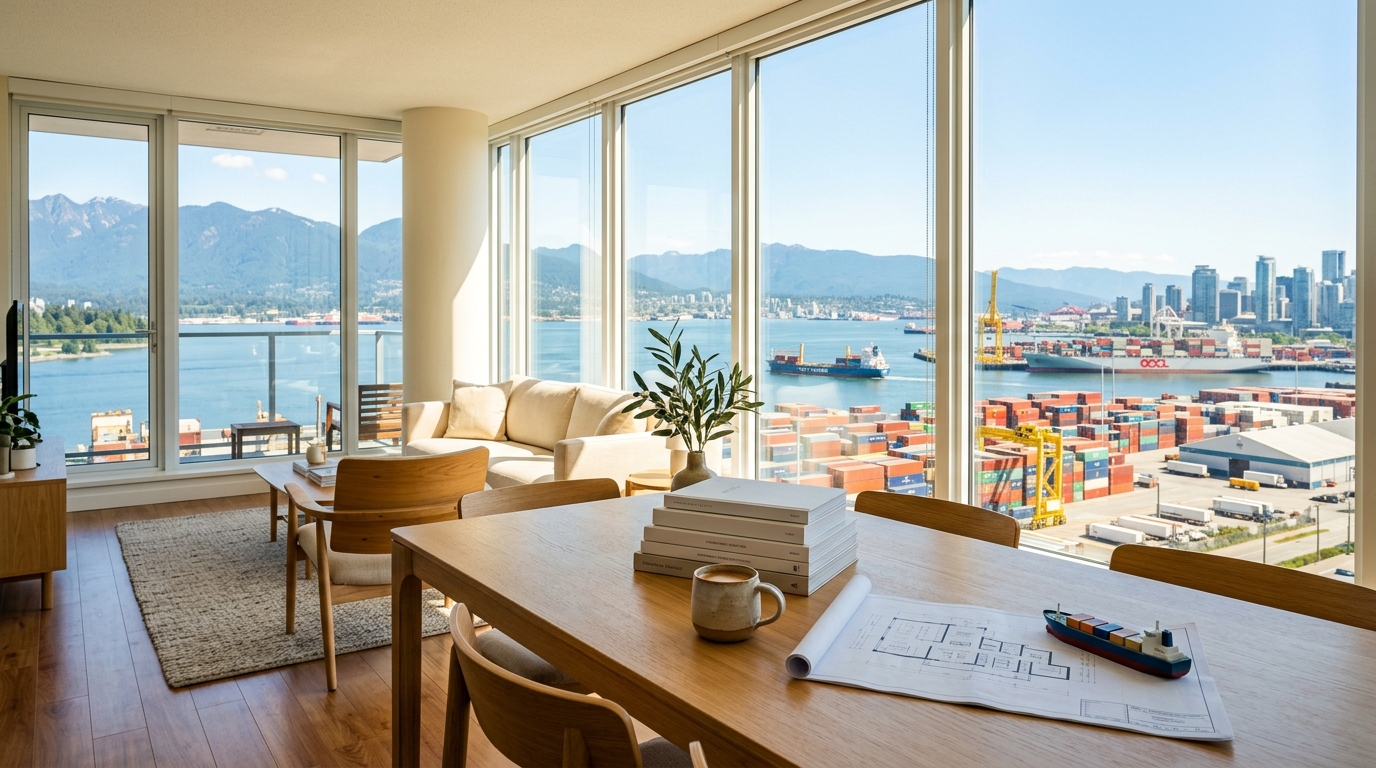
The pressure has intensified as trans-Pacific container flows have been redirected through Metro Vancouver's port complex, adding volume to a last-mile network already operating at capacity. The downstream effect lands hardest in Surrey, Delta, and Pitt Meadows—the functional spine of the region's distribution infrastructure.
What Space Actually Costs
For operators hunting small-bay industrial space—units typically ranging from 2,000 to 8,000 square feet—the rent reality is stark. Net asking rents for small-bay industrial in Surrey have climbed sharply over the past 24 months, with current rates between $24 and $28 per square foot annually, compared to $17 to $20 in early 2024, according to Colliers International. That represents a cost increase of 35% to 40% for the same footprint—before operating costs, taxes, and the short-term lease premiums that have become standard in a landlord's market.
These short-term premiums are significant. Operators who cannot commit to five- or ten-year terms—due to shifting demand or capital constraints—are signing 12- to 24-month leases at rates 15% to 20% above comparable long-term deals. It is the real estate equivalent of buying flexibility on credit.
Data from Cushman & Wakefield suggests that lease renewals significantly outnumbered new leases signed in Q1 2026, a pattern reflecting both tenant caution and a lack of available product. When tenants cannot find better options, they stay put.
The Workarounds Gaining Traction
Faced with constrained supply and rising costs, a growing cohort of Metro Vancouver logistics operators is adapting. Three strategies are gaining traction.
The first is co-location. Operators who might once have viewed competitors as rivals are now sharing warehouse space, splitting fixed costs, and coordinating delivery windows to maximize throughput. The BC Trucking Association has noted the rise of informal and formal co-location arrangements among its members as a direct response to vacancy pressure.
The second is logistics technology. A cohort of software startups—several based in Vancouver—is building tools designed to wring more throughput from constrained footprints. Warehouse management systems that optimize pick paths, inventory positioning software that reduces dwell time, and dynamic slotting algorithms are seeing increased adoption among operators who cannot solve their space problem by acquiring more square footage.
The third adaptation is geographic diversification. Some operators are extending their last-mile networks into secondary nodes—Abbotsford, Chilliwack, and the eastern Fraser Valley—where vacancy rates remain higher and rents are lower. The Surrey Board of Trade has flagged the risk that cost pressure could push distribution activity further from Metro Vancouver's population core, with implications for local employment and delivery service levels.
What to Watch
Two variables will shape the next 12 months. The first is new industrial supply: while strata and lease projects are in the development pipeline across Surrey and Delta, construction timelines and financing conditions mean meaningful relief is unlikely before late 2027. The second is the trajectory of trans-Pacific trade volumes, which will determine whether the current squeeze deepens or stabilizes.
The bottom line: For any Metro Vancouver business that moves physical goods, last-mile warehousing is no longer a background cost—it is a strategic variable. Operators who lock in space now, explore co-location, and invest in throughput technology are building a durable advantage over those waiting for the market to soften. On current evidence, that softening is not coming soon.



