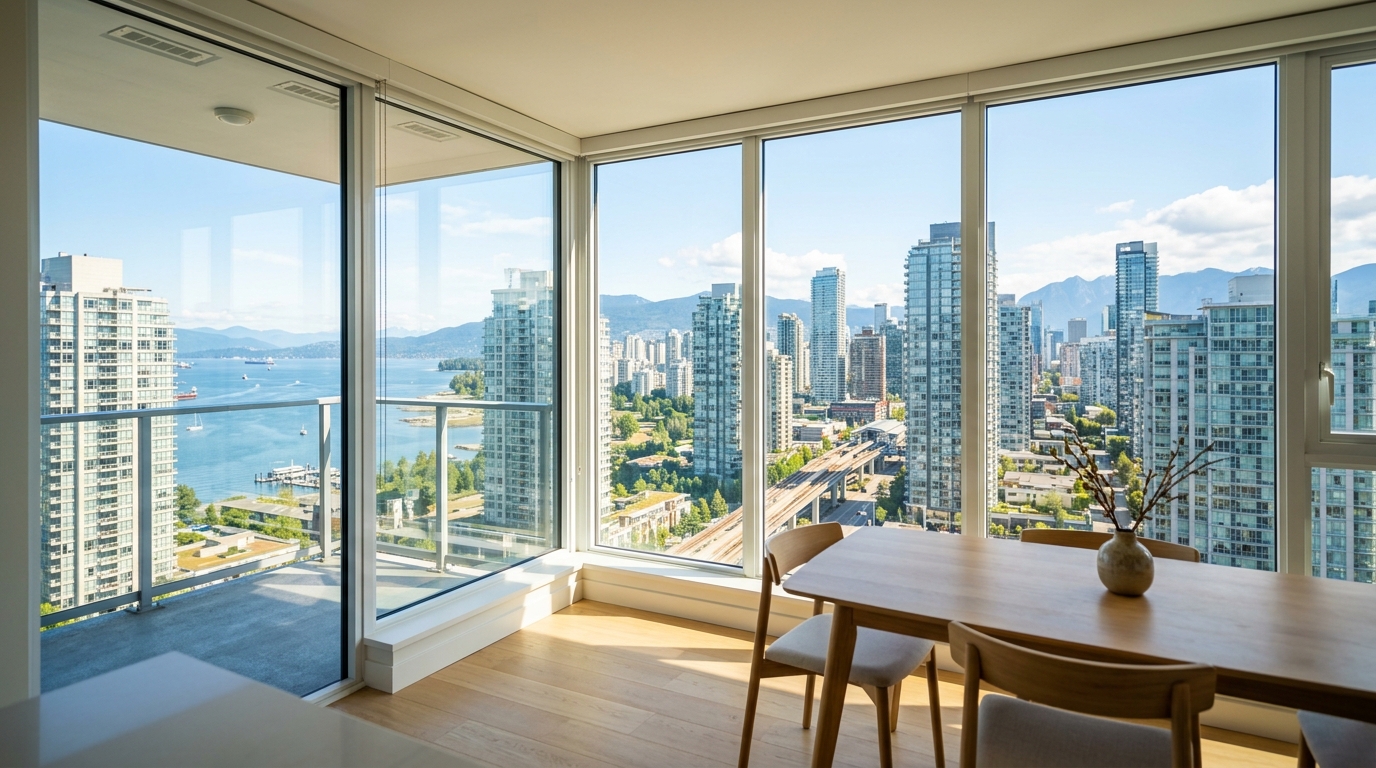
Stand at the corner of Kingsway and Beresford Street on any weekday morning and the arithmetic of urban transformation is impossible to miss. To the east, a crane swings over what was, until recently, a two-storey strip mall anchored by a Vietnamese restaurant and a dry cleaner that had operated for 22 years. To the west, the glass podium of a recently completed 40-storey tower gleams—its ground-floor retail units dark behind paper-covered windows. This is Metrotown in the summer of 2026: a neighbourhood being rebuilt faster than it can be absorbed.
Burnaby’s Metrotown corridor is entering its most intensive redevelopment phase since the original shopping centre opened in 1986, and the stakes extend far beyond the neighbourhood’s borders. The decisions Burnaby City Council makes in the next 18 months—on displacement timelines, ground-floor activation requirements, and affordable-unit ratios—will function as a living policy template for every other municipality managing density pressure along the SkyTrain spine.
The scale of what’s moving
The numbers are significant. Burnaby’s Metrotown Downtown Plan targets 40,000 new residents in the area over 30 years—a population roughly the size of Penticton, layered onto an existing urban fabric within walking distance of a single SkyTrain station. Metrotown SkyTrain station consistently ranks among the top five busiest in the entire TransLink network, making it both an ideal candidate for transit-oriented density and a pressure-tested proving ground for what that density produces.
Active rezoning applications and projects under construction within 600 metres of the station currently number in the dozens, according to Burnaby City Council’s rezoning application registry. The pipeline includes residential towers ranging from 35 to 58 storeys, mixed-use podium buildings, and several purpose-built rental projects seeking density bonuses. For real estate investors tracking land assemblies, the corridor has become one of the most actively transacted in Metro Vancouver, with BC Assessment parcel transaction data showing a sustained run of site consolidations along Kingsway, Beresford, and Bonsor Avenue.
The retail bifurcation problem
A significant operational challenge is the commercial leasing gap opening between new and legacy retail inventory. Ground-floor retail vacancy in recently completed Burnaby podium towers is running above 15%, according to Q1 2026 market reports from commercial real estate firms tracking the corridor. The cause is a structural mismatch: podium units in new towers are typically larger, carry higher base rents, and come with triple-net obligations that suit national tenants rather than the independent operators who historically defined Metrotown’s street-level character.
Meanwhile, the legacy strip-mall inventory being displaced is not simply relocating. Operators who built customer bases over decades on relatively affordable gross leases are finding that no equivalent space exists within the corridor at rents their margins can support. The result is a two-tier commercial landscape: gleaming podium frontage that sits dark while searching for a tenant willing to pay $55 to $75 per square foot, and a shrinking supply of the affordable space that independent retailers need.
Displacement pace draws scrutiny
The residential displacement picture is generating its own pressure. Local housing advocacy groups have documented a sustained pattern of renoviction and no-fault eviction notices tied to rezoning applications in the Metrotown area. The concern is that the pace of change has outrun the city’s capacity to provide relocation support or guarantee affordable replacement units within the same neighbourhood.
Burnaby Council has signalled awareness of the tension. Amendments to the city’s tenant assistance policy, debated in 2025, require developers to provide longer notice periods and enhanced compensation packages for renters displaced by rezoning-enabled demolitions. Whether those requirements translate to genuine housing continuity for displaced tenants remains a subject of debate among housing advocates.
What this means for investors and operators
For real estate investors with exposure to Metrotown, the near-term picture is nuanced. Residential towers with purpose-built rental components and CMHC MLI Select financing are well-positioned: the fundamentals of a top-five SkyTrain station, a growing resident base, and provincial transit-oriented development zoning protections create a durable demand floor. Condo presale projects face more variable absorption, particularly in the upper floors of towers where price-per-square-foot assumptions were built on a market that has since softened.
For retail operators, the opportunity is real but requires precision. The podium vacancy problem is also a negotiating window: landlords sitting on dark ground-floor units are increasingly willing to offer tenant improvement allowances and rent-free periods that were unthinkable two years ago. Independent operators who can demonstrate traffic and anchor value—such as food and beverage, health services, or childcare—are in a stronger position than the headline rents suggest.
The broader precedent question should occupy every municipal planner and transit-corridor investor in Metro Vancouver. Metrotown is not an outlier; it is the leading edge of a densification wave that will move through Lougheed, Surrey Central, and Brentwood over the next decade. How Burnaby manages the collision between displacement, retail activation, and community continuity in the next 18 months will either produce a replicable model or a cautionary one.
The bottom line
Metrotown’s redevelopment is accelerating, creating genuine opportunity for investors, developers, and retail operators willing to negotiate in a market with more vacancy than the headlines acknowledge. The risks are equally real: a commercial leasing bifurcation that threatens street-level vibrancy, and a residential displacement pace that continues to test the local safety net. Watch Burnaby Council’s next rezoning cycle closely. The policy decisions made there before the end of 2026 will set the template for every SkyTrain corridor that follows.



