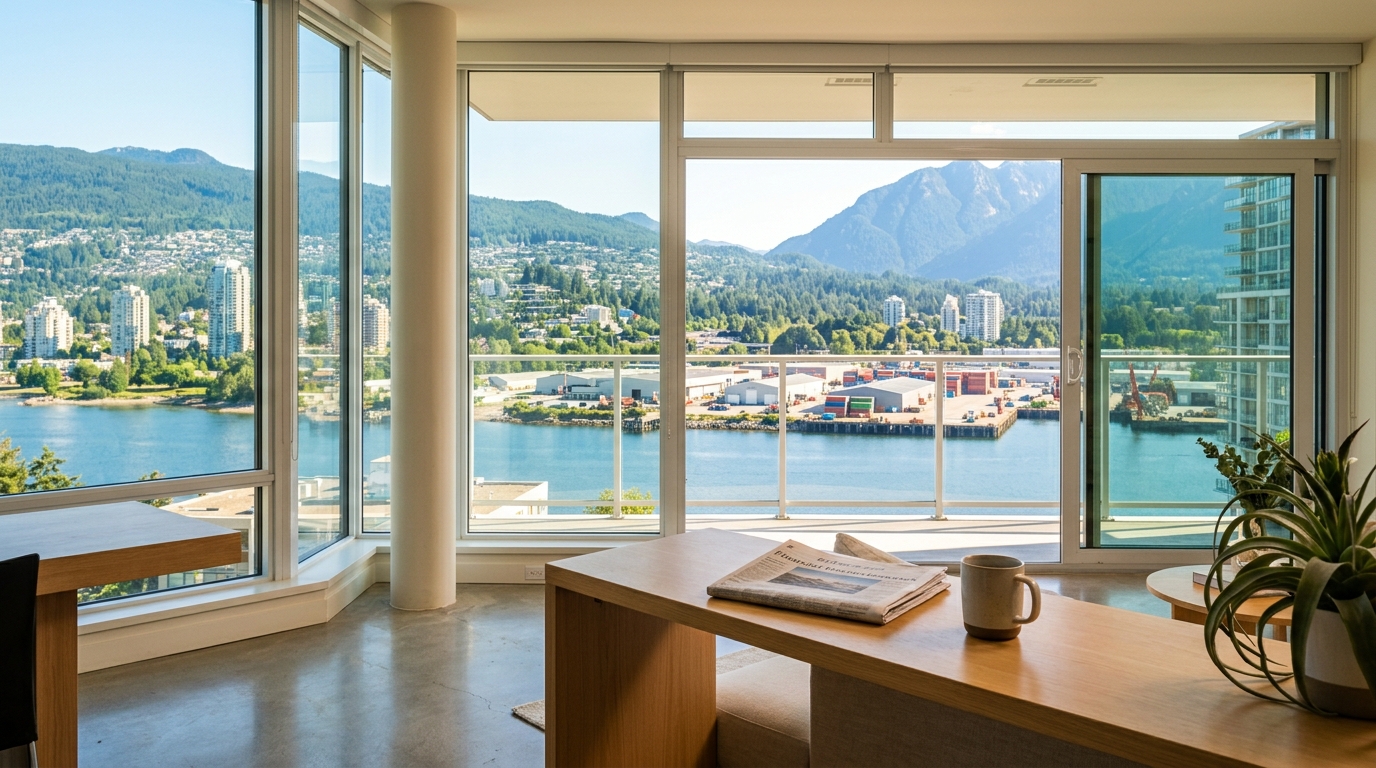
Drive along Harbour Avenue in North Vancouver on a weekday morning and the signs of scarcity are clear: loading bays humming before 7 a.m., "No Vacancy" signs in the windows of small-bay strata units, and the occasional moving truck signalling that another tenant has made the difficult decision to relocate. The North Shore’s industrial corridor—once an affordable hub for last-mile logistics, marine contractors, and trades firms serving the region’s dense residential base—is running out of room.
Industrial vacancy on the North Shore fell below 2.5% in Q1 2026, according to brokerage tracking data, a threshold that signals a landlord’s market with little negotiating leverage for tenants. For context, Metro Vancouver’s overall industrial vacancy rate sat near a historic low of approximately 3.1% at the close of 2025. The North Shore is tighter still, and unlike Burnaby or Surrey, it has virtually no developable industrial land in the pipeline to ease the pressure.
The supply constraint is structural. North Shore municipalities sit between mountains and ocean, with residential zoning consuming most of the flat land that industry might otherwise occupy. The District of North Vancouver’s planning documents show minimal net-new industrial land available for development, meaning the existing stock of strata and leasehold units is, for practical purposes, a fixed resource.
Strata industrial sale prices on the North Shore have crossed $700 per square foot, a record for the submarket that reframes the rent-versus-own calculus for operators with the capital to purchase. For those who lease, the effect is felt in rising asking rents and renewal terms that offer little of the flexibility tenants enjoyed three years ago.
The Strategic Fork
For businesses with leases expiring in 2026, the decision is no longer straightforward. Renewing on the North Shore means absorbing a significant step-up in occupancy costs—in some cases 30% to 40% above the expiring rate. Relocating to Coquitlam, Port Coquitlam, or Pitt Meadows offers lower base rents and, in some cases, newer purpose-built space, but it introduces its own logistical costs.
The Tri-Cities and Pitt Meadows corridors have absorbed significant industrial demand from operators priced out of Burnaby and East Vancouver, and vacancy there is also tightening. A marine contractor whose clients are concentrated in North Vancouver marinas faces a different relocation calculus than a general e-commerce fulfillment operator.
Operators should evaluate the total financial commitment, including the differential in net rent over a five-year term, one-time relocation and fit-out costs, the impact on staff retention, and any client-proximity premium. For some, the math still favours staying; for others, the numbers increasingly point east.
Why This Submarket Is Different
The North Shore’s industrial base serves an economic ecosystem that is not easily replicated. Marine service firms, specialty trades, and last-mile operators serving the district’s roughly 190,000 residents depend on proximity. Metro Vancouver’s regional industrial land strategy has flagged the North Shore’s constrained supply as a long-term concern, but regional policy instruments move slowly. Operators with 2026 expiries cannot wait for rezoning or new supply.
The Bottom Line
The North Shore industrial market has moved from tight to scarce. For operators with lease expiries in the next six to twelve months, the strategic window for decision-making is closing. Those who have not yet begun a relocation search or a renewal negotiation are already behind. The firms that navigate this best will be those that quantify the cost of proximity versus the arbitrage of relocation before the landlord sets the terms.
Watch for: Q2 2026 brokerage reports from Avison Young and CBRE for updated North Shore vacancy data; any District of North Vancouver planning decisions affecting industrial zoning in the Lynn Creek and Harbourside areas; and whether the Pitt Meadows corridor’s vacancy rate holds below 5% as displaced North Shore tenants arrive.



