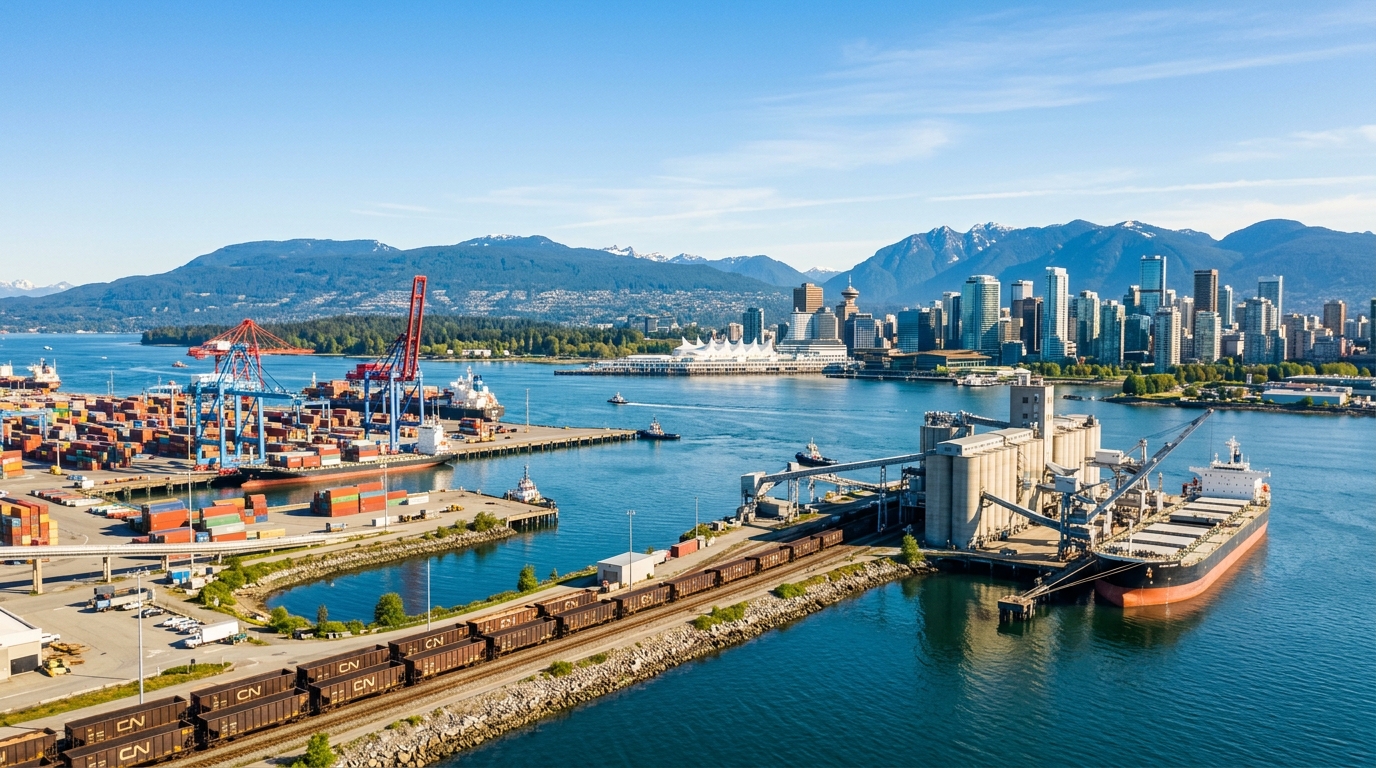
For decades, BC exporters have faced a singular reality when CN or CP left grain sitting on a siding outside Kamloops: wait, complain, and wait some more. The Port of Vancouver is Canada's largest port by tonnage, moving approximately 145 million tonnes of cargo annually, and the mountain rail corridors feeding it are effectively a duopoly. Shippers needed the railways, and the railways knew it.
That leverage equation may be shifting. Federal transport officials are signalling that amendments to the Canada Transportation Act could include binding performance standards with financial penalties—the most significant structural change in shipper-rail relations since the original Act passed in 1996. For Metro Vancouver's export-dependent economy, the implications are concrete.
The Dwell Time Problem
This policy push follows a trend of rising congestion. Terminal dwell times at Deltaport and Centerm—the Port of Vancouver's primary bulk and container facilities—climbed to multi-year highs through the second quarter of 2026, driven by congestion on CN and CPKC mountain corridors. Dwell time measures how long cargo sits at a terminal awaiting rail pickup; every extra day increases demurrage costs, storage fees, and revenue delays for exporters.
The Vancouver Fraser Port Authority tracks this performance data, providing the benchmark Ottawa is now monitoring. When dwell times spike at Canada's Pacific gateway, the downstream effects ripple through grain elevator scheduling in Alberta, potash loading at Canpotex terminals, and lumber shipment windows for Interior BC mills.
For a mid-sized grain handler moving Prairie wheat to Asian buyers, a 48-hour increase in average dwell time can cascade into missed vessel windows and contractual penalties with offshore customers. Those costs land on the exporter's margin, not the railway's.
What Ottawa Is Proposing
While the Canada Transportation Act has undergone periodic reviews, the current round—informed by the 2022 statutory review—is the first to place binding performance penalties on the table. Previous reviews focused on service-level agreements and voluntary commitments; shippers could seek arbitration, but the process was slow and the remedies modest.
Binding penalties would mean railways face automatic financial consequences for missing defined performance thresholds, such as car cycle times and placement reliability. The Shipping Federation of Canada and grain industry groups have long argued that without such teeth, performance frameworks remain largely decorative.
The Western Grain Elevator Association has consistently documented the gap between railway service commitments and actual delivery, noting that predictable car supply has been the exception rather than the rule during periods of mountain corridor congestion.
The Railway Perspective
CN and CPKC maintain that performance standards must account for realistic operating conditions, such as weather disruptions, labour negotiations, and infrastructure constraints. CN's quarterly operating metrics and CPKC's results highlight that performance is sensitive to variables beyond simple capacity planning. The industry warns that an overly aggressive penalty framework could potentially discourage the capital investment required to expand corridor capacity.
Implications for Vancouver
For the local business community, this shift represents a rebalancing of power. When exporters lack credible recourse for underperformance, they absorb costs that reduce their competitiveness against international rivals. Fertilizer Canada has documented how rail reliability directly affects the ability of Canadian potash producers to compete on delivery timelines.
If binding standards take effect, Vancouver-area freight forwarders and logistics operators could see more predictable vessel loading windows and a clearer mechanism for addressing missed commitments. The timeline for implementation remains uncertain, as CTA amendments require parliamentary passage and regulatory development, likely extending into 2027.
For now, shippers should view federal signalling as directional. The ultimate impact will depend on whether the final legislation creates automatic triggers for penalties or relies on a more complex, complaints-based arbitration process.



