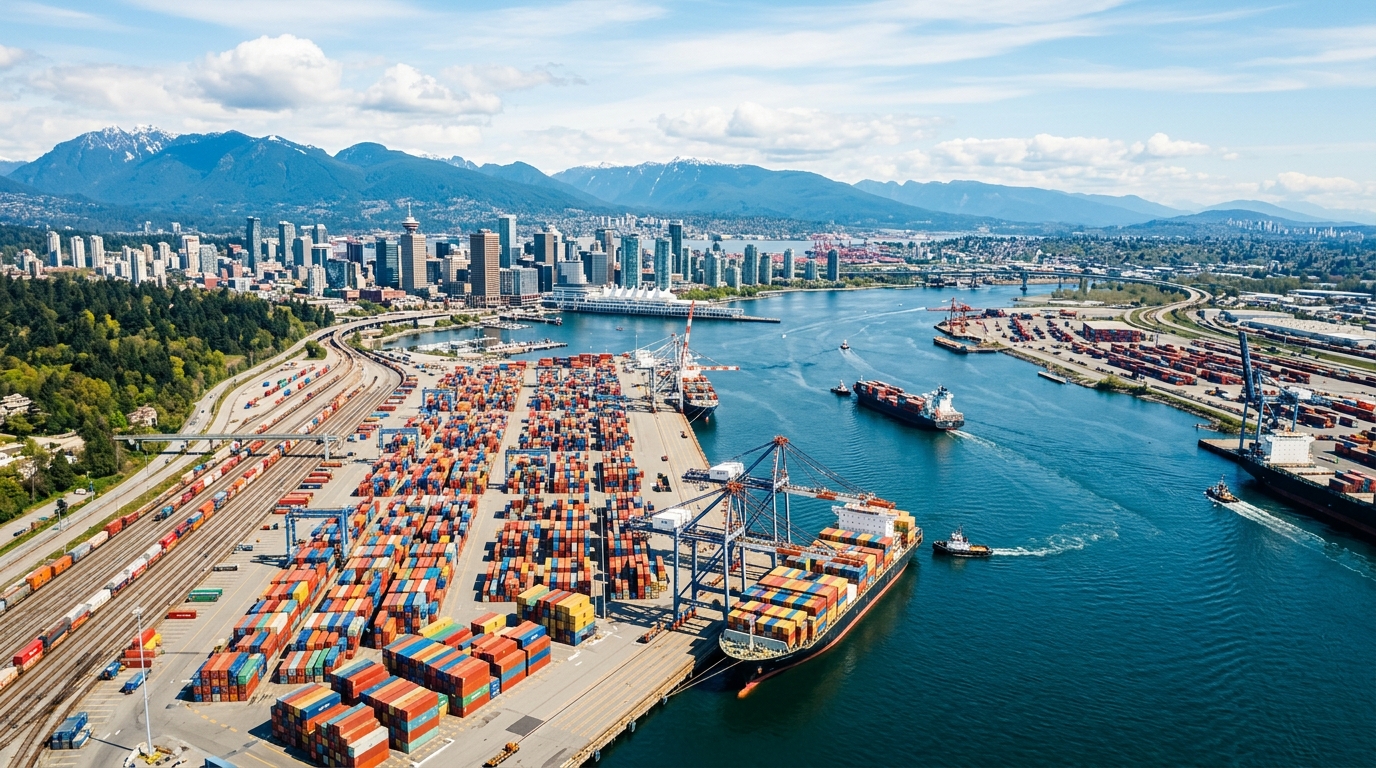
For much of the past decade, BC manufacturers and agri-food producers reaching Asian markets faced a narrow set of choices: truck goods south, route through a US port, and absorb the associated tariff and logistics costs. While predictable, this reliance on US infrastructure left exporters vulnerable to shifting trade policies. Now, the Port of Vancouver is moving to change that calculus.
The Vancouver Fraser Port Authority has accelerated a multi-year diversification strategy to reshape how BC goods reach global markets. The authority has expanded capacity agreements with Asia-Pacific ro-ro and break-bulk operators and fast-tracked approvals for inland container depots in the Fraser Valley. This move shortens the supply chain for producers in Abbotsford and Chilliwack who previously faced long overland hauls to reach deep-water terminals.
The Port of Vancouver is Canada's largest port by cargo volume, handling approximately 145 million tonnes annually. The current shift focuses on reducing dependence on US routing to build durable, direct corridors to Asia-Pacific markets.
Capacity and Infrastructure
The infrastructure behind this shift centres on two facilities. Centerm, the container terminal on Burrard Inlet, has undergone a significant capacity expansion, while Deltaport at Roberts Bank remains a primary hub for container volume. Together, these facilities form the backbone of the port’s export capacity, now being marketed as a direct alternative to US-routed shipments.
Inland container depot approvals are a critical, if less publicized, component of this strategy. By establishing approved locations closer to production areas, the port authority reduces the friction costs—time, fuel, and driver hours—that have historically hindered smaller producers. A greenhouse operator in Langley or a food processor in Abbotsford can now consider direct container export to Asian markets, a process that was logistically cumbersome only two years ago.
The Agri-Food Opportunity
BC's agri-food exports have grown steadily, with the province's greenhouse sector representing a significant share of outbound trade. US tariff volatility has provided a catalyst for producers to diversify their routing. Several operators in the Abbotsford and Chilliwack areas have already begun rerouting shipments through the port's expanded facilities, according to information from the port authority. Furthermore, Global Affairs Canada trade data shows BC agri-food exports to Asian markets trending upward.
Logistics and Market Access
The Canadian International Freight Forwarders Association's BC chapter reports increased inquiries from exporters seeking Asia-Pacific routing. While the capacity exists, operators must recalibrate their internal logistics, documentation, and buyer relationships to accommodate direct ocean freight.
Logistics advisors suggest that businesses establishing these relationships now will gain a structural advantage. The BC Chamber of Commerce's trade policy committee has long argued that the province's export sector is over-indexed to the US market. Statistics Canada data confirms that US-bound overland freight remains the dominant share of BC's total merchandise exports, indicating significant potential for diversification.
For BC manufacturers, this expanded corridor offers a durable route to Asia-Pacific buyers. For Metro Vancouver, the port’s evolution reinforces the region’s role as a primary trade hub. The infrastructure is ready; the next step belongs to the businesses prepared to utilize it.



