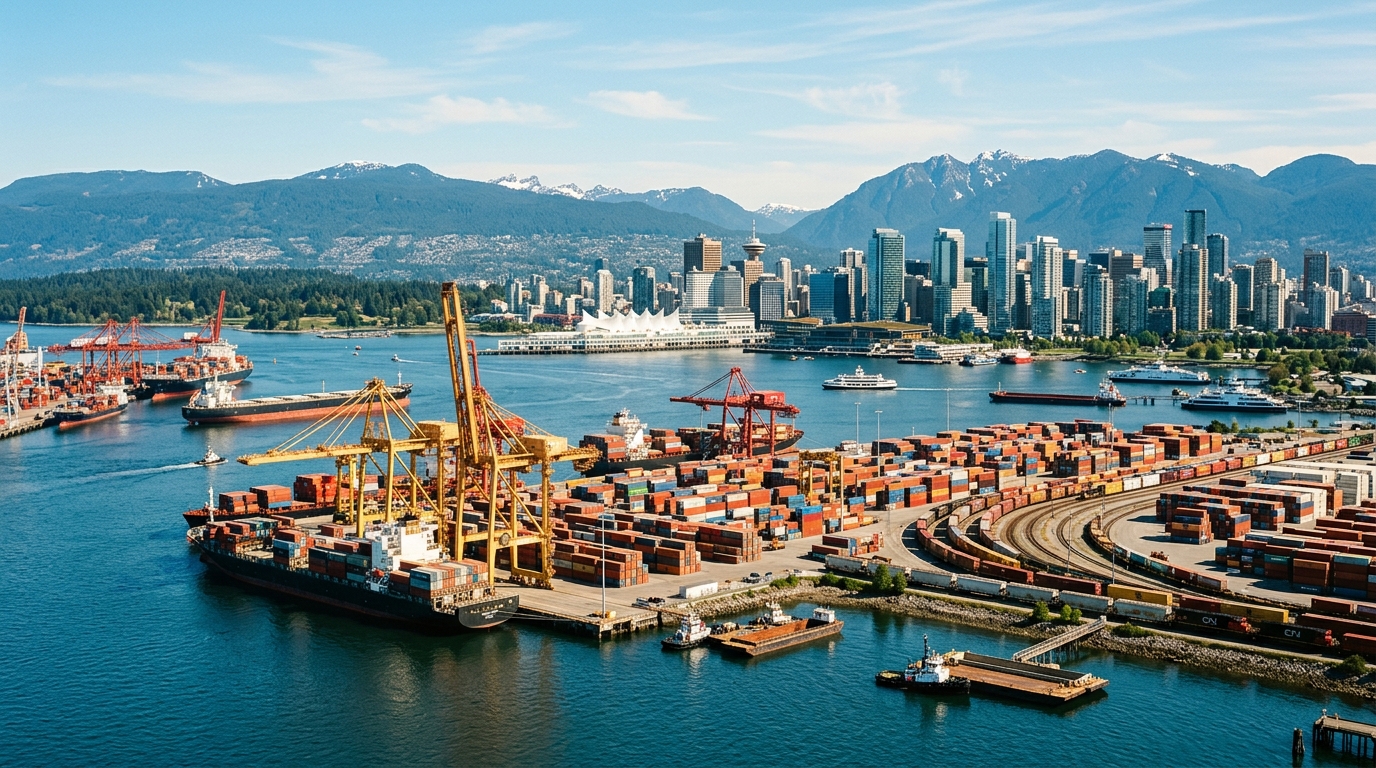
The numbers are modest on paper but significant in practice. The Port of Vancouver handles approximately 3.5 million twenty-foot equivalent units (TEUs) annually, making it Canada’s largest port by cargo volume. A 5% shift in routing patterns—driven by persistent U.S.-China trade tensions—translates to roughly 175,000 TEUs redirected through new Asia-Pacific corridors. For freight logistics operators, customs brokers, and Fraser Valley warehousing firms, this represents a significant shift in the business cycle.
The structural driver is clear. Export Development Canada has identified Asia-Pacific market diversification as a top strategic priority for Canadian exporters in 2026, as tariff exposure on U.S.-routed goods creates cost pressure and supply chain uncertainty. BC exporters—particularly in commodities, agri-food, and light manufacturing—are increasingly booking directly onto Southeast Asia and Japan corridors rather than routing through American intermediary ports. Vancouver, as the closest major North American port to Asia, is the natural beneficiary.
Asia-Pacific trade already accounts for roughly 70% of Port of Vancouver container traffic, providing the necessary infrastructure, carrier relationships, and customs capacity. The composition of that traffic is evolving: more direct BC-origin export bookings, fewer transhipments via U.S. West Coast hubs, and growing interest in corridors to Vietnam, South Korea, and Japan as exporters seek markets with lower tariff friction.
For a BC food processor, a softwood lumber exporter, or a manufacturer with U.S. tariff exposure, the economic case for routing through Vancouver directly to Southeast Asia is strengthening each quarter. The challenge is no longer whether to diversify, but how quickly to operationalize the transition.
Freight forwarders are already observing this shift. The Canadian International Freight Forwarders Association has noted increased member activity around non-U.S. Pacific routing options as exporters seek to reduce single-corridor dependency. For logistics operators with established Vancouver-Asia relationships, this represents an expansion opportunity, particularly for those offering consolidation services to mid-size exporters.
The BC government is supporting this transition. The BC Ministry of Agriculture and Food operates export diversification programming targeting Asia-Pacific market development, with funding available to agri-food producers seeking to establish direct relationships with buyers in Japan, South Korea, and Southeast Asia.
BC Chamber of Commerce member surveys from the past year show elevated concern regarding U.S. tariff exposure, with many respondents actively evaluating alternative export routes. The chamber frames this diversification as a strategic upgrade that reduces the concentration risk inherent in relying on U.S.-China trade corridors.
Execution remains critical. Direct Asia-Pacific routing typically demands longer lead times, stricter letter-of-credit discipline, and familiarity with destination-country customs and phytosanitary requirements. Exporters will need customs brokers and freight forwarders with specific Asia-Pacific expertise.
For Metro Vancouver’s logistics ecosystem, the signal is clear: the port’s role as a transhipment node is deepening for Canadian exports. Warehousing operators in the Fraser Valley, container examination facilities, and port-adjacent processors are well-positioned to benefit from sustained volume growth on Asia-direct corridors. Operators who secure capacity and build compliance infrastructure now will be better placed than those who wait for the shift to become consensus.



