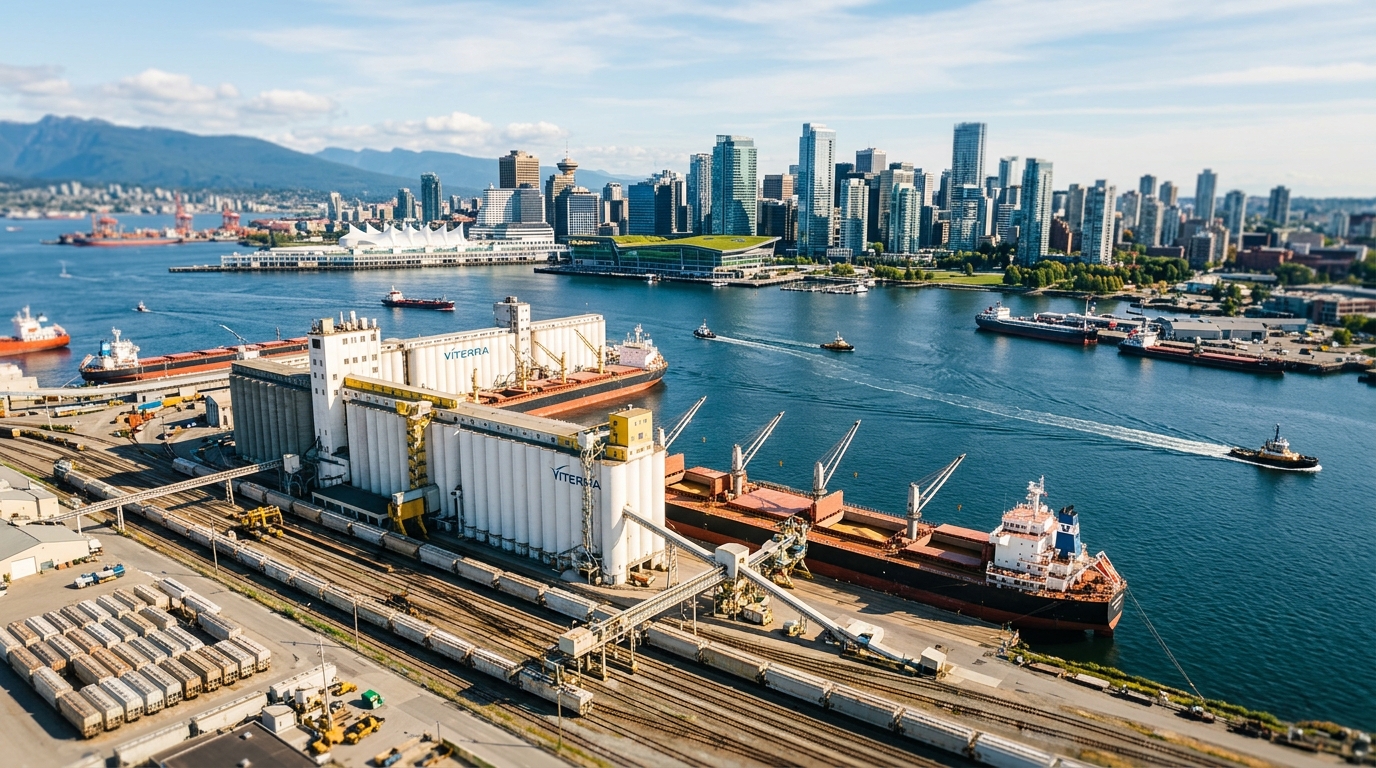
The data arriving from Vancouver’s grain terminals reveals a story of pressure—and, for the right operators, opportunity. Vessel queues at terminals such as Pacific Terminal and the North Shore’s grain facilities have extended wait times well beyond seasonal norms heading into spring 2026. This surge is driven by high Prairie grain volumes, including export demand rerouted from U.S. corridors. The result: demurrage clocks are ticking, contracts are being repriced, and logistics operators with spare capacity are fielding new inquiries.
Vancouver remains Canada’s busiest bulk commodity port, moving roughly 35 million tonnes of grain annually. That scale means even modest disruptions ripple through the supply chain, from Prairie elevators to rail loading facilities and the vessel queues idling in English Bay. When the system backs up, the costs are immediate and measurable.
Demurrage—the daily penalty charged when a vessel sits waiting beyond its contracted loading window—runs anywhere from $15,000 to $35,000 per day for a typical Panamax bulk carrier. With wait times at Vancouver grain berths stretching beyond typical windows this spring, exporters and logistics intermediaries are absorbing costs that compress grain-handling margins. Some are passing those costs forward into new contract pricing; others are absorbing them while they renegotiate.
Quorum Corporation's grain supply chain monitor has flagged tightening throughput efficiency at Vancouver terminals as carryover stocks from last year's harvest remain elevated. The Canadian Grain Commission's weekly export data shows export volume running ahead of the prior year, testing the physical limits of terminal capacity on the West Coast.
What this means for Vancouver logistics firms
When primary terminals are congested and contract terms are in flux, grain companies and agricultural exporters seek alternatives. Warehousing operators with available short-term storage, trucking and transload firms that can absorb overflow, and technology providers with visibility tools that help shippers manage demurrage exposure are seeing increased interest.
Rail is central to the equation. Both CN Rail and CPKC move the bulk of Prairie grain to Vancouver. Their car allocation decisions—how many hopper cars flow to which elevators—effectively determine which terminals are congested and which have breathing room. Operators who have cultivated relationships with both Class 1 railways, or who can offer flexible rail-to-truck transload solutions, are well-positioned to capture diverted volume.
The Western Grain Elevator Association has advocated for terminal expansion investment on the West Coast, a conversation the current crunch is accelerating. For BC construction, engineering, and logistics technology firms, that pipeline represents a long-term opportunity layered on top of the immediate contract repricing cycle.
The bottom line
If you run a logistics operation in Metro Vancouver or the Fraser Valley with spare warehouse space, flexible trucking capacity, or software that helps shippers track grain movement and demurrage costs, demand is rising. The bottleneck at the grain terminals is a temporary constraint forcing buyers to look beyond their usual providers. Firms that move quickly to position themselves as overflow solutions—and price accordingly—are the ones likely to convert this spring's congestion into durable contract relationships.
For the broader BC logistics sector, this episode underscores Vancouver's structural importance to Canadian agriculture. The port's vessel traffic data consistently shows grain as a dominant bulk commodity flow. Any friction in that system—labour, weather, terminal capacity, or rail car supply—has financial consequences. Building resilience into that chain, whether through technology, physical infrastructure, or contract flexibility, is a competitive advantage in a constrained market.



