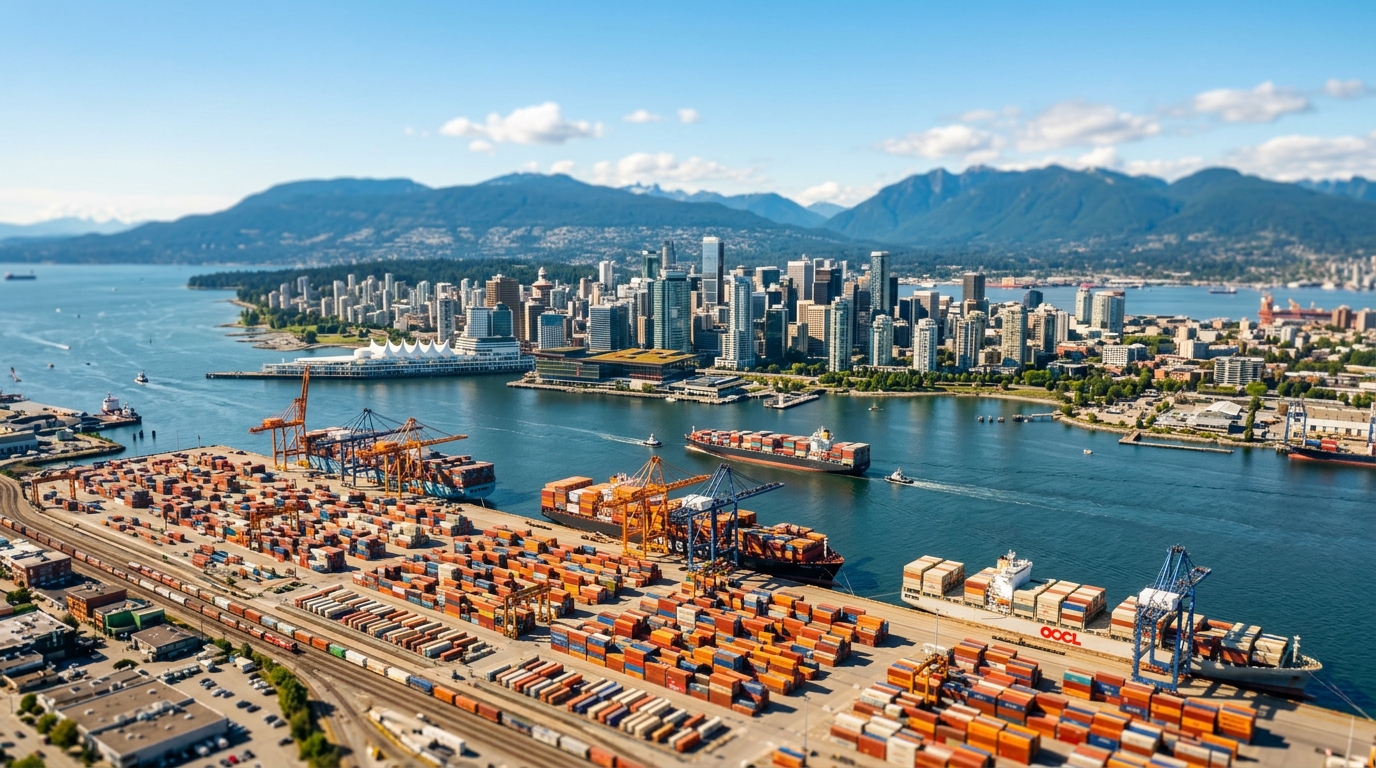
Container throughput at the Port of Vancouver is recovering. The disruptions of 2024 and 2025—driven by labour action, supply chain volatility, and shifting shipper preferences—are easing. However, this recovery is not a return to the status quo. A meaningful share of trans-Pacific cargo that once moved through Metro Vancouver has rerouted north to the Port of Prince Rupert, and logistics intelligence suggests this shift is structural, not cyclical.
For Metro Vancouver's logistics, warehousing, and freight brokerage sectors, this requires a strategic pivot. The operators who thrive in the coming years will be those who adapt to this new reality.
What the numbers show
Prince Rupert's competitive position has strengthened over several years, but the 2024–2025 period accelerated adoption among shippers who previously defaulted to Vancouver. The Fairview Terminal Phase 2 expansion raised the port's annual container handling capacity to 1.8 million TEUs, providing shippers the confidence to commit long-term volume. Crucially, Prince Rupert offers a two-day shorter rail transit to Chicago via CN's network compared to Vancouver—a margin that remains vital for time-sensitive importers.
The Vancouver Fraser Port Authority's throughput data confirms the recovery, but it also reflects a gateway that now shares the trans-Pacific load with its northern counterpart more durably than at any prior point in the corridor's history.
Why this is structural
Shippers do not reroute lightly. Switching a supply chain involves renegotiating contracts with ocean carriers, inland rail providers, customs brokers, and distribution centre operators. Once that investment is made, the inertia favours the new route. The Journal of Commerce's trans-Pacific routing analysis documents this pattern, as Prince Rupert's market share has grown steadily across successive disruption cycles.
The two-day rail advantage to the U.S. Midwest is fixed. As Prince Rupert's terminal capacity matures, the reliability arguments that once favoured Vancouver's deeper shipper ecosystem are narrowing.
What this means for Vancouver operators
Metro Vancouver's logistics sector built capacity—warehousing, drayage, and customs brokerage—around assumptions of pre-2024 dominance. Those assumptions require updating. Vancouver remains a significant container gateway, but operators sizing new investments or projecting revenue should model for a gateway that holds a smaller share of trans-Pacific volume than it did five years ago.
The Canadian International Freight Forwarders Association suggests that members should diversify gateway relationships and build flexibility into their routing assumptions.
The opportunity side of the ledger
Prince Rupert's logistics ecosystem remains thinner than Vancouver's. While the terminal is expanding, the surrounding service infrastructure—drayage, warehousing, and cold chain—has not kept pace. That gap is a business opportunity.
Metro Vancouver firms with established relationships with CN Rail's intermodal network are well-positioned to extend their capabilities northward. A Vancouver-based freight forwarder that builds a Prince Rupert service offering is not conceding volume; it is following the cargo and capturing margin.
The BC Ministry of Transportation's ongoing investment in the northern container corridor signals that provincial infrastructure support will continue to flow toward Prince Rupert. Early movers will benefit from this tailwind.
The bottom line
If you run a logistics business in Metro Vancouver, the pie is being cut differently. Some cargo that once moved through your backyard now moves through Prince Rupert, and it is likely to stay there. The smart move is to serve that cargo where it is. Operators who build Prince Rupert-linked capabilities in the next 18 months will be positioned to secure the next wave of shipper commitments.



