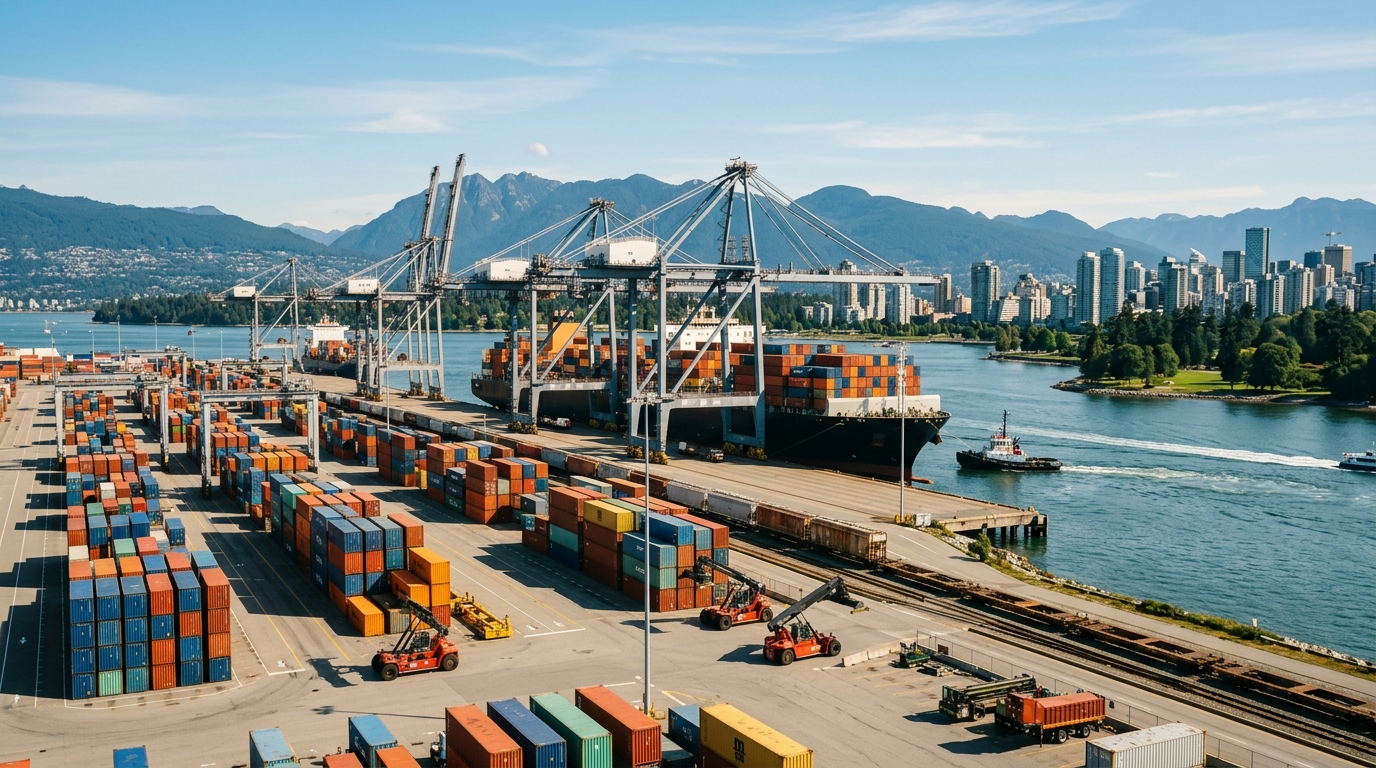
Canada’s largest port is testing a shift that BC shippers have sought for years. The Vancouver Fraser Port Authority is advancing a pilot programme to extend cargo-gate hours through weekends at select terminals. If successful, the move would represent the most significant operational change at the Port of Vancouver in over a decade.
The stakes are high. The Port of Vancouver handled approximately 147 million tonnes of cargo in 2024. Despite this volume, cargo gates at most terminals have historically closed on weekends—a structural constraint that shippers argue increases costs and hinders competitiveness.
The Cost of Inaction
When a container ship arrives on a Friday evening, the cargo cannot move through terminal gates until Monday morning. During this window, the importer pays demurrage—a daily fee charged by the shipping line for every day a container occupies terminal space beyond its free-time allowance. These fees can reach hundreds of dollars per day, adding significant friction to supply chains.
For BC exporters in sectors like lumber, agri-food, and mining, the issue is reversed: product staged for export sits idle, delaying vessel loading and occasionally causing missed sailings.
Testing Operational Feasibility
The VFPA pilot aims to determine if terminals can maintain weekend gate hours without creating bottlenecks in yard operations, trucking, or customs processing. Success requires coordination between terminal operators, the Canada Border Services Agency, and the trucking community. The initiative follows Q1 2026 congestion events that drew criticism from freight forwarders and importers.
The West Coast Benchmark
BC shippers have long pointed to the US West Coast as a model. The Port of Los Angeles and the Port of Long Beach both implemented extended-gate programmes, reporting reduced container dwell times and improved truck turn times. Logistics data suggests Vancouver has historically faced longer dwell times than its southern competitors, creating an incentive for cargo owners to route through US ports.
Industry Perspective
The BC Chamber of Commerce and the Greater Vancouver Board of Trade have identified gate-hour restrictions as a primary competitiveness issue. They advocate for extended hours to better leverage Vancouver’s geographic proximity to Asian markets. Similarly, the Canadian International Freight Forwarders Association (CIFFA) has pushed for modernisation to reduce supply-chain friction.
Looking Ahead
For importers, the immediate benefit of the pilot is the potential for demurrage savings. For exporters, it offers improved reliability in staging cargo. As supply chains continue to evolve, the ability to match the operational flexibility of US ports is critical for maintaining Vancouver’s status as a top-tier gateway.
The VFPA has not yet established a timeline for evaluating the pilot or a path toward permanent adoption. Future decisions will likely hinge on labour dynamics, including shift structures and collective agreements. For now, the launch of the pilot marks a significant step in addressing long-standing industry concerns.



