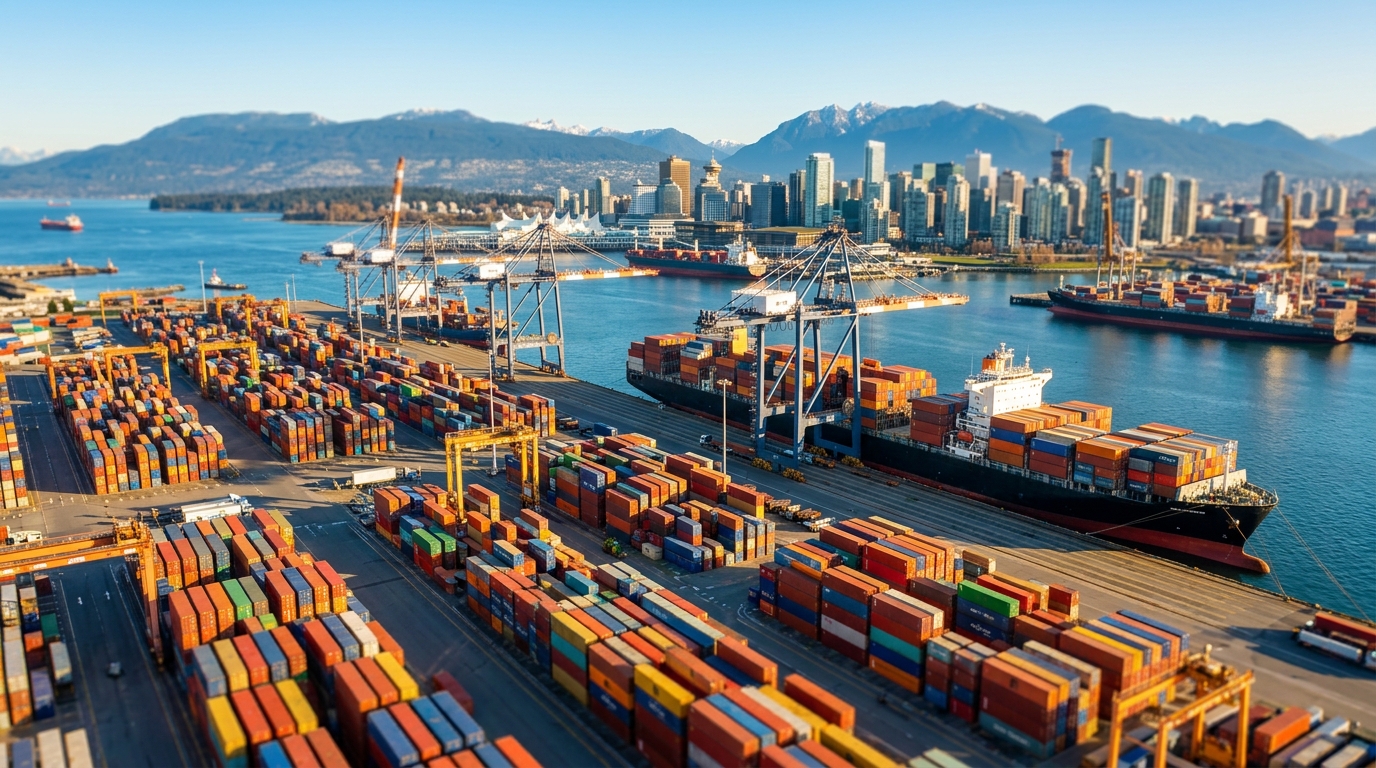
The clock ran out on July 9. Three days into the post-pause era, BC’s goods-exporting sector is no longer dealing with a hypothetical cost structure—it is living inside one. Operators who treated the 90-day window as a planning runway are discovering it was worth every hour. Those who waited are now managing triage.
The stakes are not abstract. BC exported approximately $17.5 billion in goods to the United States in 2025, with lumber, seafood, and agri-food accounting for the majority of tariff-exposed volume. Under the post-pause regime, Export Development Canada estimated Canadian exporters now face average effective tariff rates of 15 to 25 per cent depending on sector. For industries already operating on single-digit margins, this represents a structural redesign of the business model.
Lumber: Stacking Duties on an Already-Burdened Sector
BC’s softwood lumber industry arrived at this moment carrying weight it had already been managing for years. Softwood lumber already carried a combined US duty rate exceeding 14 per cent before the reciprocal tariffs were applied; the new rates stack directly on top of that existing burden. For mills whose cost structures were engineered around a specific landed price in the American market, the arithmetic has changed materially.
The operators best positioned are those who accelerated two moves during the pause: locking in forward contracts priced to reflect the new duty environment, and accelerating mass timber and engineered wood product lines where HS code classifications and value-added status can shift the effective duty exposure. The Ledger’s earlier coverage of BC forestry’s mass timber pivot documented that dynamic in detail; the competitive gap between those who made that pivot and those who didn’t is now visible in real contract negotiations.
Seafood: The Asian Market Hedge Is Paying Off
BC’s seafood exporters present a more differentiated picture. The BC Seafood Alliance has documented a multi-year push by the province’s larger processors to build direct relationships with buyers in Japan, South Korea, and China—and that groundwork is now functioning as the hedge it was intended to be.
Processors with established Asian distribution channels are reporting that they can redirect volume that would have gone to US buyers toward markets where Canadian seafood faces no new tariff friction. While freight economics to Asia differ from cross-border trucking, it is a functioning alternative. Smaller operators without those relationships are more exposed, particularly those supplying US restaurant chains under contracts that did not anticipate this cost structure.
HS-level trade data from Statistics Canada shows BC seafood exports to the US concentrated in crustaceans and groundfish—the categories where US buyers have the fewest substitution options and where Canadian producers retain the most pricing power.
Agri-Food: Margin Compression Is Arriving Unevenly
For BC’s agri-food exporters—berries, tree fruits, processed foods, and specialty products—the tariff impact is arriving unevenly across the supply chain. The BC Ministry of Agriculture and Food’s export data shows the US remains the dominant destination for the province’s agri-food sector, which means diversification timelines are longer and immediate exposure is higher.
Producers with strong retail brand recognition in the US have more pricing power to pass through some of the cost increase. Commodity producers supplying US processors have almost none. EDC’s tariff impact tracking has flagged agri-food as one of the sectors where contract renegotiation is most active; outcomes depend heavily on who has alternatives.
The Forward Playbook: What Operators Need to Do Now
The window for reactive planning has closed. Three priorities are emerging for operators navigating this environment:
First, conduct an immediate HS code analysis. Effective tariff rates vary significantly by product classification. The Canada Border Services Agency’s classification guidance and a trade lawyer’s review of existing product codes is a direct cost-reduction exercise.
Second, leverage EDC tools. Export Development Canada has expanded its trade financing and export credit insurance programs. Operators should review their EDC relationship this week to support market diversification.
Third, price the new reality into Q4 contracts. Every contract renewal must reflect the actual landed cost structure, including the new duty layer.
The Bottom Line
If you export goods to the United States, your cost structure changed permanently three days ago. The gap between prepared and unprepared exporters will widen through the back half of 2026. The Canadian Chamber of Commerce’s trade reports consistently show that the exporters who recover fastest from trade disruptions are those who treat the disruption as a forcing function for necessary diversification. The question is no longer whether the US market is reliable—it is which operators have built the relationships to sell those products elsewhere.



