Forget the qubit race. The most compelling business story in quantum computing isn't about who builds the most powerful machine—it's about who builds the infrastructure that makes those machines functional. A technically credible cluster of Metro Vancouver companies is positioning itself to supply that foundation, supported by a federal procurement mandate that takes effect in four years.
Ottawa has directed federal departments to begin migrating to quantum-safe cryptography systems, with a target of protecting critical federal infrastructure by 2030. This policy decision has created something rare in deep tech: a defined customer with a clear deadline and budget. For Vancouver startups working at the infrastructure layer, it represents the most significant near-term revenue signal the sector has produced.
The local research foundation is robust. UBC's Stewart Blusson Quantum Matter Institute provides research that feeds directly into commercial development. Simultaneously, the National Research Council’s Challenge programs have been channelling early-stage support—including IRAP funding streams—toward companies bridging the gap between laboratory output and deployable products. This ecosystem gives Metro Vancouver a deal-flow engine that larger financial centres have been slow to recognize.
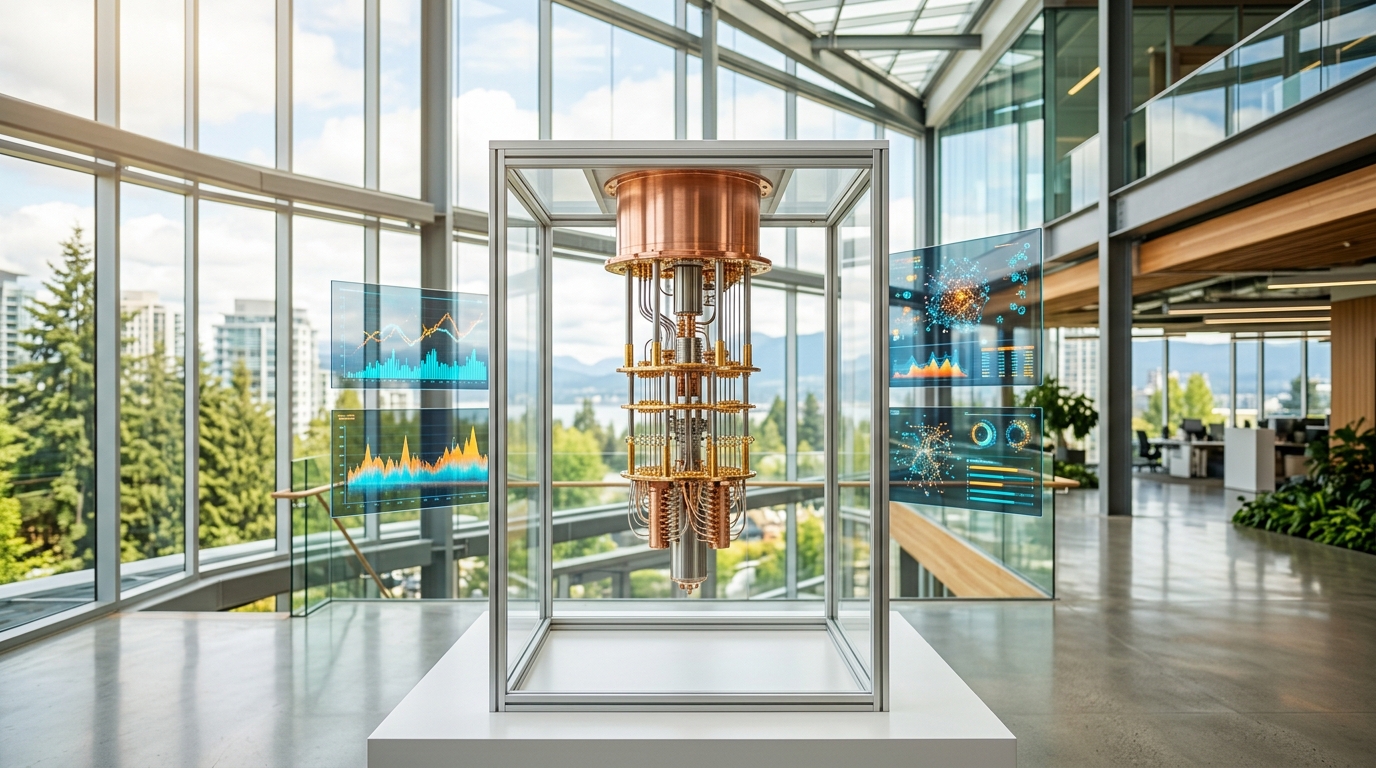
The opportunity divides into three distinct layers. Quantum-safe cryptography is the most immediate: the software and algorithms that protect classical systems against future decryption threats. Error-correction software sits in the near-to-medium term, addressing the fundamental instability of current hardware. Cryogenic control systems, which manage the extreme low-temperature environments quantum processors require, represent the hardware-adjacent layer where physics meets engineering at scale.
The cryptography sector offers the clearest path to revenue. Canada's Communications Security Establishment has issued guidance on post-quantum cryptography migration, recommending that organizations transition to algorithms capable of withstanding quantum attacks. The logic is sound: large encrypted datasets can be harvested today and decrypted later once hardware matures. The threat is real, and the timeline is uncertain, which is why Ottawa is acting now.
Quantum Industry Canada's member directory lists a growing cohort of BC-based companies operating across these layers. The concentration in Metro Vancouver reflects the gravitational pull of UBC and SFU research, combined with the province's existing strength in cybersecurity—a sector that, as previously reported in these pages, has already demonstrated it can navigate federal procurement.
The federal mandate matters beyond direct procurement. When Ottawa moves, provincial governments, Crown corporations, and federally regulated financial institutions often follow. The financial services sector faces quantum risk exposure across decades-long data retention requirements. A company that establishes its quantum-safe credentials on a federal contract gains a reference customer that opens doors across the entire regulated economy.
Investors are beginning to take notice. BDC Capital has been active in deep tech verticals adjacent to quantum, and Yaletown Partners has maintained a focus on "Intelligent Industry" and deep tech. While funding rounds remain modest by global standards, valuation discipline is significantly stronger than during the frothy quantum SPAC era of 2021.
The structural advantage for Vancouver companies lies in being well-positioned for a specific market phase. The hardware wars—involving IBM, Google, and various architectures—will play out over years, and the ultimate winner remains uncertain. However, error-correction software, quantum-safe cryptography, and cryogenic control systems are required inputs regardless of which hardware architecture prevails. Building hardware-agnostic infrastructure is a classic platform play: let the hardware companies compete while you supply the essential components to all of them.
The 2030 deadline is close enough to drive procurement cycles now. Federal departments do not migrate critical systems overnight; assessment, vendor selection, and implementation phases typically run two to three years. Consequently, the procurement window for quantum-safe cryptography is effectively open. Vancouver startups that can demonstrate compliance-ready products are entering a market where the customer has already decided to buy. The only remaining question is from whom.
For founders and investors, the signal is clear: the quantum opportunity in Vancouver is not about building the most powerful computer. It is about building the software and systems that make quantum computing safe, stable, and usable—before the federal deadline concentrates the market around the early movers.