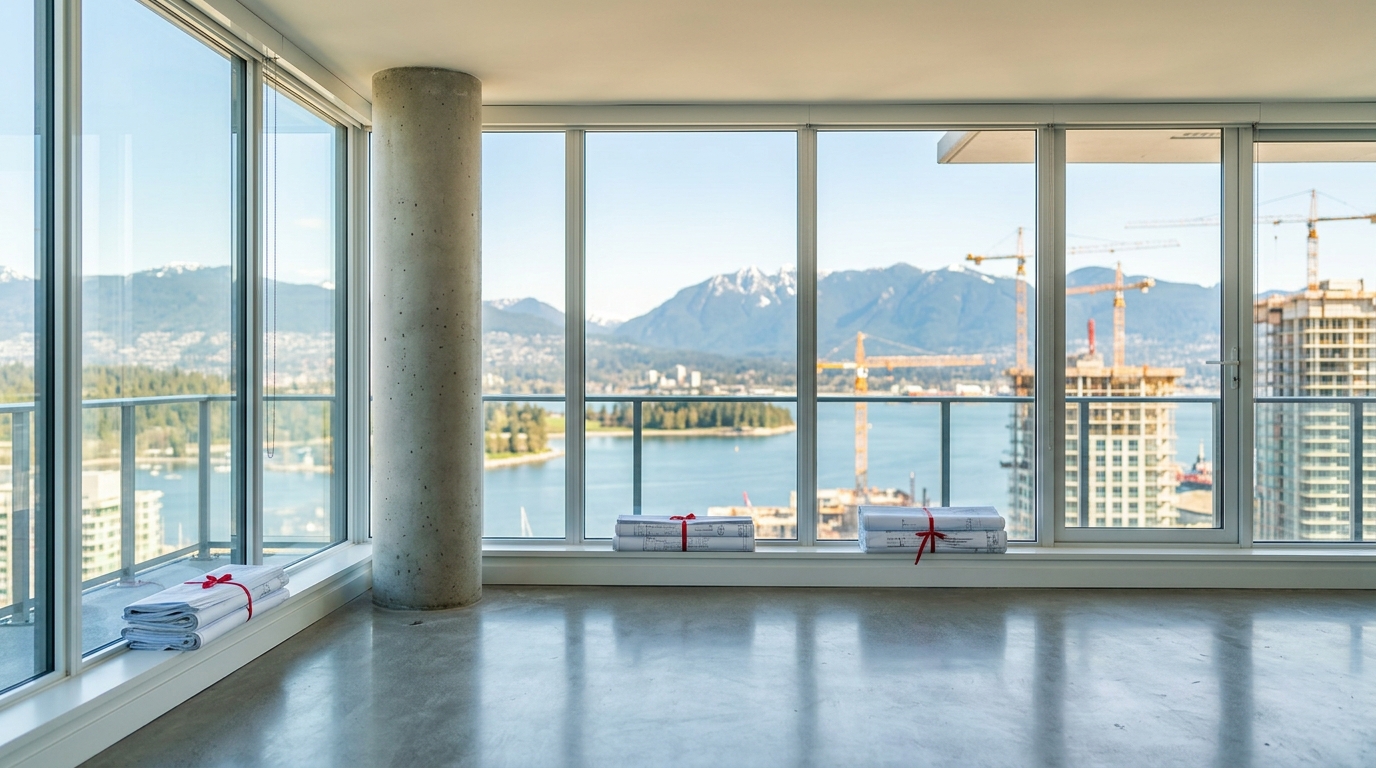
Picture a 60-unit mixed-use building on an arterial corridor in East Vancouver—the kind of project the city’s housing strategy targets. The land is assembled, and the architect has filed drawings. The pro forma, at the time of acquisition, pencilled out. Then the rezoning queue opens, and the clock starts. Thirty-six months later—if the applicant is fortunate—a development permit may follow. By then, the financial model that justified the deal has been dismantled, one carrying-cost invoice at a time.
This is the central tension in Metro Vancouver’s housing market. It is not primarily a story about city hall moving slowly; it is a story about math. Specifically, it concerns what happens to project economics when the gap between land acquisition and construction financing grows long enough to swallow the margin.
According to three consecutive annual surveys by the Urban Development Institute (UDI) Pacific, permitting delay is the single largest cost escalation factor its members face. Industry estimates place carrying costs for construction financing in Metro Vancouver at $40,000–$80,000 per unit, per year of delay. On a 60-unit project, a 12-month slip can eliminate a project's margin entirely.
The timeline problem is structural. City of Vancouver rezoning timelines for mid-size mixed-use projects have stretched to 36–48 months, up from 18–24 months before the pandemic. The causes are layered: a surge in application volume following provincial densification mandates, staffing constraints in development services, and the complexity of projects that must satisfy affordability, sustainability, and design criteria simultaneously.
When Lenders Blink First
Lender behaviour has shifted significantly in the past 18 months. Construction lenders—including private mortgage investment corporations and schedule B banks active in Metro Vancouver—have begun inserting rezoning-contingency clauses into term sheets. Financing is often not committed until a rezoning is secured. For a developer carrying land at market rates while waiting 36 months for approval, this means absorbing the full cost of the waiting period on equity alone, with no certainty of a project at the end.
Rezoning risk is binary: the approval either comes or it does not. The unpredictability of the timeline makes underwriting difficult. Consequently, mid-size, mixed-use projects are becoming effectively unbankable at the pre-rezoning stage. Developers who cannot absorb multi-year carrying costs on equity alone are stepping back from the queue.
The Supply Shortfall
CMHC’s Housing Supply Report for Metro Vancouver estimates that the City of Vancouver issued 21,000 fewer housing units in 2025 than its own 10-year housing target required. This gap represents projects that were never completed or never started because the economics could not survive the process.
The BC Ministry of Housing has made permit acceleration a priority, and provincial legislation has attempted to streamline approvals. However, the gap between policy intent and municipal processing remains wide. The City of Vancouver’s own housing target progress reports acknowledge the shortfall.
The Cost of Delay
Consider a developer who acquires a site for $8 million to build 60 rental units. At a blended carrying cost of $60,000 per unit per year, a 36-month rezoning process adds $10.8 million in costs before construction begins. This excludes soft costs, architectural fees, and the opportunity cost of equity. These expenses are either absorbed—rendering projects unviable—or passed forward into required returns, resulting in higher rents or strata prices.
What Builders and Investors Should Watch
UDI Pacific has advocated for dedicated rezoning streams for projects that meet pre-approved criteria, allowing applications that conform to existing community plans to bypass discretionary review. While the City of Vancouver has piloted expedited streams for certain rental projects, eligibility criteria remain a barrier for many mid-market developers.
At the provincial level, the Ministry of Housing’s permit acceleration efforts include funding for municipal staffing and a standardized application portal. Whether these investments reduce processing times or merely shift bottlenecks remains the primary concern for the development community heading into the 2027 planning cycles.
For investors and operators, the implication is clear: projects with rezoning already secured carry a premium reflecting scarcity. The rezoning backlog is a market signal reshaping where capital flows across the region.
The Bottom Line
Vancouver’s housing supply crisis is often framed as a demand issue, but the rezoning backlog identifies it as a systems problem. The demand and policy intent exist; what is missing is a process capable of delivering units at a pace that matches the city’s targets. Until carrying costs stop compounding during the approval gap, the math will continue to eliminate projects that cannot survive the wait, embedding the cost of delay into the city’s housing stock.



