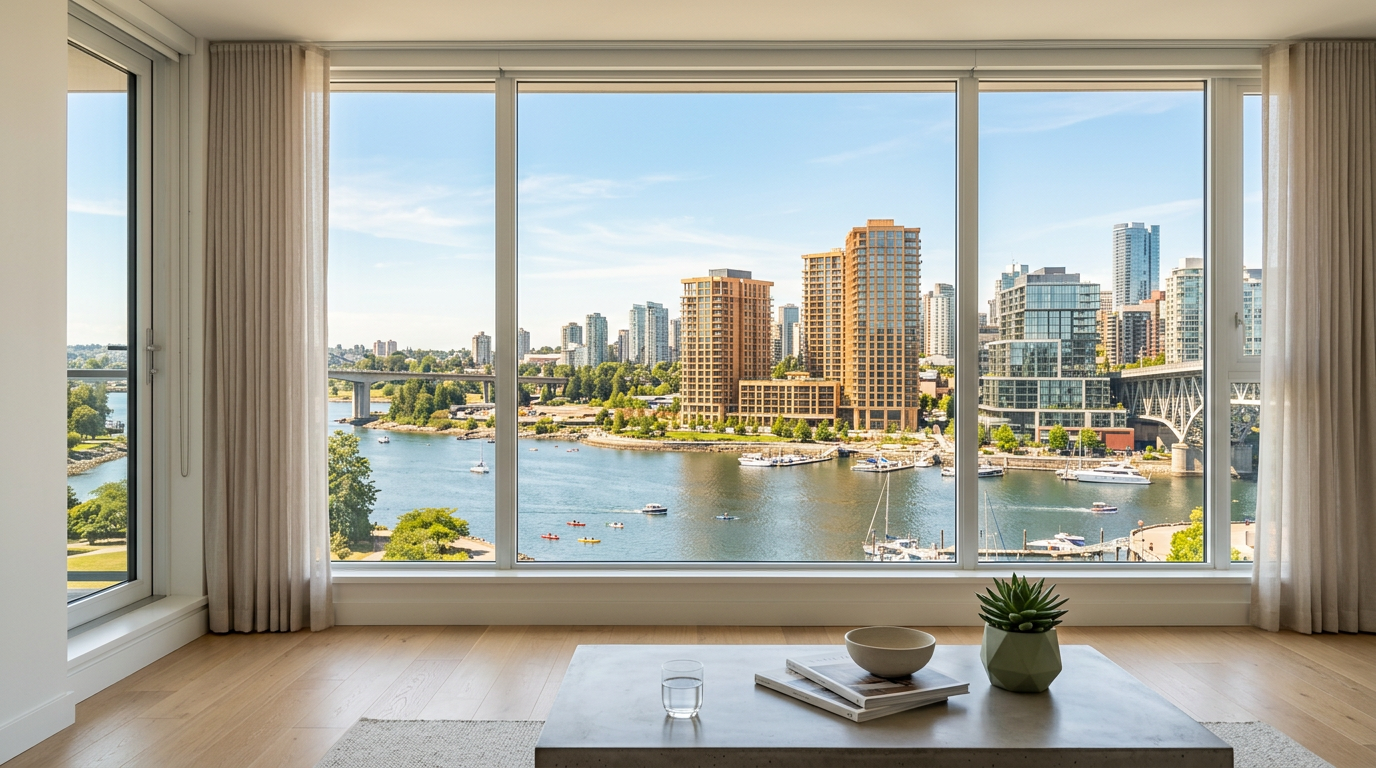
Walk along West 2nd Avenue in Kitsilano on a weekday morning and you'll notice it: the construction hoardings around Senakw are coming down, tower cranes are winding down their rotations, and the scale of what's arriving is becoming impossible to ignore. More than 1,400 purpose-built rental homes developed by the Squamish Nation's Nch'kay̓ Development Corporation are weeks from welcoming their first residents. For the coffee shops, yoga studios, grocers, and landlords within a 10-minute walk, the neighbourhood economy is about to be redrawn.
Senakw is the headline act, but it isn't performing alone. Across the city, four major completions are converging in 2026 — each one injecting a concentrated new population into a distinct catchment area. Peterson Group's Frame is bringing mixed-use density to Norquay Village near Renfrew–Collingwood. Oakridge Park's Time Out Market, retail spaces, and public park are coming online along the Cambie Corridor. And in Strathcona, Beedie Group's 120,000-square-foot facility — developed for Tesla — is nearing completion, a project that has been described as potentially among the largest Tesla facilities in North America, though that claim has not been independently confirmed from primary sources.
Taken together, these four projects represent one of the largest cohorts of new residents and commercial tenants to arrive in Metro Vancouver's inner neighbourhoods in recent memory. For operators with the foresight to position now — before move-in day — the opportunity is real and time-sensitive.
Kitsilano: 1,400 Households, One Underserved Retail Strip
Senakw's rental towers sit on Squamish Nation land at the foot of the Burrard Bridge, technically outside the City of Vancouver's jurisdiction but squarely within Kitsilano's commercial catchment. Rental pricing details for the development are still emerging, but purpose-built rental at this scale — 1,400-plus units designed for long-term tenancy rather than condo resale — is expected to generate consistent new demand for neighbourhood retail and services.
The immediate retail gap is evident on the West 4th and Cornwall corridors: food-and-beverage, convenience, and daily-needs retail are thinner on the Burrard Bridge end of Kits than they will need to be once those households are resident. First-movers who sign leases on ground-floor commercial space in the next 60 to 90 days will be establishing themselves before the customer base exists — the classic advantage of a nascent retail ecosystem. Landlords on West 4th between Burrard and Vine should expect renewed leasing interest and, in all likelihood, upward pressure on asking rents as the towers fill.
Norquay Village: Frame and the Renfrew Corridor Moment
Peterson Group's Frame project is bringing mixed residential and commercial density to Norquay Village, a neighbourhood that has quietly been accumulating density along the Renfrew–Collingwood corridor without yet generating the retail critical mass its population warrants. Frame's ground-floor commercial component is designed to anchor a more walkable streetscape — but the businesses that fill those spaces will determine whether the neighbourhood's commercial identity catches up to its residential one.
Service operators — physiotherapy, childcare, specialty grocery, and neighbourhood restaurants — are the categories most likely to succeed here. The opportunity is less about high-volume foot traffic and more about becoming the trusted, embedded neighbourhood provider before competitors recognise the catchment has matured.
Cambie Corridor: Oakridge Park's Commercial Gravity
The Cambie Corridor story is different in character. Oakridge Park is not adding a handful of units to a quiet street — it is completing a major urban node with a Time Out Market dining hall, curated retail, and a public park that will draw visitors from across the city, not just the surrounding blocks. The commercial opportunity here is less about first-mover positioning in a nascent market and more about understanding the catchment's new centre of gravity.
Independent operators and regional chains alike should be studying the secondary retail corridors — West 41st, West 49th, and the blocks immediately east of Cambie — for the spillover effect. When a destination node opens, it lifts surrounding commercial real estate values and creates foot-traffic patterns that benefit businesses two and three blocks away, not just those inside the development itself.
Strathcona: Industrial Activation and the Daytime Economy
The Beedie-Tesla facility in Strathcona operates on a different logic entirely. A 120,000-square-foot commercial and industrial facility does not deliver residential density — it delivers a daytime workforce. Lunch spots, coffee operators, and trade-supply businesses within walking distance stand to benefit from a significant new weekday customer base. Strathcona's existing independent food scene, already one of the city's most interesting, is well-positioned to absorb that demand without losing its character.
The Bottom Line
The window for first-mover positioning across all four catchments is measured in weeks, not months. Metro Vancouver's 2026 completion pipeline is among the largest in decades, and the neighbourhoods absorbing that density will not look the same by year's end. For the retailer signing a five-year lease, the landlord setting asking rents, or the service operator choosing a second location, the calculus is straightforward: the residents are coming. The question is whether your business is there when they arrive.
Watch for: Senakw's first-occupancy announcements, Oakridge Park's confirmed Time Out Market opening date, and any leasing activity on Frame's ground-floor commercial units — each will be a signal that the window is narrowing further.



