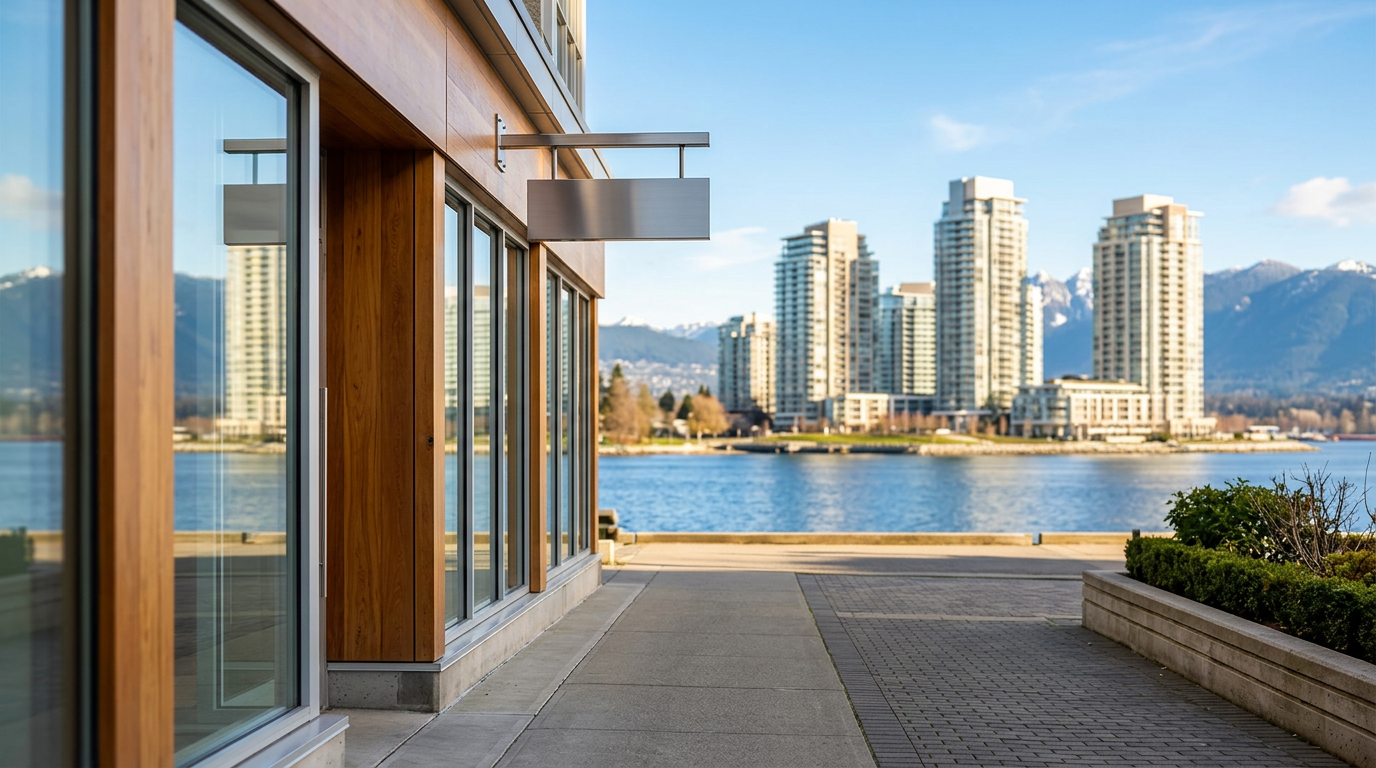
A coffee shop on West 4th Avenue has operated in the same location for eleven years. The owner knows every crack in the sidewalk and every regular by name. This spring, she is taking a new approach: she contacted her landlord in January—three months before her renewal window opened—to negotiate early. She has been monitoring the construction cranes over Senakw to understand the coming shift on her block.
She is not alone. Across the Kitsilano and Mount Pleasant corridors—commercial strips within a 10-minute walk of Senakw, the Squamish Nation's landmark mixed-use project at the Burrard Bridge, and Frame, the Peterson Companies' tower in Mount Pleasant—operators are recalibrating their lease timing. The window for first-mover advantage is narrowing, and those who recognize the shift are acting now.
Senakw is projected to deliver approximately 6,000 rental units across 11 towers. Frame adds further density to the Broadway-Main corridor. Together, they represent a massive injection of spending power into neighbourhoods where retail infrastructure was built for a smaller population. Landlords and national tenants are aware of this; independent operators must ensure they are as well.
The Inquiry Surge
Commercial leasing desks at CBRE and Colliers Vancouver report a marked uptick in inbound inquiries for spaces along West 4th Avenue, the Broadway corridor between Cambie and Main, and the eastern reaches of Kitsilano. While specific vacancy rate figures for Q1 2026 are pending, the directional signal is consistent: available quality space in the immediate Senakw and Frame catchment areas is tightening, and asking rates for premium ground-floor units are trending upward.
When major residential projects open, national tenants—including grocery, pharmacy, and fitness chains—move quickly to anchor the new foot traffic. Once those anchor leases are signed, they set the rental floor for the corridor. Secondary and independent operators then negotiate from a position of diminished leverage, facing fewer choices and higher rates.
What the BIAs Are Hearing
The Kitsilano BIA has fielded questions regarding lease strategy since late 2025. Public communications from the BIA reflect a divide between operators who view the incoming density as a generational opportunity and those concerned about being priced out. The BIA encourages members to review lease expiry dates and engage landlords proactively.
The Strathcona BIA, whose catchment sits on the periphery of the Frame development, has also noted heightened landlord activity. The concern in that area involves the potential displacement of independent, artisan-focused retail if landlords reposition properties for national tenants.
The Lease Timing Math
Senakw's first residential occupancies are expected within weeks, with Frame following a similar schedule. The lag between a building opening and its retail catchment fully activating is typically six to nine months—sufficient time for a landlord to complete a full negotiation cycle with a national tenant.
For an independent operator with a lease expiring in the next 12 to 18 months, the critical negotiation window is now. Operators who approach their landlord early—highlighting customer loyalty, alignment with incoming demographics, and a willingness to commit to longer terms—are in a stronger position than those who wait for the standard notice period.
The operators best positioned are those whose offerings align with the profile of incoming residents: younger, professional, transit-dependent renters. Specialty grocery, coffee, fitness studios, and neighbourhood-scale food and beverage remain areas where independent operators hold a competitive advantage—provided they can secure their space.
Market Snapshot: Affected Corridors
- West 4th Avenue (Burrard to Balsam): Ground-floor retail asking rates are trending upward on premium corner units; landlord patience for vacancy has shortened since Q4 2025.
- Broadway (Cambie to Main): Elevated inquiry volume from national food-and-beverage operators; spaces with direct transit visibility command significant premiums ahead of the Broadway Subway's full activation.
- Mount Pleasant / Strathcona periphery: Mixed signals, with strong interest from independents alongside early-stage conversations involving national fitness and pharmacy operators.
The Bottom Line
Senakw and Frame are significant demand generators. The surrounding retail corridors are entering a repricing event that will reward operators who move early. If you operate within a 10-minute walk of either development and your lease expires before mid-2028, the conversation with your landlord should already be underway.



